


Career Insights
30 posts
Sort by Most Viewed
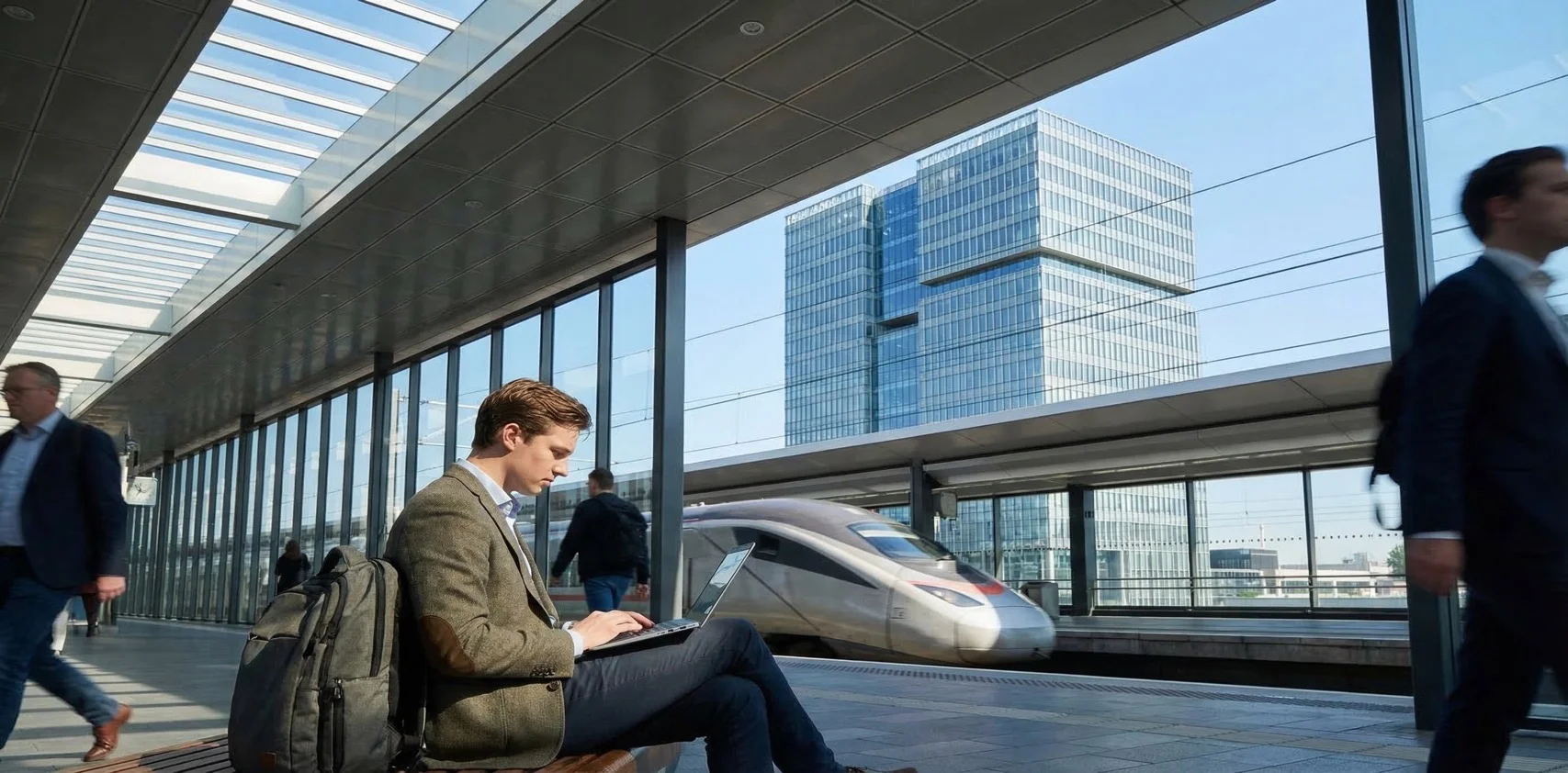
Tethered Nomadism: Digital Nomadism Didn't Die — It Grew Up
In late 2024, Amazon CEO Andy Jassy sent an internal memo requiring all employees to return to the office five days a week starting in 2025. Within weeks, Google, Meta, and Dell followed with tightened remote work policies. The headlines wrote themselves: "The Remote Work Party Is Over." "The Digital Nomad Bubble Has Burst." The data tells a different story. MBO Partners' 2025 State of Digital Nomads Report found that traditionally employed digital nomads in the U.S. — people with full-time jobs who work from different cities or countries — grew from 10.2 million in 2024 to 11.2 million in 2025. A 10% increase. This happened while roughly 70% of companies had implemented some form of Return to Office (RTO) policy. Digital nomadism didn't vanish. It evolved. A new work pattern is emerging, occupying the space between the total freedom of pure nomadism and the daily commute of traditional office life. Call it "tethered nomadism" — you're still moving, but there's an invisible cord connecting you to an office, a team, an obligation that requires periodic return. That cord isn't a chain. For most people, it's the thing that makes nomadic life actually sustainable. What RTO Actually Looks Like To understand why tethered nomadism is rising, you need to look past the headlines about RTO and examine what's actually happening on the ground. On the surface, RTO looks like a corporate power grab. But the reality is far messier than "your boss wants you back." First, not all RTO means Monday-through-Friday in the office. According to the Flex Index's early 2025 survey, only 33% of companies with RTO policies require full-time in-office attendance. The majority have adopted hybrid models: two to three days in the office per week, with the rest flexible. Most companies don't want employees at their desks every day — they want to see them regularly. Second, enforcement is softer than the announcements suggest. Multiple HR research firms tracking compliance have found that even at companies requiring three days per week, actual attendance rates hover around 60–70%. Management knows. Most look the other way — because cracking down means losing talent. Third, RTO intensity varies dramatically by industry. Finance (especially investment banking) leads the charge — Goldman Sachs and JPMorgan demanded full return as early as 2023. But tech, creative industries, and consulting have been notably more accommodating. In knowledge-intensive fields where replacing top performers is prohibitively expensive, companies can't afford to pull the string too tight. This uneven landscape is precisely the soil in which tethered nomadism grows. The Three-Day Consensus If there's one number that defines the current shift in how we work, it's three. Three days per week in the office has become the default setting for hybrid work. This number wasn't chosen arbitrarily — it's the equilibrium point in a long tug-of-war between employers and employees. For companies, three days is enough to maintain team cohesion. Research shows that two to three days of face-to-face contact per week effectively sustains informal knowledge transfer, cross-departmental serendipity, and managers' ability to read team dynamics. Three days also lets companies credibly claim they have an "office culture" — still important to certain boards and investors. For employees, three days means four consecutive days away from the office. Wednesday is the last office day; Thursday through Sunday is a continuous block of freedom. Four days is enough to fly to another city, spend a few days there, and return Monday morning. Or, concentrated differently: come in Monday through Wednesday, work remotely Thursday and Friday. Many companies have taken this further by calculating on a monthly basis: at least 12 days per month in the office. This gives employees even more flexibility in how they arrange their time — compress those 12 days into two weeks, and you have the other two weeks entirely free. This is the arithmetic foundation of tethered nomadism: a cord long enough to give you meaningful range, but not so long that you drift entirely out of the organization's gravitational field. The Length of the Cord: Three Models In practice, tethered nomads have developed three distinct models, defined by the length of their cord. Short cord: the weekend nomad. Three to four days in the office each week, with long weekends (Thursday evening to Sunday) spent in nearby cities. This is the lowest-barrier entry point. A marketing director in Tokyo might fly to Seoul or Taipei every weekend. A London-based designer might spend weekends in Paris or Amsterdam. No special arrangement with the employer needed — just energy management and a budget for flights. Medium cord: the monthly commuter. One to two weeks per month in the office, with the rest spent working remotely from other cities. This is currently the most common form of tethered nomadism. The cord's length is typically measured in flight time — under six hours is comfortable, over eight starts to feel punishing. A San Francisco employee might make Mexico City their second base (four-hour flight); a London employee might choose Lisbon or Barcelona (two to three hours). Long cord: the quarterly returnee. One to two weeks per quarter in the office, with near-complete freedom the rest of the time. This arrangement is typically reserved for senior or highly sought-after talent. Companies offer this level of flexibility because losing the person would cost more than accommodating them. A senior architect might work from Southeast Asia year-round, flying back to Silicon Valley each quarter for strategy sessions and team offsites. What all three models share: none of them are covert. The most successful tethered nomads negotiate their terms openly, establish predictable rhythms, and prove the arrangement works through results. The New Geography of Arbitrage Geographic arbitrage — earning in dollars or euros, spending in baht or pesos — has always been a core appeal of digital nomadism. Tethered nomadism doesn't eliminate this advantage, but it introduces a new variable into the equation. Accessibility over affordability. In the past, nomads chose cities primarily by cost of living. Chiang Mai could be done for under $1,000 a month; Ubud in Bali was slightly more but still cheap. For tethered nomads, though, if you need to fly back to Tokyo every month, Chiang Mai becomes less attractive — five hours each way with a connection, two days lost to travel each trip. Bangkok, with direct six-hour flights to Tokyo and competitive fares, is the smarter play. This logic is reshaping the global nomad map. For U.S. West Coast tech workers, Mexico City (four-hour flight, same time zone, ~$1,500/month cost of living) is overtaking Chiang Mai as the go-to base. For European workers, Lisbon and the Canary Islands (two to four hours, Western European time zone, 60% of major-city costs) continue to heat up. For Asian nomads, Kuala Lumpur (dense direct-flight network, English-speaking, one-third of Singapore's costs) and Ho Chi Minh City (young, vibrant, rock-bottom costs) are the new favorites. Time zones become hard constraints. Fully independent nomads can ignore time zones — nobody cares when they're online. Tethered nomads have meetings to attend and messages to answer. In practice, a three-hour time difference is the comfort zone: you can shift your schedule slightly to overlap with headquarters without sacrificing sleep or social life. Beyond five hours, something has to give. Long-term, it's unsustainable. This means the cord isn't just physical distance — it's temporal distance. You can live eight flight-hours away, but if the time difference is only two hours, the cord's pull is manageable. Conversely, a three-hour flight but six-hour time difference (London to Dubai, for instance) creates more coordination friction than the distance would suggest. The tax and visa gray zone. Tethered nomads face a problem pure nomads often sidestep: because their movement patterns are relatively fixed, tax authorities can more easily track their days spent in-country. Most nations use the "183 days in a calendar year" threshold for tax residency. An American employee spending three weeks per month in Mexico City will likely trigger Mexican tax obligations, potentially requiring dual filing. For now, this remains a gray area. Many tethered nomads adopt a "don't ask, don't tell" approach, but as countries digitize border records and cross-reference entry data, the risk is rising. The safer play: stay under 90 days in any single location, and consider countries offering dedicated digital nomad visas (Portugal, Costa Rica, Malaysia's DE Rantau program) for legal work authorization. Gen Z: Not Rebellion — A Different Default The single biggest force propelling tethered nomadism is generational. Gen Z — born between 1997 and 2012 — now represents the largest demographic among digital nomads, at 35% of the total. This isn't because they "don't want to work" or "just want to travel." It's because their default assumption about what work looks like is fundamentally different from every generation before them. For Boomers and Gen X, the default image of "work" was: commute to an office, sit at a desk for eight hours, commute home. Remote work was the exception, a privilege, something you had to apply for. For Millennials, that default started to loosen. They lived through the 2008 financial crisis, learned that corporate loyalty doesn't always pay, and began prioritizing work-life balance. But most Millennials still accepted the office as the primary work venue. Gen Z is different. They entered the workforce between 2020 and 2022 — during the largest remote work experiment in human history. Their first job may have been done entirely from home. Their interviews were on Zoom, onboarding was online, and their first interaction with colleagues was on Slack. For them, "the office" isn't the default mode of work. It's one option among several. When companies tell Gen Z to "return to the office," what they hear isn't "go back to normal." It's "change how you work." That's why their resistance is so strong — not out of laziness, but because they're being asked to abandon a model that already works for them. Tethered nomadism is their compromise: fine, I'll come to the office, but on my terms. I'll give you three days. The other four, I'm going where I want. The Corporate Math Facing this generational force, companies are running their own calculations. On the surface, the executives pushing RTO care about "productivity" and "culture." But HR departments see a different set of numbers: recruitment costs, attrition rates, competitors' policies. A mid-2025 Gartner report estimated that companies strictly enforcing full RTO saw key-talent attrition rates 15% higher than industry peers within six months of implementation. Replacing a senior engineer — factoring in recruiting, interviewing, onboarding, and lost productivity — costs roughly 1.5 to 2 times their annual salary. For someone earning $200,000, that's $300,000 to $400,000 in hidden costs per departure. That math is forcing a rethink. The smartest approach isn't one-size-fits-all — it's treating work flexibility as part of the compensation package. Just as companies use stock options, signing bonuses, and education stipends to attract talent, "remote work days" have become another form of currency. Some companies now explicitly include "up to X days per month of remote work" in their offer letters, institutionalizing flexibility. The most forward-thinking companies are going further, turning tethered nomadism into an employer branding advantage. Spotify's "Work From Anywhere" policy and Airbnb's "Live and Work Anywhere" program position flexibility as a core recruiting proposition. These companies have found that offering flexibility attracts more top talent, not less. There's a subtle power dynamic at work: once some companies make flexibility a selling point, others are pressured to follow or risk disadvantage in the talent market. The RTO wave looks strong from the top, but the pushback from the talent side is equally powerful. The equilibrium point is hybrid — and hybrid is the incubator for tethered nomadism. The Satellite Base Strategy Early digital nomad culture worshiped perpetual motion — a new city every month, a new country every quarter. The Instagram nomad, laptop-on-beach, backpack-around-the-world aesthetic defined the popular imagination. But lived experience tells a different story. The most common complaint among long-term nomads isn't money or visas — it's drift fatigue. The cognitive tax of continuously adapting to new environments: finding housing, sorting out internet, navigating transportation, locating food, building social connections. Each task is minor. Stacked together, they drain willpower and erode productivity. Tethered nomads have developed a smarter approach: the satellite base model. The idea: establish fixed living infrastructure in two to three cities. Each base has stable housing (a long-term rental or a reliable Airbnb host), a familiar coworking space, local friends, and a mental map of which café has the most reliable WiFi. Then rotate between these bases rather than starting from scratch each time. A tethered nomad anchored to a Singapore-based company might structure their year like this: Singapore (one to two weeks per month, office time), Chiang Mai (three to four months per year, deep-focus work), Bali (two to three months per year, socializing and recharging). All three bases are within four hours' flight time, with less than one hour of time difference, and costs distributed from high to low. The advantages compound across multiple dimensions. Cognitive load drops sharply — you arrive in a familiar city and start working immediately, no three-day settling-in period. Social relationships accumulate rather than evaporate — visiting the same place two or three times a year makes you a "regular," not a tourist. Logistics get lighter — you can keep clothes and equipment at each base, traveling with just a carry-on. Most importantly, this model makes your life legible to employers. "I rotate between three cities" is far easier for a manager to accept than "I could be anywhere in the world." It provides structure and predictability — precisely what most managers lack and crave in remote teams. Don't Sneak Around: Transparency Is the Best Strategy The most common failure mode in tethered nomadism isn't technical problems or declining productivity. It's trust collapse. Some people try to game the system — nominally complying with RTO while using a VPN to mask their location, letting the company think they're working from home when they're actually in another country. The risk here is severe: discovery (increasingly likely as companies get better at tracking device locations) typically means immediate termination for policy violation or even fraud, potentially forfeiting severance and unemployment benefits. The better path is a proactive proposal. Treat your nomad plan like a business case. Include: your intended locations and timeline; how you'll ensure time-zone overlap and meeting attendance; performance data from recent quarters (proving you're worth trusting); potential risks and mitigation plans (backup internet, emergency return logistics); and a clear trial period (say, three months, with continuation based on results). The signal this sends: I'm not running away from work — I'm organizing it more deliberately. For managers, the initiative and planning involved are themselves demonstrations of competence. Not every manager will say yes. But even a rejection establishes a foundation. Six months later, when you come back with sustained excellent performance, the odds improve dramatically. The Loneliness Factor In the digital nomad literature, one finding comes up again and again: most people who abandon nomadic life don't do so because of money or work problems. They quit because of loneliness. The social architecture of pure nomadism is inherently fragmented. You meet people in Chiang Mai, leave after three months. Meet people in Lisbon, leave after three months. Every relationship is shallow, temporary, with an explicit expiration date. For extroverts, this might be manageable. For most people, the constant cycle of "meeting new people" is exhausting. Tethered nomadism structurally alleviates this problem. First, you have office colleagues. However much you dislike commuting, spending one or two weeks per month in the office — eating lunch with the team, joining after-work drinks, having real face-to-face conversations — provides a baseline social layer. Second, the satellite base model lets you accumulate relationships in each location. You're not a stranger appearing in a different city each month — you're a familiar face who returns every few months. This pattern of "intermittent presence" is actually an effective model for maintaining friendships: close enough to sustain connection, distant enough to prevent fatigue. Third, tethered nomadism comes with a built-in identity narrative. Pure nomads often wrestle with existential ambiguity — no fixed address, no stable community, no clear social role. Tethered nomads have a ready answer: "I work at [company], just with a flexible location arrangement." It sounds trivial, but when you need to explain your lifestyle to family, friends, or yourself, having a simple story matters more than you'd think. Not an Endpoint — A Starting Point Zoom out, and tethered nomadism is likely a transitional form. AI is changing the nature of knowledge work. As more meetings can be replaced by AI-generated summaries, as more collaboration can happen asynchronously through AI agents, the requirement to be "in the same space at the same time" will continue to shrink. Maturing VR/AR technology may redefine "face-to-face" entirely — when putting on a headset places you and a colleague at the same virtual table, the case for a twelve-hour flight back to headquarters weakens considerably. But technology is never the only variable. Organizational culture, management psychology, regulatory frameworks — these change far more slowly than tools. Even when technology has eliminated every practical reason to require office presence, the human desire to "see my team" won't disappear. Some form of the cord, then, will likely persist for a long time. It will lengthen — perhaps from one week per month to one week per quarter — but probably won't vanish entirely. For the foreseeable future, the optimal solution for most knowledge workers isn't "total freedom" or "total fixity," but finding their own position on the spectrum between the two. The real value of tethered nomadism isn't that it's a perfect lifestyle. It's that it proves something: where you work doesn't have to be a binary choice. It can be a spectrum, and everyone has the right to find their own point on it. A Practical Playbook For those considering the shift from office life to tethered nomadism, some actionable advice. Measure your cord first. Before planning anything, understand your actual constraints. What exactly does your company's RTO policy require — three days per week, one week per month, once per quarter? What's your direct manager's attitude? Are any colleagues already doing this? What percentage of your work genuinely requires in-person presence? Write down the answers. Now you know your cord's length. Pick your first satellite base. Don't start by planning a world tour. Choose one city that meets these criteria: under six hours' flight from your office, within three hours' time difference, reliable internet and coworking infrastructure, cost of living not dramatically different from your current city (too large a gap creates its own adjustment problems), and somewhere you're genuinely interested in. Go for one month. See if the rhythm works. Build a performance moat. This is the most important point: your flexible arrangement lives or dies by your output. Before proposing a nomad plan (and after implementing one), make sure your work isn't just "as good as when I was in the office" — it needs to be demonstrably better. This is your strongest card in negotiations with management, and your only protection if company policy tightens. Secure a financial safety net. Tethered nomadism costs more than staying put — flights, multi-city accommodation, potentially a tax advisor. Build an emergency fund covering at least six months of expenses, and honestly calculate what this lifestyle actually costs. If the savings from geographic arbitrage don't cover your mobility costs, the math doesn't work. Set exit conditions. Not everyone is built for this life. Before you leave, decide: under what circumstances would I stop? Three consecutive months of feeling more exhausted than excited? Declining performance? Damage to important relationships? Having exit conditions isn't giving up. It's maturity. Aim for sustainable, not perfect. Nomad life on social media is all sunshine, beaches, and laptops. Reality includes: getting sick in an unfamiliar city, WiFi dying five minutes before a critical meeting, sitting alone in a foreign apartment on New Year's Eve missing home. All of this is normal. Tethered nomadism isn't a vacation — it's a lifestyle choice that demands discipline and resilience. People who make it through the first three months usually make it through three years. The Other End of the Cord The 2025 work landscape sits at a fascinating point of tension. On one end, the corporate pull to bring employees back to the office. On the other, the individual push for flexibility and autonomy. Tethered nomadism stands at the intersection, using a single cord to connect stability and freedom simultaneously. The existence of that cord reminds us: real freedom isn't the absence of all constraints. It's finding the maximum range of motion after understanding what the constraints are. The first decade of digital nomadism belonged to pioneers — people willing to give up everything and commit fully to a life in motion. Tethered nomadism opens the second decade: one that belongs to ordinary people. People with mortgages to pay, careers to build, families to care for — who still want to preserve some space in their lives for movement and exploration. They don't need to quit their jobs to chase the dream. They just need a cord long enough.
April 8, 2026

Managing Up as a Remote Worker: Out of Sight Doesn't Mean Out of the Game
A software engineer spent an entire year working remotely from Chiang Mai. During that time, he was consistently the fastest to deliver on his team. His bug rate was the lowest in the group. The CTO publicly praised his code review quality twice in all-hands meetings. When his annual performance review came back, the rating was a B. His manager's explanation was polite but pointed: "Your output is fine, but the team feels you're not fully engaged." A person who worked over ten hours a day and never missed a single deadline had been labeled "not fully engaged." Looking back on that moment, he said the strongest emotion wasn't anger. It was confusion. He genuinely had no idea what he'd done wrong. That confusion points directly at the most dangerous blind spot in remote work: performance and visibility are two entirely different things. Proximity Bias: The Default Setting in the Human Brain This engineer's experience isn't an outlier. Behind it lies a psychological mechanism validated by extensive research, known in academic literature as Proximity Bias. The concept is straightforward: humans are naturally inclined to give higher evaluations, greater trust, and more collaboration opportunities to people who are physically closer to them. This isn't a character flaw in any particular manager. It's a cognitive shortcut left behind by evolution. A 2023 Harvard Business Review feature on hybrid work found that even when remote employees matched their in-office counterparts in objective output, managers still tended to perceive the people they could physically see as more hardworking and more dependable. The researchers called this the "visibility premium": the mere act of showing up at the office adds points to a person's evaluation, independent of actual performance. Microsoft's 2022 Work Trend Index put it more bluntly: 85% of managers said that under hybrid or remote arrangements, they struggled to feel confident their employees were truly productive. Microsoft coined a term for this: "Productivity Paranoia." Not 15%. Not half. Eighty-five percent. In other words, even if someone delivers on time, maintains consistent quality, and never misses a beat, their manager may still harbor a persistent, nagging question: "Is this person actually working hard?" It sounds absurd. And it is. But absurdity doesn't equal nonexistence. The bias is there, and it won't disappear just because it's irrational. Even more sobering evidence comes from Stanford economics professor Nick Bloom's longitudinal research. He found that remote workers' probability of receiving a promotion was nearly 50% lower than that of their in-office colleagues. Not because of any gap in ability, but purely because managers didn't "see" them putting in the effort. Faced with this structural disadvantage, there are two possible responses: spend energy proving the system is unfair, or spend that same energy designing strategies to navigate it. Both have merit, but this article focuses on the latter, because the latter can change outcomes in the near term. The Triple Bind of Digital Nomads If proximity bias were the only issue, working from home would already be challenging enough. But digital nomads face not just one variable called "remote" — they contend with three interlocking structural disadvantages operating simultaneously. Layer One: Time Zone Misalignment Creates Systematic Invisibility It's 9 AM in Chiang Mai. The nomad opens their laptop, energized and ready to work. At that exact moment, their manager back in Taipei has already been in the office for hours, currently in their third meeting of the day. By the time the nomad finishes their most critical deliverable and wants to sync up, the manager has already left for the evening. The nomad's most productive hours register as dead silence in the manager's awareness. The absence of real-time responsiveness compounds the problem. When a manager asks during a morning standup, "Who can pick this up right now?" the nomad in a different time zone may still be asleep. By the time they see the message, the task has already been claimed by whoever in the office raised their hand first. A 2023 Gartner survey found that over 70% of managers, when assigning critical tasks, default to whoever can respond immediately. This isn't deliberate exclusion of remote colleagues — it's the path of least resistance under pressure. Time zone differences don't merely create inconvenience. They systematically exclude nomads from the real-time moments that signal eagerness and availability. Layer Two: The Gap Between Environmental Signals and Professional Image A remote engineer once joined a client video call from a café on Nimmanhaemin Road in Chiang Mai. Halfway through the meeting, backpackers at the next table broke into loud conversation. The sound of tuk-tuk horns from the street punched through his noise-canceling headphones. On screen, the client's expression stiffened almost imperceptibly. After the meeting, his manager messaged: "For important calls, could you find somewhere quieter?" The tone was friendly. The signal was unmistakable. This is the awkward position digital nomads regularly find themselves in. One reason they chose this lifestyle was precisely to escape the confines of a fixed office. Yet in the "professional imagination" of most managers and clients, a serious worker should be sitting in a quiet, organized, formal-looking space. "Shouldn't results be all that matter?" In theory, yes. In practice, human judgment never relies on results alone. UCLA professor Albert Mehrabian's research in the 1970s established that up to 55% of interpersonal communication is conveyed through visual cues. In a video call, the background, lighting, and audio quality all silently broadcast signals about whether someone is "professional enough." What the nomad considers charming ambiance may register as carelessness to the person on the other end. Layer Three: The Vacuum of Corridor Politics Inside every office exists an invisible information network sometimes called corridor politics. It refers to informal interactions that happen outside official meetings: chitchat at the water cooler, exchanged glances by the elevator, hushed conversations over lunch. "Apparently the boss isn't happy with Q3 numbers." "That proposal got shot down — word is finance had objections." "The new VP seems to care a lot about X direction." None of this appears in any Slack channel, meeting minutes, or official documentation. Yet it constitutes some of the most valuable intelligence in an office ecosystem. Colleagues who are physically present absorb these signals passively every day. They don't need to actively seek information — being there is the antenna. Remote workers are entirely excluded from this intelligence network. By the time a key decision is finalized, they discover after the fact that the winds shifted long ago, and nobody thought to send them a memo. A 2022 study in MIT Sloan Management Review found that over 60% of critical organizational decisions are influenced by informal communication channels. Being absent from corridor politics doesn't just mean missing gossip — it means losing the ability to participate in and influence how decisions are shaped. Stack all three layers together, and you have the real structural landscape digital nomads operate in. It's not an ability problem. It's not an effort problem. It's that the operating logic of most organizations inherently disadvantages people who aren't physically present. Understanding this matters because it fundamentally reframes the question. When remote workers receive unfair evaluations, their first instinct is often self-doubt: "Am I not performing well enough?" The answer is usually no — performance may be excellent. But performance that isn't seen is, in most organizational cultures, performance that doesn't exist. The real question, then, is not "How do I perform better?" but "How do I ensure that what I've already done well reaches the right people at the right time?" This is a communication design challenge, not a capability gap. Making Performance Visible: From "What I Did" to "What They See" With the structural challenge mapped out, the next step is building a system to actively counter it. The four strategies below share a common logic: convert invisible work into visible signals. Strategy One: The Weekly Dispatch — Establishing a Stable Cognitive Anchor Rather than waiting for the manager to ask "What have you been up to?", make sure they receive the answer at a predictable cadence. The practice: every Monday morning (in the manager's time zone), send a concise weekly update. Three sections are sufficient: What was completed last week (describe outcomes, not hours logged) What's planned for this week (demonstrate direction and priorities) Anything that needs support (if nothing, write "All on track, no blockers") A few details matter. The send time must be fixed — not whenever you remember, not when you get around to it, but the same day, same window, every single week without exception. This rhythm alone builds an impression of stability in the manager's mind. Align the send time to the manager's time zone; even if it means scheduling delivery at 3 AM from Chiang Mai, the manager's experience is "the update was already there Monday morning." Keep the tone informational, not self-congratulatory. "Completed the X module refactor; performance improved approximately 30%" is sufficient. No need to mention overtime or personal sacrifice. The core logic of the weekly dispatch: a manager's greatest anxiety isn't that an employee is underperforming — it's not knowing what the employee is doing. Eliminate that uncertainty consistently, and trust follows naturally. Some may object: "Isn't this just putting on a show?" Quite the opposite. The weekly dispatch isn't performance theater — it's information asymmetry reduction. With time zones and distance separating you from your manager, the absence of proactive signals leaves the manager with only one option: guessing. And when people guess under uncertainty, they tend to guess negatively. The weekly update isn't about impressing anyone. It's about compressing the space available for speculation. Buffer's 2023 State of Remote Work report found that remote workers who provided regular structured updates received manager satisfaction scores 43% higher than those who updated sporadically. A consistent communication rhythm is, in itself, a powerful trust signal. There's also a frequently overlooked side benefit: every weekly dispatch doubles as a running performance record. When it's time for a self-assessment in three months, a raise negotiation in six, or a résumé update in a year, those accumulated dispatches make every accomplishment instantly retrievable. This isn't just a tool for managing up — it's a tool for managing a career. Strategy Two: Visibility Design — Default to Async, Go Sync When It Counts Remote workers tend to default to asynchronous communication: Slack messages, emails, comments in project management tools. These channels work well for routine updates, but in certain situations, synchronous interaction should be a deliberate choice. Which situations? When the goal is to demonstrate judgment, not just execution. Suppose a potential risk is identified in the project's technical direction and an alternative approach is worth proposing. An email detailing the analysis might prompt the manager to think "that makes sense" before moving on to the next item. But a fifteen-minute video call that walks through the reasoning, allowing the manager to ask questions and receive real-time answers, creates an interaction of entirely different memorability. The Generation Effect in cognitive psychology explains why: people retain significantly deeper memories of conversations they actively participated in compared to text they passively read. The objective of managing up isn't merely for the manager to "know" about an idea — it's for the manager to "remember" the idea and who proposed it. Not everything warrants a video call, of course. The key is choosing the right moments. Synchronous communication is particularly valuable when: Proposing a significant recommendation or alternative approach A project hits trouble and a fast decision is needed Gauging the manager's genuine stance on something (written communication is too easily polished and hedged) Immediately before or after quarterly reviews or annual planning cycles For routine progress updates? Async is fine. Respect everyone's time. Strategy Three: Alliance Building — Installing a Proxy in the Office Of the four strategies, this one is the least intuitive and possibly the most effective. The nomad needs to identify an ally within the office. Not a political faction — a colleague with a solid working relationship and mutual goodwill. The two establish a reciprocal understanding: the nomad handles tasks that can be done remotely (compiling technical documentation, reviewing reports, running data analyses), while the ally performs actions in the office that the nomad physically cannot. For example, when the manager discusses a project's progress in a meeting, the ally can naturally mention: "That part was primarily handled by XX — it was wrapped up last week." Just one sentence, delivered casually, without fanfare. But for someone who isn't in the room, having another person ensure they're "seen" at a critical moment is enormously valuable. The reciprocity works in reverse too. The ally urgently needs a document — the nomad, leveraging the time difference, prepares it overnight so it's ready when the ally walks into the office the next morning. The ally's report needs data support — the nomad runs the analysis. Once this mutual support stabilizes, it's more persuasive than any form of self-promotion. Some might worry this resembles forming cliques. The distinction is fundamental. Cliques operate by excluding others. Alliance building operates by finding partners whose gaps complement each other. What the nomad lacks is physical presence. What the office colleague may lack is spare bandwidth or a specific technical skill. This is a mutually beneficial collaboration — normal and healthy in any organization. Strategy Four: Timing — Appear When the Manager Most Needs Reassurance Managing up isn't the platitude "communicate more with your boss." Frequency matters far less than timing. When does a manager most need a remote worker to show up? Not when everything is running smoothly. When they're feeling anxious. Four key moments remote workers should make a point of being present: Project kickoff. At the start of a new project, a manager's primary anxiety is "Does everyone understand the direction?" Proactively scheduling a brief call to confirm understanding of objectives and priorities creates the impression: "This person may not be in the office, but they're clearly locked in." Crisis moments. When things go wrong, the absent are the first to be forgotten. While office colleagues huddle tensely to discuss solutions, a remote worker who simply types "Anything I can help with?" on Slack barely registers. A more effective approach: quickly analyze the problem, volunteer for a specific piece of the response, and deliver results in the shortest possible timeframe. Decisive action during a crisis leaves a lasting impression. End-of-quarter periods. Managers typically use this time to compile team performance summaries, report upward, and plan the next quarter's direction. Proactively organizing personal accomplishments into a clear document saves the manager the effort of digging through records. Ostensibly it's helping them; the practical effect is that when they're assembling performance data, the nomad's name and contributions are the clearest, most complete entry in the file. Personnel transitions. When someone resigns, someone gets promoted, or the organization restructures, managerial attention is being redistributed. This is a prime window for refreshing one's presence. Nothing dramatic is required — just being slightly more proactive and slightly more visible than usual during this period. The shared logic across all four moments: these are the times when managers most need reassurance, and showing up proactively is how reassurance is delivered. Asynchronous Trust: The Foundation Beneath Remote Work Relationships The four strategies above address the visibility problem. The deeper challenge is trust. In an office, trust has a remarkably low entry threshold. Seeing someone show up on time each day, sit at their desk, attend meetings, and interact with colleagues — these mundane behaviors automatically accumulate into a baseline of trust. Even without knowing what the person specifically accomplished, simply "seeing them there" produces a vague but effective judgment: "They're probably reliable." Remote workers have no such automatic mechanism. Every unit of trust must be deliberately constructed. How? Three core principles. Principle One: Absolute consistency in commitments. Say Wednesday delivery, deliver Wednesday. Say 2 PM call, be online at 2 PM sharp. Not ninety percent of the time — one hundred percent. It sounds severe, but this is the real cost of remote trust. An office colleague who's five minutes late is spotted hurrying down the hallway, and nobody thinks twice. A remote worker who's five minutes late produces a single sensation on the other end: "I have no idea whether this person is even there." The absence of visibility amplifies every minor lapse. Principle Two: Oversupply transparency. In the office, colleagues can see someone working late, frowning in concentration, or meeting with another department. For remote workers, all of these process signals are invisible. Critical milestones must therefore be surfaced proactively. Not exhaustive play-by-play reporting, but making key process waypoints visible. "Currently comparing approaches A and B; expect a conclusion tomorrow." "This task turned out more complex than anticipated; I've adjusted the timeline, with the new delivery date at X." The message to convey: work is continuously in progress, not materializing from thin air. Principle Three: Anticipating problems matters more than solving them. In an office, noticing the manager's expression darken prompts a quick check-in. Remote workers don't have access to these real-time facial cues. The habit to cultivate: think of the problem before it's formally raised. "I've noticed that X's timeline might cascade into Y's schedule — wanted to check whether priorities need adjusting." The impression created by anticipatory communication far exceeds that of after-the-fact damage control. The signal it sends isn't just "this person is working" — it's "this person is thinking about the bigger picture." For a manager, a remote employee who can foresee problems may actually be more dependable than an in-office colleague who simply waits for instructions. This is one of the rare areas where remote workers can flip the structural disadvantage: being away from the office noise provides a quieter environment for deep thinking. Leveraging this unique advantage and converting it into a habit of proactive communication turns what was a liability into irreplaceable value. Intuition Versus System People in the office enjoy one advantage that nomads cannot replicate: the luxury of intuition. Sharing physical space with a manager every day means passively absorbing a constant stream of nonverbal signals. The manager's mood today. Which topics are getting attention lately. Who they're spending time with. What they seem hesitant about. None of this requires deliberate intelligence gathering — simply being present is the antenna. Nomads don't have that luxury. Without the raw signal data that fuels intuition, nomads cannot afford to operate on gut feeling. What they need instead is a systematic methodology: a way to read situations that become invisible across distance, and to make the most effective possible use of limited interaction opportunities. The strategies in this article are a starting point: the weekly dispatch addresses information asymmetry, visibility design ensures critical moments leave a mark, alliance building compensates for the absence of physical presence, and timing selection maximizes the impact of every interaction. These methods are not isolated tactics — they form an interlocking system that allows remote workers to be correctly understood even within a structure designed to overlook them. If these strategies resonate with you but you want a more comprehensive framework for navigating workplace dynamics, consider A101 Office Politics Masterclass by DarenCademy. This two-day workshop, taught by Bryan Yao, uses tools like interpersonal network mapping and empathy maps to help you decode office power structures — from reading the room to building alliances to choosing your battles. It's particularly valuable for remote workers who need to navigate politics without the advantage of physical presence. What Happened Next The engineer in Chiang Mai spent roughly three months adjusting his approach. He began sending consistent weekly updates, proactively scheduling calls at key moments, and found a reliable ally in the office. Six months later, his manager's attitude had visibly shifted. The most concrete evidence: when a cross-departmental project opportunity emerged, the manager's first thought was him. "You may not be in the office," the manager said, "but I've always known you have the full picture." He later offered a concise summary that may be worth ending on: "I used to think doing good work was enough. Then I realized that good work is the baseline. Making sure the right people know about it at the right time — that's what completes the picture of professionalism." That insight holds true whether someone is sitting in a Chiang Mai café, a Tokyo coworking space, or a Lisbon coliving apartment. Remote work grants spatial freedom, but it doesn't exempt anyone from the responsibility of building presence within a professional ecosystem. Freedom and visibility were never an either-or choice. The truly mature nomad understands that both must be cultivated in tandem.
May 7, 2026

165,000 UK Nomads Flocked to Europe — Then Hit a Legal Wall
On April 8, 2026, UK job platform LiveCareer UK published a report that sent ripples through the digital nomad community: approximately 165,000 British citizens are currently living abroad as digital nomads, with the overwhelming majority based in Europe. Spain and Portugal top the list. The headline sounds like a freedom story — Brits escaping London's sky-high rents and grey skies, trading their cramped flats for sun-soaked terraces overlooking the Mediterranean, laptop in hand. But dig deeper, and this is really a story about law, taxes, and the vanishing grey zones that made this lifestyle possible in the first place. Because a significant portion of those 165,000 people are operating in legal limbo — and that limbo is disappearing fast. The Brexit Price Tag: From "Going Home" to "Entering a Foreign Country" To understand why British digital nomads face unique challenges in Europe, you have to go back to 2020. That year, the UK formally left the European Union, ending 47 years of membership. For most Brits, the most immediate impact of Brexit wasn't trade tariffs or fishing quotas — it was the loss of their right to live and work freely anywhere in the EU. Before Brexit, any British citizen could pack a bag, move to Barcelona, Lisbon, or Berlin, and start working — no visa needed. This was a fundamental EU right: Freedom of Movement. After Brexit, Brits were instantly reclassified as "third-country nationals" in the Schengen Area, subject to the 90/180-day rule: within any rolling 180-day window, they can stay for a maximum of 90 days. Overstay, and you're illegal. For tourists, 90 days is plenty. For someone trying to build a life while working remotely from a Lisbon apartment, it's a wall. EES Goes Live: The End of Grey Zones For the past few years, many British nomads played the system — hopping between Schengen and non-Schengen countries, flying to Turkey or back to the UK for a few days to "reset the clock." Technically illegal, but with entry and exit tracked through manual passport stamps, enforcement was inconsistent at best. That era ended on April 10, 2026. The EU's Entry/Exit System (EES) went live on that date. EES is a fully automated electronic border control system that replaces passport stamps with biometric data — fingerprints and facial scans — to precisely track every non-EU citizen's entry and exit. The system automatically calculates days stayed and alerts border agents when someone approaches or exceeds the 90-day limit. What this means: the old excuses — smudged stamps, disconnected databases between countries, border agents who didn't check — are gone. EES creates a single, shared database across all 29 Schengen states. Every day is counted. There's nowhere to hide. For British nomads who've been "long-term short-staying" in Europe, EES is a wake-up call: get legal, or get out. Digital Nomad Visas: Solution or New Labyrinth? In response to demand from Brits and other non-EU citizens, multiple European countries have rolled out Digital Nomad Visas (DNVs) over the past few years. These visas allow holders to legally reside and work remotely, provided their employer or clients are based outside the host country. Sounds like the perfect fix. But the devil is in the details. Spain: The Sunny Coast with a Steep Entry Fee Spain's DNV (officially the "International Remote Work Visa"), launched in 2023, requires applicants to earn at least 200% of Spain's minimum wage. In 2026, that means roughly €2,520 per month (about $2,750 USD) in provable income. Applicants also need an employment or freelance contract with a non-Spanish company, a clean criminal record, private health insurance, and proof of at least one year of remote work experience. The process typically takes 2-4 months and must be initiated from a Spanish consulate in the UK before entering Spain. The visa is valid for up to one year, renewable for up to three. But each renewal requires fresh proof of income eligibility. Portugal: An Even Higher Bar Portugal's DNV (the D8 visa) sets the bar higher — requiring monthly income of at least four times Portugal's minimum wage. With the 2026 minimum at €870, that's €3,480 per month (about $3,800 USD). For freelancers or early-stage startup employees, that's a tough threshold. Portugal demands "stable and provable" income — sporadic project fees or investment returns typically don't qualify. It's worth noting that Portugal once attracted droves of remote workers with its Non-Habitual Resident (NHR) tax regime, offering up to ten years of tax breaks. But NHR stopped accepting new applications in 2024, replaced by a much more restrictive "NHR 2.0" aimed primarily at academic researchers and high-skilled workers in specific industries. For the average digital nomad, Portugal's tax appeal has faded considerably. Croatia: The 18-Month Long Stay Croatia offers one of the EU's longest DNV durations — up to 18 months. The income threshold is relatively moderate at approximately €2,540 per month, and visa holders are exempt from Croatian income tax during their stay. The catch: the 18-month term is non-renewable. After it expires, you must leave Croatia for at least six months before reapplying. This makes it better suited for extended stays than permanent relocation. Estonia: The Digital Pioneer's One-Year Deal Estonia, the birthplace of e-Residency and a global leader in digital governance, offers a DNV with a maximum one-year stay. The income threshold is €4,500 per month (about $4,900 USD), placing it at the higher end among European countries. Estonia's advantage lies in its fully digital administrative infrastructure — visa applications, tax filings, and company registration can all be handled online. But one year still means this isn't a long-term solution. The Bigger Picture Greece, Malta, Hungary, Romania, Latvia, Iceland, Norway, and others have also launched their own DNV programs with varying terms. But the core problem is the same: every country has its own income thresholds, duration limits, renewal rules, and tax obligations — and these rules keep changing. For British digital nomads, this isn't as simple as "pick a country and apply." It's navigating a legal jigsaw puzzle made up of 30-plus countries, where the pieces get reshuffled every few months. The Tax Trap: Leaving the UK Doesn't Mean Leaving UK Taxes If visas are the visible obstacle, taxes are the hidden trap. Many British nomads naively assume that being physically outside the UK means they owe no UK taxes. This is a dangerous misconception. HM Revenue & Customs (HMRC) uses a complex framework called the Statutory Residence Test (SRT) to determine whether someone remains a UK tax resident. The SRT doesn't just count days in the UK — it also considers work patterns, family ties, property ownership, bank accounts, and social connections. The SRT works roughly as follows: Automatic Overseas Tests: If you spend no more than 15 days in the UK during a tax year (April 6 to April 5) while having been UK-resident for the previous three years — or no more than 45 days if you were non-resident for all three prior years — you're automatically non-resident. Automatic UK Tests: If you spend more than 183 days in the UK, or have a sole home in the UK that you use for more than 30 days, you're automatically resident. Sufficient Ties Test: If neither automatic test applies, HMRC examines your "tie factors" — family (spouse or minor children in the UK), accommodation (accessible UK housing), work (substantive UK employment), the 90-day rule (spending 90+ days in the UK in either of the two preceding tax years), and country tie (more days in the UK than in any other single country). The more ties you have, the fewer days it takes to be classified as UK-resident. In practice, this means a Brit working remotely from Lisbon who still owns a London flat, whose spouse lives in Manchester, and who occasionally flies back for client meetings — even if they spend only 60 days a year in the UK — could still be deemed a UK tax resident by HMRC. Then there's the double taxation risk. If you hold a Portuguese DNV and live there for more than 183 days, Portugal will also consider you a tax resident. You could simultaneously be a tax resident in both countries. While the UK has Double Taxation Agreements with most European nations to prevent the same income from being taxed twice, these treaties are complex and typically require professional tax advice to navigate properly. And cross-border tax consultation isn't cheap — often an unaffordable luxury for freelance nomads. A Counterintuitive Conclusion: Brexit Fueled the Nomad Boom While Making It Harder The LiveCareer UK report reveals a profound irony: Brexit, in many ways, created the British digital nomad boom. After losing the right to work freely in the EU, many Brits became more aggressive about pursuing remote work opportunities. The logic was simple — if you can't legally work in a Barcelona office, why not work remotely from a Barcelona café? COVID-19 accelerated the trend. Remote work shifted from exception to norm, making more Brits realize: if the job doesn't require an office, why live in one of Europe's most expensive cities? But the legal foundation of this nomad wave is fragile. Brexit stripped Brits of automatic EU work rights. The 90/180-day rule caps their stays. EES eliminates the grey zones. And while DNVs offer legal pathways, each comes with its own thresholds and complications. In other words, Brexit made more Brits want to be digital nomads while simultaneously making it harder to be one legally. The Real Spectrum Behind 165,000 The 165,000 figure in the LiveCareer UK report encompasses a diverse range of situations: Fully compliant: Holding a proper DNV or work visa, correctly filing taxes, carrying local health insurance. Typically higher-earning tech workers or seasoned freelancers. Semi-compliant: Entering on tourist status and working remotely within the 90-day window. Technically, most Schengen tourist entries don't permit "work" — but if you're working for a UK employer without generating local income, this grey area has been tolerated to varying degrees. Non-compliant: Overstaying, failing to report taxes, or both. Risks include entry bans, fines, back taxes, and — post-EES — automatic flagging by the system. Retired or semi-retired: Living on pensions in lower-cost European countries. Visa issues are simpler, but tax complications remain. The report doesn't break down the proportions. But community observation suggests the "semi-compliant" category is the largest — and these are the people most disrupted by EES. Europe's Calculus: Using Visas to Attract Talent From the European perspective, British digital nomads are ideal economic contributors — they bring foreign spending, don't compete for local jobs, are typically well-educated, and have strong purchasing power. This is precisely why more countries keep launching DNV programs. Spain's calculation is particularly shrewd. As the top destination for British nomads, it benefits directly: these people rent apartments, dine at restaurants, shop at supermarkets, hire cleaners. Their spending flows straight into the local economy without taking a single Spanish job. In Southern European countries grappling with aging populations and high youth unemployment, this is a remarkably good deal. Portugal has shifted strategy. After ending the NHR tax break, it appears to be moving from quantity to quality — using higher income thresholds to select for higher-spending nomads. Rising rent backlash from Lisbon locals is part of the context behind this policy shift. Smaller countries like Croatia and Estonia use DNVs more aggressively as nation-branding tools. Croatia's Adriatic coastline and Estonia's tech ecosystem have both gained international visibility through their nomad visa programs. The trend is clear: more European countries will launch or refine DNV programs, and Brits — as Europe's largest pool of non-EU English-speaking talent — will be a primary target audience. The Price of Freedom The story of 165,000 Brits working remotely across Europe exposes a core contradiction of modern digital nomadism: technology allows work to happen anywhere, but the law still ties people to borders. Visa systems assume people belong to one country. Tax systems assume income is earned in one place. Social security systems assume people settle somewhere. The digital nomad lifestyle challenges every one of these assumptions. Post-Brexit Brits experience this contradiction more acutely than perhaps any other group. They once had the right to move freely across Europe, lost it, and then tried to reclaim a version of that freedom through technology and remote work — only to discover that legal walls are harder to cross than geographic distances. This isn't a problem that technology will solve on its own. It requires a fundamental update to international legal frameworks — recognizing that digital nomads are neither tourists nor immigrants, but an entirely new category of cross-border workers who need entirely new legal structures. Until that day comes, 165,000 British nomads — and millions of others worldwide in similar positions — will continue walking the tightrope between freedom and compliance. Some will find legal paths. Some will retreat home. Some will keep operating in the grey zones until the EES red light flashes. That is the price of freedom.
April 28, 2026

Remote Work Isn't a Perk—It's a Selection Mechanism: Why the Strongest Companies Are Embracing Async Collaboration
In 2023, while most tech companies were busy herding employees back into offices, GitLab CEO Sid Sijbrandij said something in an interview that cut through the noise: "We're not remote-first. We're all-remote. And we're never going to have an office." This wasn't a marketing slogan. GitLab has team members in over 65 countries, and the company's entire operating system is built on a publicly available handbook that exceeds two thousand pages. No headquarters, no physical offices, no weekly all-hands meetings. What they do have is a work culture built on written communication, asynchronous collaboration, and the relentless measurement of output. This isn't a Silicon Valley anomaly. Automattic, the company behind WordPress, has been fully distributed since its founding in 2005, spanning more than 90 countries. Basecamp (now 37signals) has practiced remote work since the late 1990s—its founders Jason Fried and David Heinemeier Hansson wrote an entire book, Remote, arguing that offices are the enemy of productivity. Zapier, Buffer, Doist (the company behind Todoist)—these companies share a common trait that goes beyond "allowing employees to work from home." Their organizational DNA was designed from the ground up for asynchronous collaboration. Understanding this distinction is critical. "Allowing remote" and "built for remote" are two fundamentally different organizational models. The former patches remote capability onto a traditional company framework—you can work from home, but the meetings are the same meetings, just migrated from conference rooms to Zoom. The latter rebuilds from the foundation—synchronous meetings are not the default, all decision-making processes are documented in writing, and the default mode of communication is text, not voice. Why Async Collaboration Is a Superior Way to Work Synchronous communication—real-time conversations and meetings that require everyone to be online simultaneously—has a fatal flaw: it assumes everyone's time has equal value in that moment. A one-hour meeting with eight people doesn't cost one hour. It costs eight. And of those eight hours, the actual information exchange that required everyone's simultaneous presence might account for fifteen minutes. The rest is people listening to discussions irrelevant to them, waiting for their turn to speak, or mentally drifting. GitLab's handbook captures this precisely: "If a decision can be communicated through a document, it should not be communicated through a meeting. Meetings are the most expensive form of synchronous communication." Their approach: all proposals are first written as Issues or Merge Requests. Relevant stakeholders read and provide feedback at their convenience. The responsible person makes the decision and records it in the document. The entire process requires no one to be online at the same time. Basecamp's Shape Up methodology goes further. Work is divided into six-week cycles. At the start of each cycle, teams receive a "pitch"—a thoroughly argued proposal document, not a presentation meeting. Team members read it on their own, plan their own approach to delivering within six weeks, and in between there are no daily standups, no progress check-in meetings. At the end of six weeks, you either shipped or you didn't. Results talk. Automattic's internal communication runs primarily through a tool called P2—essentially an internal blog platform. Every team and every project has its own P2, and all discussions happen in long-form text. CEO Matt Mullenweg once said: "If you can't write down your idea, you probably haven't fully thought it through." This isn't a motivational poster quote. It's the core logic by which Automattic filters talent: if you can't clearly articulate your thinking process in writing, you won't survive at this company. The Brutal Side of Async: An Output-Only Game Here's something that isn't entirely politically correct: async remote work is paradise for some people and hell for others. It's paradise for those who can self-manage, excel at written communication, and sustain output without external pressure. It's hell for those who depend on office structure and atmosphere for motivation, who communicate better face-to-face, or whose work habits require real-time feedback. In a traditional office, you can create the illusion of value by "looking busy." Arriving early, leaving late, speaking up actively in meetings, frequently walking within the boss's line of sight—these behaviors all signal "effort" in a physical office. In an all-remote company, every one of these signals becomes invisible. Nobody sees what time you start working. Nobody knows whether you're paying attention in a call. The only thing visible is your output: the documents you wrote, the code you committed, the designs you delivered, the projects you moved forward. GitLab's performance evaluation system directly reflects this logic. Their handbook states explicitly: "We measure results, not input. We don't care when you work or how long you work. We care about what you deliver." This sounds liberating, and it is—but the flip side is unforgiving: if you don't deliver, no excuse is valid. You can't say "I was in six meetings today, I was busy," because in an async culture, meetings aren't work. The output of meetings is work. This "output-only" culture demands enormously from workers. You need strong time management, because no one will schedule your day for you. You need excellent written communication skills, because more than 80% of collaboration happens through text. You need discipline, because your manager won't—and shouldn't—micromanage you. You need initiative, because in an async environment, people who wait to be told what to do get culled quickly. What This Means for Job Seekers If you're considering joining an all-remote company, the first thing you need to do isn't updating your technical résumé. It's asking yourself honestly: are you built for this? All-remote companies often interview differently from traditional ones. GitLab's process involves substantial asynchronous written communication—you may be asked to complete a written assignment rather than (or in addition to) a live video interview. This isn't to save the interviewer's time. It's because written communication ability is itself the core skill being evaluated. If you can't express your ideas clearly in writing during the interview, you won't perform any better in daily work. Automattic's interview process is famously distinctive—they have a "trial project" phase, typically lasting three to eight weeks, during which you actually participate in company projects. You get paid, but it's a mutual evaluation. They want to see not just your skills, but whether you can consistently produce high-quality work when nobody's watching you. Some concrete advice for job seekers. First, before applying, spend a few days working in a completely async mode—turn off instant messaging, conduct all communication via email or documents, batch-process messages at fixed times instead of responding instantly. See if you can tolerate this rhythm. Second, start building a "written portfolio"—technical documentation, project proposals, decision memos. These artifacts are more useful in all-remote interviews than any verbal presentation. Third, if possible, gain actual async collaboration experience through freelancing or part-time remote work first. Fourth, carefully read the target company's public handbook—GitLab's handbook is public, Basecamp's Shape Up documentation is public. Reading and understanding these documents is more valuable than any job-search guide. The Truth About Remote Work: It's Not a Benefit, It's an Organizational Philosophy Many people treat remote work as an employee benefit—a fancier version of free lunch or flexible hours. But in the context of GitLab, Automattic, and Basecamp, remote work isn't a perk. It's a fundamental organizational design choice. It changes communication patterns, decision-making processes, performance evaluation criteria, and even how company culture is defined. These companies chose all-remote not because it's better for employees (though for some employees it certainly is), but because they believe this way of working produces better outcomes. When you force all communication through writing, you force people to think more deeply. When you eliminate most meetings, you return time to the deep work that actually creates value. When you stop measuring performance by attendance, you select for people who can autonomously deliver. That's why the title calls remote work a "selection mechanism." It doesn't just select for employees who are suited to remote work. It selects for a way of thinking, communicating, and maintaining work discipline that is suited to remote work. Not everyone fits this system, just as not everyone fits a clock-in-clock-out office. But if you're the kind of person who can sustain output without external structure, who thinks more clearly in writing than in speech, who thrives on autonomy over your own work rhythm—then an all-remote company isn't just a job option. It might be the best environment you'll ever work in. The strongest companies are embracing async not because it's trendy, but because in a globalized talent market, whoever removes the constraint of "everyone must be in the same place at the same time" first gets to hire the best people from everywhere on Earth. The office isn't the source of productivity. Talent is. And asynchronous collaboration is the key that unlocks the global talent pool.
March 13, 2026

The Midlife Crisis of Digital Nomadism: When Freedom Becomes Its Own Trap
You remember the first time you opened your laptop in a Chiang Mai café, don't you? Sunshine pouring in, a latte for less than two dollars, your project on screen, and a single thought in your head: "I'm never going back to an office." That feeling was real. The problem is, three years later you find yourself in a Lisbon café doing roughly the same thing, drinking roughly the same coffee—except the latte now costs three euros and the questions running through your mind are completely different. The first two years of digital nomadism are a honeymoon. You learn to manage meetings across time zones, to fit your life into a carry-on, to compare cities on Nomad List like a sommelier comparing vintages. These skills make you feel like you've cracked a code that cubicle workers haven't. But by year three, four, five, an uncomfortable thought creeps in: you're free, but you're not moving forward. According to MBO Partners' 2025 Digital Nomad Trends Report, the top challenges nomads face are burnout (23%), time zone friction (21%), and loneliness (19%). A 2023 survey by Passport Photo Online is even blunter—77% of digital nomads have experienced professional burnout at least once, with the figure climbing to 80% among entrepreneurs. These aren't outliers. They're structural. Structural problem one: your career has no "up." In a traditional job, you have titles, promotions, and salary negotiations that serve as benchmarks. You might hate the game, but at least it gives you coordinates for measuring growth. Digital nomads don't have this. You might go from a freelancer charging $40 an hour to one charging $80, but fundamentally you're still one person selling time. Nobody's going to write "Congratulations on your promotion to Senior Digital Nomad" on LinkedIn, because that title doesn't exist. Your income may have grown, but your operating model, client relationships, and daily routine are virtually unchanged. You're not climbing a ladder. You're sliding across a flat surface. Structural problem two: your social connections reset constantly. The friends you made at a co-working space in Bali scatter within three months. You follow each other on Instagram, exchange occasional likes, but meaningful conversations go from daily to monthly to annual. Human intimacy requires time and repeated contact, and the essence of nomadism is constant movement. By year five, you know people everywhere but nobody is waiting for you to come home anywhere. Structural problem three: you have no safety net. No employer-sponsored health insurance, no pension contributions, no HR department to call when things go sideways. You might have international health coverage, but that's the bare minimum. A major illness, a client pulling the plug, a political crisis in the country you're staying in—you handle it all yourself. You are your own HR, CFO, and therapist. At twenty-eight, that sounds empowering. At thirty-five, it starts to feel like a liability. These problems aren't bugs in the nomadic lifestyle. They're side effects of its best feature. You chose freedom, and freedom's price is the absence of structure. The question isn't whether to keep nomading—it's whether you're conscious of the cost and willing to build your own scaffolding. The nomads I've seen navigate the "midlife crisis" successfully tend to take one of three paths. Path one: base-camp nomadism. It sounds like an oxymoron, but it's the most pragmatic solution. You pick a home base—your favorite city, the most tax-friendly jurisdiction, or wherever your partner and family are—and orbit around it. You stop being "a person with no home" and become "a person whose home is somewhere, but who's often not there." The subtle difference solves the social reset problem: you build a stable friend circle, a regular café, a family doctor in your base city. You travel three to four months a year and return to your anchor the rest of the time. This isn't abandoning nomadism. It's nomadism's second act. Lisbon, Chiang Mai, Medellín, Taipei—different nomads pick different bases for different reasons, but the logic is the same: you need somewhere to come back to. Path two: from solo operator to partnership. After five years alone, you hit a ceiling that no hourly rate increase can break through. There are only so many hours in a day. The way past this ceiling is finding complementary partners and turning your one-person shop into a two-or-three-person micro-agency. One codes, one sells, one designs—suddenly you can take on bigger projects, serve longer-term clients, and build a brand instead of just selling your personal skills. The bonus is genuine companionship. Not the nodding-acquaintance kind you get in co-working spaces, but someone who shares your risk and your profit. The depth of that bond is entirely different. Path three: from selling time to building assets. This is the hardest path but offers the highest return. You convert years of accumulated expertise and connections into assets that generate income without requiring your real-time involvement—online courses, SaaS products, paid newsletters, automated services in a niche market. The transition from "selling time" to "selling assets" typically takes one to two years of overlap, during which you maintain freelance income while developing new revenue streams. But once the assets start generating, you shift from "free but anxious freelancer" to "genuinely passive-income business owner." Your income decouples from your hours, and your anxiety drops with it. These three paths aren't mutually exclusive. You can absolutely live in Lisbon, run a micro design studio with two remote partners, and publish a paid newsletter on the side. The point isn't which path to pick—it's recognizing that "keep doing the same thing indefinitely" isn't a sustainable option. The digital nomad midlife crisis isn't an ending. It's a turning point. It forces you to redefine yourself from "someone who escaped the office" to "someone who actively designed their life structure." The former runs on negation—no commute, no boss, no cubicle. The latter runs on affirmation—I want this kind of relationship, this income structure, this rhythm. The shift from negation to affirmation is the real rite of passage in a nomadic career. Those who survive the midlife crisis often end up living better than their office-bound peers. Because they were forced, at thirty-five, to confront a question most people don't face until forty-five or fifty: what kind of life do I actually want? That's not a misfortune. It's a privilege—provided you're willing to stop, think, and not just book a flight to the next city pretending the question doesn't exist.
March 16, 2026

Digital Nomad Visas Are Splitting Into Two Types: One for Travelers, One for Talent
When Estonia launched the world's first digital nomad visa in 2018, the concept was refreshingly simple: give remote workers a legal way to stay in the country without pretending to be tourists. At the time, only a handful of nations were experimenting with the idea, and most policymakers treated it as a niche curiosity. Seven years later, more than seventy countries and territories have rolled out some form of digital nomad visa. From Caribbean island nations to core EU member states, from Southeast Asian tourism hubs to emerging tech cities in the Middle East, "welcoming remote workers" has gone from novelty to standard operating procedure in the global competition for talent. But if you start digging into these programs, you'll notice something: they all carry the label "digital nomad visa," yet they are fundamentally two different things. One type lets you stay for a while, experience the local lifestyle, and leave your existing tax situation untouched. Call it the Traveler Visa. The other asks you to put down roots, pay taxes, and participate in the local social system. Call it the Talent Visa. The logic behind each is entirely different, and choosing the wrong one can be more expensive than most people realize. Same Name, Different Game Start with a basic question: why would a country issue a visa to someone who works remotely for a foreign employer? The most intuitive answer is consumer spending. Nomads rent apartments, eat out, shop, and generally inject foreign-earned income into the local economy. For many countries, this is the cleanest revenue source imaginable: no jobs displaced, no employer obligations, just spending power flowing in from abroad. This logic gave birth to the first wave of digital nomad visas: the Traveler Visa. But as remote work became mainstream, some countries started thinking bigger. They didn't just want your spending; they wanted your skills, your tax contributions, and your long-term economic participation. These countries grafted the digital nomad concept onto their existing talent attraction frameworks, creating programs that don't just let you "try living here" but ask you to commit: become a tax resident, join the social insurance system, and genuinely integrate into the national economy. That's the Talent Visa logic. Both types allow you to work remotely from a foreign country. But what they ask from you, what they give back, and what happens legally when you leave are completely different stories. The Traveler Visa: An Upgraded Tourist Stay The Traveler Visa is designed for simplicity: legally extend your stay beyond the typical tourist visa duration while continuing to work remotely. Classic examples include Barbados's Welcome Stamp, Bermuda's Work from Bermuda certificate, Croatia's digital nomad residence permit, and similar programs across the Caribbean and Southeast Asia. These visas typically share several features. Duration ranges from six months to one year. Most traveler visas are valid for six to twelve months, with some offering a single renewal. Long enough for a deep experience, short enough to avoid serious legal entanglement. No local tax residency triggered. This is the defining feature and the sharpest line between traveler and talent visas. Most traveler visa programs explicitly exclude holders from becoming local tax residents. You continue filing taxes in your home country; the host nation does not tax your foreign income. The Barbados Welcome Stamp, for instance, explicitly states that holders are not considered Barbadian tax residents. Moderate income thresholds. Typical requirements hover around $2,000 to $3,500 per month, mainly to confirm you have stable remote income and won't become a financial burden. Streamlined applications. Most traveler visas can be applied for online, with basic documentation: proof of income, health insurance, and a clean criminal record. Processing times range from days to weeks. The barrier is intentionally low because every applicant means more consumer spending. No path to permanent residency or citizenship. When the visa expires, it expires. Time spent under a traveler visa typically doesn't count toward permanent residency or citizenship requirements. Think of it as a day pass to a coworking space. You can use the facilities, but you're not a member. Your name won't be on the mailbox, and you leave nothing behind when you walk out. Hidden Risks of the Traveler Visa Traveler visas aren't risk-free. The most common pitfalls involve tax gray zones. While the host country doesn't tax you, your home country may have a different perspective. Many jurisdictions apply worldwide taxation: as long as you're a tax resident, all income is reportable regardless of where you earn or spend it. If you spend eight months outside your home country, your tax residency status there may come into question. And if you're simultaneously not a tax resident anywhere, some authorities will default to claiming you based on citizenship or last known residence. Healthcare is another concern. Traveler visas typically require international health insurance, but these policies often have coverage gaps compared to national social insurance systems, especially for chronic conditions, mental health, and long-term care. Banking access can also become complicated. Extended absence from your home country may trigger account restrictions, while the host country generally won't let you open local accounts since you're not a resident. The Talent Visa: A Weapon in the Global Talent War The Talent Visa operates on fundamentally different logic. The starting point isn't "come spend money here" but "come stay here." Countries issuing talent visas value not just your monthly spending but your skills, the economic value you create, the taxes you pay, and the businesses you might build locally. They're willing to offer more (long-term residency, social benefits, education access) but also demand more: tax obligations, social insurance contributions, and genuine economic participation. Portugal's D8 Visa: From Paradise to Reality Portugal was once a tax haven for digital nomads. Before 2024, D8 visa holders could leverage the Non-Habitual Resident (NHR) regime to enjoy tax-free or low-tax treatment on foreign-sourced income. This made Portugal wildly popular in nomad circles, turning Lisbon and Porto into some of Europe's hottest remote work hubs. But the NHR regime was formally terminated in early 2024. The 2026 reality: if you stay in Portugal on a D8 visa for more than 183 days, you become a Portuguese tax resident subject to progressive rates up to 48%. No special treatment, no transition provisions (unless you were grandfathered in before the NHR ended). The D8's income threshold has also risen. In 2026, you need at least €3,680 per month (four times Portugal's minimum wage), and applicants must obtain a Social Security identification number (NISS) as part of the process, which means you're pulled into the social security system from day one. This is textbook talent visa logic: welcome to Portugal, but you participate as a resident. You pay taxes and social contributions; in return, you access Portugal's public healthcare, education system, and the freedom to move anywhere within the EU. The D8 can be renewed into a long-term residence permit, eventually leading to permanent residency and citizenship. Spain's Digital Nomad Visa and the Beckham Law Spain's digital nomad visa, launched in 2023, is a particularly clever specimen, combining talent visa obligations with powerful incentives. The income threshold is €2,849 per month (200% of Spain's 2026 minimum wage), with at least 80% of income derived from non-Spanish sources. So far, this sounds like a traveler visa. But Spain added a headline attraction: the Beckham Law. Qualifying remote workers can opt into a special tax regime that caps Spanish-sourced income at a flat 24% rate for up to six years, while foreign-sourced income is taxed at 0%. The design is shrewd. It uses tax incentives to attract high-earning remote workers to settle, while requiring full residency: social insurance registration, a physical address in Spain, and access to public schools for your children. The visa pathway is clear: the first-year permit converts to a three-year residence permit, then a five-year long-term permit, then permanent residency. Spain isn't selling a ticket to visit. It's selling a one-way ticket to European life. Germany's Freelancer Visa Germany has never used the term "digital nomad visa," but its Freelancer Visa (Freiberufler Visa) functions as a talent visa in practice. Applicants must work in a recognized "free profession" (engineers, designers, software developers, consultants, journalists, among others), provide client contracts or letters of intent, and demonstrate health insurance coverage in Germany. There's no explicit minimum income requirement, but you must submit a business plan showing financial viability. Once approved, you become a German tax resident. Income tax rates range from 14% to 45%, plus monthly health insurance contributions (roughly €200 to €900 for self-employed individuals, depending on income). The overall burden is significant. But so are the returns: Germany's healthcare system ranks among the world's best, the residence permit can be renewed toward permanent residency, and a German residence card grants nearly unrestricted movement across the Schengen Area. For anyone serious about building a long-term life in Europe, this may be one of the most pragmatic paths available. Other Notable Talent Visa Programs Greece's 2024 digital nomad visa allows stays of up to two years and may trigger tax obligations on locally generated income. Its distinctive selling point: a 50% income tax reduction for new tax residents, valid for seven years. Estonia's one-year digital nomad visa, combined with its pioneering e-Residency program, lets holders register a company in Estonia and benefit from 0% tax on undistributed profits. This creates a hybrid model where your physical presence may be elsewhere, but your business "lives" in Estonia. Dubai's Virtual Working Programme offers a one-year visa with no personal income tax (the UAE has none), though living costs are steep. It falls somewhere between a traveler and talent visa: no tax residency requirements, but far more legal standing than a tourist visa. In Asia, Taiwan's Employment Gold Card is a textbook talent visa. It bundles a work permit, residence visa, and re-entry permit into a single card, offers up to three years of initial validity without requiring a local employer, and provides specific tax incentives for qualifying professionals in its first three years. (We explored the Gold Card's application process and practical experience in detail in our previous article.) Decision Framework: Which One Do You Need? The choice between traveler and talent visas isn't about which is "better." It's about where you are in your nomad journey and where you want to be in three to five years. Question 1: How long will you stay in one place? If your answer is "six months at most, then I move on," the traveler visa is almost certainly the right fit. Low barrier, light administrative burden, clean exit. If your answer is "I want to settle somewhere for one to two years, maybe longer," you need to seriously evaluate talent visas. Many countries' tax codes use the 183-day threshold: once you exceed it, the host nation may claim you as a tax resident regardless of your visa type. Rather than falling into a gray zone, proactively choosing a talent visa with a clear legal and tax framework is the smarter play. Question 2: What's your income structure? If you're a salaried remote employee of a foreign company, your income source is clear and your tax structure relatively simple. A traveler visa may suffice. If you're a freelancer juggling clients across multiple countries, things get complicated fast. A well-designed talent visa (Spain's Beckham Law, Estonia's e-Residency with company registration) can consolidate your chaotic multi-country tax situation into a single clear framework. If you run your own business or earn from diversified sources like investments, intellectual property, or platform revenue, tax planning becomes critical. You need more than a visa; you need a comprehensive tax residency strategy, and a talent visa is often the centerpiece. Question 3: Do you care about a social safety net? Under a traveler visa, your safety net relies entirely on commercial insurance and personal savings. International health plans cover emergencies and hospitalization, but chronic disease management, mental health support, unemployment protection, and pension accumulation usually aren't included. At thirty, healthy, and unattached, this may not matter. As life circumstances evolve, the gap becomes harder to ignore. Talent visas typically integrate you into the local social security system. You pay contributions, but you also gain access to public healthcare, pensions, and sometimes unemployment benefits. For anyone planning to spend three or more years abroad, this isn't an extra cost; it's risk diversification for your life. Question 4: Do you want a residency pathway? If the answer is "no, I want to keep moving," traveler visa flexibility is exactly what you need. If the answer is "maybe, I'd like to keep my options open," the talent visa's value compounds over time. Portugal's D8 leads to permanent residency after five years and citizenship after six. Spain offers a complete short-to-permanent pathway. Germany's freelancer visa converts to permanent residency (Niederlassungserlaubnis) after five years of continuous residence. EU permanent residency or citizenship means freedom to live and work across 27 member states, access to local education for your children, and social security support in retirement. A traveler visa can never offer that. Taxes: The Most Underestimated Variable Regardless of visa type, tax planning is the most commonly overlooked and most consequential factor. Many nomads assume "if I'm not there, I don't owe taxes there." Under a traveler visa, this is broadly true, but only if you maintain valid tax residency somewhere. If you're not a tax resident anywhere, you're not "tax-free"; you're a "tax orphan," and any country's tax authority that takes an interest in you will find you have no legal basis to dispute their jurisdiction claim. Talent visas actually offer clearer protection. When you're a Portuguese tax resident, your obligations are explicit, your filing basis is transparent, and if another country tries to tax you, you can invoke bilateral tax treaties to avoid double taxation. The "clear obligation" that seems like a burden is, in practice, a shield. Common Tax Traps The 183-day myth. Many people believe "under 183 days means no tax," but this is just a rough rule of thumb. Different countries use different criteria, and some focus on your "centre of vital interests" (where your family lives, where your bank accounts are, where your social ties are strongest) rather than day counts. CRS automatic information exchange. Over 100 countries participate in the Common Reporting Standard, under which financial institutions automatically report account information to your country of tax residence. The era of "don't report it and no one will know" is over. Leaving your home country doesn't mean leaving its tax system. The United States taxes citizens and green card holders on worldwide income regardless of residence. Other countries have their own "post-departure tax obligations." Understanding how to legally exit your home country's tax system is just as important as understanding the tax rate in your new one. Future Trends: The Split Will Deepen Based on developments over the past two years, the divergence between traveler and talent visas will only accelerate. On the traveler side, more countries are launching programs, but they're increasingly homogeneous. Income thresholds cluster around $2,000 to $3,500 per month, durations hover at six to twelve months, and applications are fully digital. For nomads, the deciding factors are increasingly practical: cost of living, internet speed, timezone alignment, rather than visa terms. On the talent side, competition is intensifying. Spain plays the Beckham Law card at 24%. Greece counters with a seven-year 50% tax reduction. Thailand's LTR visa offers a flat 17%. Expect more countries to roll out bespoke tax incentives for high-income remote workers in the coming years. Hybrid models will multiply. Some countries may introduce "graduated" visas: year one operates under traveler visa conditions (low barrier, no tax obligations), year two transitions to talent visa terms (integrated into tax and social security systems). This design serves both the "try before you commit" crowd and the "attract long-term talent" objective. Multilateral coordination pressure is building. The OECD and EU have begun examining the tax implications of digital nomadism, particularly the base erosion risks of "work in country A, file taxes in country B, reside in country C" arrangements. International rules on nomad tax attribution are likely to become more explicit, shrinking the gray zones. Practical Advice: Before You Go First, establish a "tax home base." Whether you choose a traveler or talent visa, make sure you maintain clear tax residency in at least one country. It can be your home country or the country where you settle via a talent visa. The point is having an unambiguous "home," not in the emotional sense, but in the tax law sense. Second, calculate the true cost. Talent visa tax burdens look heavy, but factor in the benefits. If you're spending $300 a month on international health insurance under a traveler visa, with no pension accumulation and no unemployment safety net, the "net cost" of a talent visa may be lower than you think once you account for these hidden expenses. Third, understand your exit costs. Entering a country's tax system isn't hard; leaving is the real test. Some countries impose exit taxes. Others require continued filing for several years after departure. Before committing, find out what it will cost to leave later. Fourth, don't treat visa type as a tax strategy. A visa is permission to enter and reside. Taxation is a separate legal framework. Holding a traveler visa doesn't automatically make you tax-exempt, and holding a talent visa doesn't mean you'll pay the maximum local rate. Real tax planning considers your nationality, income sources, asset allocation, family situation, and applicable bilateral tax treaties. If your income exceeds $50,000 annually, consulting a cross-border tax professional is almost certainly money well spent. Fifth, stay flexible. The digital nomad visa landscape is evolving rapidly. This year's best option may be revised next year. An option that doesn't exist today may appear tomorrow. Keep tracking policy changes across countries, and maintain the ability to switch between traveler and talent visas as your circumstances evolve. Conclusion The global split in digital nomad visas reflects a more fundamental question: in an era when where you work and where you live can be entirely separate, which country do you actually "belong" to? The traveler visa says: "You don't belong anywhere, so everywhere welcomes you for a while." The talent visa says: "You can choose to belong here, and we'll give you corresponding rights and obligations." Neither logic is superior. Some people spend their entire nomad careers happily moving from one traveler visa to the next. Others find the right place and decisively commit through a talent visa. Many will switch between the two modes at different life stages. What matters is understanding what you need right now, and the true cost behind each choice. A visa is just a door. The path you walk through it is always your own.
June 10, 2026

Your Company Says You Can Work Remotely, but That Does Not Mean You Can Work From Abroad: The Legal Gray Areas of Overseas Remote Work
Your Company Says You Can Work Remotely, but That Does Not Mean You Can Work From Abroad: The Legal Gray Areas of Overseas Remote Work Many people, upon landing a remote work opportunity, immediately think: "If I don't have to go to the office, I can work from anywhere, right?" The logic feels natural, and technically it is true. With a stable internet connection and a laptop, logging into company systems from Taipei, Chiang Mai, or Lisbon works essentially the same way. But the problem has never been about technology. When you move your work location from your home country to a foreign one, you trigger a chain of issues involving labor law, visas, taxation, insurance, and data security compliance. These are problems that employees often cannot resolve on their own. This article outlines the most commonly overlooked legal and regulatory risks of working remotely from overseas. The goal is to help you figure out before you leave what needs to be confirmed with your employer and which gray areas you should not venture into alone. "Remote-Friendly" Does Not Mean "Work From Anywhere" The original intent behind most remote work policies is to let employees skip the daily commute and work from home, a coffee shop, or a coworking space in the same city. That is an entirely different proposition from "working in another country." Most companies' remote work policies explicitly define the geographic scope of where employees may work. Some restrict it to the same country. Others limit it to specific cities or time zones. Even when the policy language is vague, that does not mean the company is implicitly approving overseas work. The reason is straightforward: where an employee works can trigger legal obligations in that jurisdiction. This is not just the employee's problem. The company may also take on additional legal liabilities and costs as a result. Labor Law and Employment Relationships: When You Move, the Rules Move With You Labor law jurisdiction typically depends on where work is actually performed, not the address written in the contract. When you work remotely in another country for an extended period, the following issues may arise: Working hours and labor conditions: Different countries have different rules on maximum working hours, overtime pay, vacation days, and minimum wage. If the country where you are actually working has stricter labor protections, you could theoretically be entitled to those protections, but your employer could simultaneously be required to comply with local employer obligations. Workplace injuries: Your employer in Taiwan covers you under labor insurance, with occupational injury protection applicable in Taiwan. But if you are injured while working in Thailand, whether labor insurance will pay out and whether there are additional employer liabilities under local law become ambiguous. Insurance coverage: Group insurance and commercial medical insurance provided by your company typically have geographic restrictions. If you spend an extended period in a country not covered by the policy, claims could be problematic if something goes wrong. Data security and compliance: Certain industries (finance, healthcare, government contracts) have strict rules about where data can be accessed. Connecting to company systems via VPN from overseas, even if technically possible, could violate client contracts or regulatory requirements. Visas and Residency: A Tourist Visa Is Not a Work Permit This is one of the most frequently encountered gray areas for overseas remote workers. Most countries' tourist visas (or visa-free entry arrangements) explicitly prohibit "engaging in work." The question is whether "working remotely for a foreign employer" counts as working in the host country. Different countries apply different standards. Some take a lenient view, reasoning that if your employer and income source are both abroad, you are not taking local jobs. Others define it strictly: if you are on their territory providing labor, regardless of where your employer is located, it counts as work. In practice, many digital nomads handle this quietly: they enter on a tourist visa and do not volunteer information about their work status to immigration officers. This rarely gets flagged in many countries, but that does not make it legal. If you are found in violation, consequences range from warnings and departure orders to marks on your immigration record that could affect future visa applications. Are digital nomad visas the solution? In recent years, a growing number of countries have introduced visa categories specifically for remote workers. These visas typically allow you to reside in the country and work for a foreign employer, but the conditions vary widely: some require a minimum income threshold, some cap the length of stay, and some prohibit you from serving local clients. Before applying, read the official requirements published by the destination country's government carefully. Do not rely solely on secondhand summaries from travel blogs. Tax Risks: Not Just Your Problem, but Your Company's Too Taxation is likely the most complex dimension of overseas remote work, and it operates on two levels. The Individual Level: Tax Residency Status One of the most common criteria countries use to determine tax residency is the number of days you spend within their borders. Beyond a certain threshold (which varies by country), you may be deemed a local tax resident and required to file and pay local income tax. Even if your entire salary is paid by a Taiwanese company, you could end up needing to deal with tax obligations in both Taiwan and the country where you are working. While most countries have double taxation agreements (DTAs) to prevent being taxed twice on the same income, the actual process is far from simple and typically requires professional tax advice. The Company Level: Permanent Establishment Risk If an employee works remotely in a particular country for an extended period, the local tax authority may determine that the employer has established a "permanent establishment" (PE) there. Once that determination is made, the company must register for tax purposes in that country, pay local corporate taxes, and possibly fulfill local employer withholding obligations. This is the core reason why many large multinational companies impose strict limits on employee overseas remote work. From the company's perspective, one employee wanting to work from Bali for three months may seem trivial, but it could trigger the entire company's tax obligations in Indonesia, creating costs and risks that are completely disproportionate. Why Is Your Company So Conservative About This? If you request permission to work remotely from abroad, the answer you get will likely be "no" or "it needs a case-by-case review." This is not necessarily the company being unreasonable. Behind the decision is a series of compliance considerations: Administrative costs of cross-border employment: Once an employee triggers local employer obligations by working overseas, the company may need to register, file, and insure in that jurisdiction, and potentially engage local legal and accounting advisors. These administrative costs are substantial, especially for small and medium-sized companies. Data security and privacy regulations: GDPR, personal data protection laws, and industry-specific regulations may restrict cross-border data transfer and access. An employee accessing company systems from overseas could constitute a data breach risk from a regulatory standpoint. Insurance liability: If an employee has an accident or health issue overseas, does the company's existing insurance cover it? If not, does the company need additional coverage? These are real cost concerns. Client contract restrictions: Some client contracts specify where data must be processed or require personnel to pass specific security clearances. An employee unilaterally working from overseas could put the company in breach of client agreements. Management complexity: Cross-time-zone collaboration, international payroll, and compliance with varying labor laws across countries all add to the workload of HR and legal departments. Understanding the company's position helps you communicate your request more effectively, rather than simply assuming "as long as the work gets done, it should be fine." Questions to Confirm Before You Leave Whether you are a full-time employee or a freelancer, before planning to work remotely from overseas, it is worth clarifying the following: For Employees: Confirm With Your Company Does the company's remote work policy explicitly allow overseas work? Are there restrictions on locations or number of days? Has the company approved you working in the specific country you have in mind? Do you need to submit a formal application or sign an additional agreement? During your time overseas, will your employment contract, working hour regulations, or workplace injury coverage be adjusted? Does the company's IT security policy allow system access from overseas? Do you need to use a designated VPN or device? Will the way your salary is paid be affected by your change in work location? For Yourself Does the destination country's visa conditions allow remote work? Do you need to apply for a specific work visa or digital nomad visa? Could the number of days you plan to stay trigger tax residency status in that country? Is your current health insurance and accident insurance valid overseas? Do you need additional travel insurance or international medical coverage? How are your Taiwan labor insurance and NHI handled while you are out of the country? (Extended time abroad may affect your eligibility or benefits.) Do your income sources and remittance methods comply with the destination country's foreign exchange regulations? Additional Considerations for Freelancers Freelancers may not have a traditional employer and enjoy more flexibility, but that does not mean there are no regulatory constraints. You still need to consider: whether the country you are working in requires you to obtain a work permit, whether you need to file taxes locally, and whether your client contracts contain clauses restricting your work location. The Freedom of Remote Work Is Not Just About Whether the Tech Works Remote work has made "work from anywhere" technically possible, but the regulatory reality is far more complex than the technology. Labor law, visas, taxation, and insurance may seem like dry topics, but they are precisely what determines whether you can work overseas with peace of mind. Rather than taking the "fly out first, figure it out later" approach, invest time before departure in working through the regulatory questions one by one. Talk to your company's HR or legal team. Consult immigration advisors and tax professionals. Read the official regulations of your destination country carefully. This preparation is not glamorous, but it is what allows your overseas remote work plans to go further and last longer. Regulations evolve, and countries' attitudes toward remote workers are shifting rapidly. Today's gray area may be addressed tomorrow by a new visa category or tax treaty. Staying informed and keeping your knowledge current is a habit every serious long-term overseas remote worker should develop.
June 23, 2026

Remote Workers Overestimate Freedom and Underestimate the Cost of Collaboration
For most people, the appeal of remote work begins and ends with one word: freedom. No commute. No cubicle. No dress code. No manager hovering near your desk at 4:47 PM wondering if you're really working. Just a laptop, a decent internet connection, and the open road. A café in Chiang Mai, a coworking space in Lisbon, a rented apartment in Tokyo, or simply the couch at home. Your time, your space, your rhythm. These are real benefits. They are not exaggerated, and they are not trivial. For many people, the ability to choose where and when they work is genuinely life-changing. But they are only half the story. The other half tends to reveal itself three to six months into the remote work experience: the freedom you gained came bundled with a sharp increase in collaboration costs. These costs were always there, but in a traditional office, they were absorbed invisibly by physical space, daily routines, and organizational structure. Once the office disappears, every one of those costs surfaces and becomes something you must handle deliberately, every single day. This article is not about whether remote work is good or bad. It is about a more practical question: why freedom and collaboration costs are so consistently misjudged, and what it takes to recalibrate. What the Office Was Quietly Handling for You Before examining the collaboration costs of remote work, it is worth pausing to consider what the office was doing behind the scenes. Information alignment. In an office, the current status of a project often reaches you without anyone deliberately sharing it. You walk past a colleague's desk and notice she is revising the pitch deck. You bump into another colleague in the break room and learn that the client timeline has slipped. This information flows through the physical environment with zero orchestration. Trust accumulation. In an office, you see your colleagues every day. You observe when they arrive, how they handle problems, whether they ask for help when stuck. Trust builds through these small, continuous observations without anyone consciously investing in it. Instant clarification of ambiguity. Much workplace communication is imprecise: "Can you take a look at this?" "Just handle it for now." "Make it roughly right." In an office, the recipient can immediately turn around and ask, "Which version do you mean?" Two seconds, clarified. The manager can walk over an hour later to check that things are on track. Early conflict resolution. Face-to-face, tone, facial expressions, and body language are all visible. Many potential frictions get resolved before they escalate. A furrowed brow, a quick "everything okay?", and the issue is caught early. All of the above happen in an office with virtually no conscious effort. They are like oxygen: invisible, taken for granted, essential. Then remote work removes the office. The oxygen disappears. Every single one of those functions now requires deliberate effort, active design, and ongoing energy. That is collaboration cost. Three Layers of Collaboration Cost That Remote Work Amplifies Remote collaboration cost is not a single, monolithic thing. It operates on at least three distinct layers, each of which becomes significantly heavier in a remote setting. Layer One: The Compounding of Communication Delays In an office, a question can go from "raised" to "resolved" in minutes. Walk to a colleague's desk, ask, get an answer. But in a remote environment, the same question follows a very different path: You type out the question and send it. You wait for the other person to come online. They see it but are not entirely sure what you mean, so they ask a clarifying question. By the time you see their reply, two hours have passed. You respond, but they are now in another meeting. The next morning, they finally read your answer, but they have lost the thread and need to re-read the entire conversation for context. A question that would have taken five minutes in an office now takes a full day or longer. If this happened occasionally, it would be manageable. But in real projects, a dozen such questions are running in parallel at any given time. Each one is waiting, each one is delayed. And the delays are multiplicative, not additive: the answer to Question A depends on Question B, which is blocked by the confirmation of Question C. The entire chain slows down together. This is why many remote workers find that their actual working hours have not decreased. The workload may not have grown, but waiting and repeated clarification now consume a significant portion of each day. Layer Two: The Precision Tax of Asynchronous Communication Remote work almost inevitably moves toward asynchronous communication. When team members are spread across time zones, you cannot wait for everyone to be online simultaneously. Slack messages, emails, and comments in project management tools become the primary channels. The benefits of async are well known: people can process information in their own optimal state without being interrupted. But async carries a cost that is frequently overlooked: every message must be significantly more precise, because the recipient will read it at an unknown time and cannot ask for immediate clarification. In an office, you can say, "There's something off with the report; can you check?" because the other person can immediately ask, "Which report? What's off?" In an async environment, the same message needs to be: "Page three of the Q2 revenue report shows a 12% discrepancy between North American figures and the CRM data. I cross-referenced against the March 15 snapshot. Could you confirm whether this is a scope difference or a counting gap?" The second version is far more precise, but it also requires the sender to spend considerably more time organizing their thoughts, verifying facts, and providing sufficient context. This is the "precision tax": every act of communication demands more cognitive effort than its in-person equivalent. A handful of such messages per day is fine. But when you are writing thirty or fifty high-quality async messages daily, the cognitive load becomes genuinely exhausting. Many remote workers end their days feeling drained without being able to point to any single major accomplishment. The reason is often here: a large share of their mental energy went into ensuring communication quality rather than doing the work itself. Layer Three: The Erosion of Trust This is the most easily overlooked layer, and potentially the most consequential. In an office, trust accumulates continuously. Daily face-to-face interaction, even without deliberate effort, steadily builds interpersonal confidence. But in a remote environment, there is no passive trust-building mechanism. Worse, trust erodes in a remote setting far faster than it builds. A colleague takes two days to reply to your message. You do not know whether they were dealing with a time zone gap, a family emergency, a more urgent project, or whether they simply did not care. In an office, you would see them the next day and probably learn that they had been buried in a deadline. In a remote setting, all you see is a chat window that has been silent for 48 hours. The human brain, when faced with insufficient information, defaults to negative interpretations. "Are they ignoring me?" "Do they think my request is unimportant?" "Are they not committed to this project?" These thoughts arise without any factual basis. In an office, such thoughts are naturally dissolved by the next day's interaction. In a remote setting, they accumulate, ferment, and eventually become genuine interpersonal problems. This explains a paradox common in remote teams: on the surface, everyone is polite and professional in their messages, but the underlying trust level is often lower than in co-located teams. Trust simply cannot build as fast as it erodes. Time Zones: More Than a Scheduling Problem If all remote workers operated in the same time zone, the issues above would still exist but would at least be mitigated by overlapping working hours. The reality of digital nomad life, however, is often different: one person in Taipei, a collaborator in Berlin, a client in New York. Three time zones, a few hours of overlap at best. Decision delays. In an office, a decision requiring two or three people's agreement can be made in a fifteen-minute huddle. Across three time zones, the same decision requires each person to see the message, think, and respond during their own working hours. One round of communication takes 24 hours. If someone raises an objection, another round. A straightforward decision can take three to five days. During that time, all work that depends on the decision is stalled. Handling urgencies. Your "urgent" might be someone else's 3 AM. You cannot call them. Even if you leave a message, it will not be seen until their workday begins. This forces remote workers to redefine urgency: many things that are "urgent" in an office must be downgraded to "important but can wait" in a cross-timezone setup. Social isolation by time zone. When your working hours overlap with the team by less than two or three hours, you are not just working at a different time. You exist in a different social dimension. You miss spontaneous online gatherings, you are always the last to respond in channels, you are absent from every real-time discussion. Gradually, you shift from "team member" to "that person in the other time zone." Freedom Does Not Mean Less Management Many people leave the office carrying an implicit assumption: remote work means less management, fewer processes, fewer rules. That assumption is part of what makes "freedom" so appealing. The reality is the opposite. Remote work does not need less management. It needs more deliberate, more conscious, more carefully designed management. The difference is that this management is no longer provided automatically by the organization. Each individual must supply it themselves. Reporting cadence. In an office, reporting happens organically. The manager walks past your desk and roughly knows what you are working on. Monday morning standup, two minutes per person. These mechanisms are lightweight and almost effortless. In a remote setting, if no one proactively reports, no one knows what you are doing. From your perspective, you may have spent the entire day productively solving problems. From everyone else's perspective, you simply vanished for a day. No one knows whether you were busy, resting, or stuck. This is the single most common trigger for trust crises in remote work. Not because people are not working, but because no one can see that they are. Reporting is also about early risk detection. In an office, if someone is stuck for a full day, the manager probably notices by afternoon. In a remote setting, the same situation might not surface for three days, during which all dependent work quietly falls behind. Risk anticipation. Experienced project managers know that the key to risk management is not handling problems after they occur but identifying them before they happen: assess impact, prepare responses. In an office, risk signals emerge naturally through daily interaction: a colleague looks stressed, another department seems overloaded, a vendor's email responses are getting slower. You pick up on these cues without any formal process. Remote work severs all of these signal channels. You cannot see facial expressions. You do not know what other teams are dealing with. You miss the subtle early warnings. By the time a problem becomes visible in text messages, it is usually already serious. This means that in remote environments, risk identification must shift from passive sensing to active mechanisms: scheduled risk reviews, structured status updates, explicit escalation paths. These practices might seem overly formal in an office. In a remote setting, they are survival essentials. Expectation alignment. The biggest invisible threat in remote work is "everyone assumes expectations are aligned when they are not." In an office, misaligned expectations are caught quickly. You submit a report, the manager flips through two pages, frowns slightly, and you know on the spot that something is off. Adjustment happens immediately. In a remote setting, you submit a report, the other person reads it three days later, spends a day writing feedback, and you see it a week after submission. In that week, you may have already built further work on top of the original direction. The later a directional error is discovered, the higher the correction cost. Remote work inherently stretches the discovery lag. Therefore, remote workers must make expectation alignment an active, deliberate practice. Before starting, write down your understanding of goals, scope, and delivery standards, and confirm agreement. During execution, set regular checkpoints so deviations are caught early. After delivery, proactively seek feedback rather than waiting for it. The Freelancer's Compounded Challenge The dynamics described above are already demanding in remote teams with organizational support. For remote freelancers, the challenge compounds further. Freelancers typically serve multiple clients simultaneously. Each client has different communication preferences, different reporting expectations, different tool ecosystems. Client A uses Slack, Client B uses Teams, Client C insists on email. Client A wants daily updates, Client B is fine with weekly, Client C mostly does not check in but occasionally demands a sudden progress review. The freelancer must switch between these frameworks constantly, with no one to help integrate them. You are your own project manager, your own communication coordinator, your own risk officer. The additional difficulty is that freelancers have no "colleague buffer." In a team, if you momentarily miss something, a teammate might catch it or remind you. As a freelancer, you face every client alone. When a ball drops, it truly drops. Many freelancers go through a painful learning curve in their first year or two of remote work: from "I'm finally free" to "Why am I spending more time on communication and coordination than on actual work?" This shift is not because freedom is bad. It is because freedom inherently includes the reality that you must now absorb every cost that organizations used to handle. Tools Are Not the Solution When confronted with remote collaboration challenges, the instinctive response is to adopt tools. Slack for real-time messaging, Notion for documentation, Asana for project tracking, Loom for async video, Zoom for meetings. These tools are useful. But tools solve the "channel" problem, not the "method" problem. If a team does not know when, how often, or in what format to report progress, no amount of tooling will help. Slack channels become information junkyards. Notion pages become unupdated ruins. Asana boards become forgotten to-do lists. Tools are the vehicle. Method is the engine. An effective remote collaboration method should answer: Who needs to know what? How frequently? In what format? Who confirms that information was received? What is the escalation path when things go wrong? What severity level requires immediate attention, and what can wait until the next business day? If these questions are not answered, even the best tools merely move the chaos online. Interestingly, these questions are not unique to remote work. They are, at their core, project management questions. In an office, they were masked by the physical environment and never felt urgent. Remote work strips away that mask and turns them into non-negotiable fundamentals. Rethinking Freedom At this point, it may be useful to reframe what "freedom" actually means in the context of remote work. The freedom remote work provides is genuine: location independence, time flexibility, no commute, the ability to design your own workspace. These advantages are real and valuable. But freedom is not free. Its price is that you must now personally handle everything that used to be absorbed automatically by office structure, organizational processes, and physical proximity. This is not a bad trade. But it is a trade that needs to be clearly understood. People who overestimate freedom assume that remote work simply removes constraints while everything else stays the same. People who underestimate collaboration costs assume that Wi-Fi and a laptop are sufficient for work to flow as smoothly as it did in an office. Those who thrive in remote work long-term have usually undergone a cognitive shift: they recognize that freedom and structure are not opposites but complements. Better structure supports greater freedom. A remote worker with a clear reporting rhythm, explicit expectation alignment, and effective risk management actually enjoys more genuine freedom than the one who "doesn't want to deal with any of that." Because their freedom is built on a controllable foundation, not on luck. From a Technical Problem to a Capability Problem The challenges of remote collaboration look, on the surface, like technical issues: which tools to use, how to configure processes, how to schedule meetings across time zones. But at a deeper level, they are capability issues. Specifically, remote workers need the core skills of project management. Not the certification-and-framework variety, but the practical kind: how to keep things moving, how to keep collaborators confident, how to deliver results in environments full of uncertainty. This capability includes several dimensions: The ability to break ambiguous goals into clear, actionable tasks. Remote environments do not tolerate "let's just start and see." The cost of course correction is too high. Goals, scope, and expectations must be clarified before work begins. The ability to design effective reporting and communication mechanisms. When to report proactively, in what format, at what level of detail, under what circumstances to escalate. These are not optional administrative tasks. They are survival skills for remote work. The ability to proactively identify and manage risks. In an office, you can afford to wait for problems to surface. In a remote setting, you must actively look for them. By the time they surface on their own, they are usually already large. The ability to build and maintain trust without face-to-face interaction. This means being highly predictable: delivering on promises, meeting deadlines, communicating proactively, and never leaving the other party guessing about your status. These capabilities are neither innate nor automatically developed through experience. They need to be systematically understood and practiced. Final Thoughts The real challenge of remote work has never been "Can you manage yourself?" Most people who choose remote work have no problem with self-discipline. The real challenge lies in the things that are harder than self-discipline: How do you keep a project moving forward when you cannot see each other? How do you make decisions when time zones do not overlap? How do you maintain trust, align expectations, and manage risks through text-only communication? If you are currently working remotely, or about to start, consider shifting your attention from "how to get more freedom" to "how to handle the collaboration costs that come with freedom." This is not a discouraging shift. Quite the opposite: when you have the capability to handle those costs, your freedom becomes genuinely solid. And if you find that the hardest part of remote work is not self-discipline but cross-timezone collaboration, reporting rhythms, project progression, and risk management, it might be worth investing one day to systematically close that gap. The 101 Project Management Intensive by Da Ren Xue is built for exactly this: not textbook frameworks or certification prep, but the practical skills for keeping things moving and keeping your team confident in chaotic environments, so you can enjoy freedom while also being equipped to bear its invisible weight.
June 15, 2026

The More Freedom You Have as a Freelancer, the More You Need Stakeholder Management
A lot of people are drawn to freelancing and digital nomadism for the same reason: they want out. Out of office politics, out from under a boss's thumb, out of pointless meetings that eat entire afternoons. The dream is simple—laptop, coffee shop in Bali or Lisbon, do good work, get paid, repeat. That dream isn't a lie. But it leaves out a crucial part. Once you actually leave the corporate structure and become an independent worker, something unexpected hits you fast: your network of relationships doesn't shrink. It grows. And it gets far more complicated. Inside a company, yes, there are annoying managers and difficult colleagues. But there's also an organizational structure absorbing shocks on your behalf. Cross-department conflict? Your manager steps in. Client makes an unreasonable demand? The account team handles it. You don't face every friction point directly, because the corporate system itself digests a huge amount of what we might call "political friction." The moment you go independent, that shield disappears. You're no longer just the person who executes. You're the salesperson, the project manager, the customer service rep, the legal counsel, the accountant, and your own boss—all at once. You technically have no superior, but in practice, every single person whose interests intersect with yours has become your stakeholder. Clients are the obvious ones. But stakeholders go far beyond clients. Freelancers Have More Stakeholders Than They Realize Let's start with a basic definition. A "stakeholder" is anyone whose decisions affect your work, and whose outcomes are affected by your work. In traditional workplaces, this concept lives inside frameworks like organizational behavior or project management. The classic scenario: a cross-departmental project involves three department heads, and you need to figure out who holds real power, what each party cares about, and how to get everyone to agree with limited resources. For freelancers, the exact same logic applies. The stage is different, but the play is the same. Take a common scenario. You land a website development project from a design agency's project manager. Seems straightforward—a one-to-one relationship. But look closer, and the real stakeholder map includes at least four parties: The project manager you're directly working with. Their primary concern is timeline, because they answer to their boss. The agency owner. They control the budget but might never speak to you directly. Low visibility, high influence. The agency's visual designer. You need to collaborate closely, but they have strong opinions about interaction effects that sometimes clash with technical feasibility. The end client. Maybe a restaurant owner who doesn't care how visually stunning the site is—what they really want to know is whether they can update menu prices themselves through the backend. If you just put your head down and code, delivering technically clean features without recognizing each stakeholder's anxieties and boundaries, the project can easily become a disaster. Endless revision requests, delayed payments, and a reputation in the industry as someone who's "hard to work with." That's not because your technical skills are lacking. It's because you didn't manage your stakeholders. The Nomad Lifestyle Amplifies the Problem If stakeholder management is already challenging for a home-based freelancer, adding "living in a foreign country" to the equation pushes complexity up another level. The trust deficit of distance. The most underestimated cost of remote work is the trust gap created by not sharing a physical space. In an office, a lot gets resolved through hallway encounters, kitchen small talk, and the five minutes of candid conversation after a meeting ends. These informal channels are critical for building trust and clearing up misunderstandings before they fester. When you're in a Chiang Mai café having a video call with a client in another timezone, all you have left are formal channels—email, Slack, scheduled calls. The client can't see your work habits. You can't read the unspoken anxiety behind their polite nods. Small issues don't dissolve naturally; they accumulate, then explode all at once. The client suddenly says "I feel like the overall direction is off," and you have no idea when that dissatisfaction started building. Platform dependency creates invisible power dynamics. Many digital nomads rely on freelancing platforms (Upwork, Fiverr, Toptal), short-term rental platforms (Airbnb), and coworking space memberships. These platforms appear to be neutral service providers, but they're actually among your most powerful stakeholders. An algorithm change alters your visibility. One dissatisfied client leaves a one-star review, and your win rate gets cut in half overnight. An Airbnb host files a complaint, and your account might get frozen. The reputation and reviews you've spent years building are stored in someone else's database. You don't own it. You're borrowing it. This is fundamentally different from corporate life. In a company, even if you have a bad relationship with a colleague, labor laws and HR departments protect both of you. In the platform ecosystem, the platform makes the rules and acts as judge. When they update their terms of service, you don't get to negotiate—you accept or leave. Many freelancers only realize the depth of this dependency when something goes wrong. A three-year Upwork account with over two hundred five-star reviews gets frozen over a single dispute, and three years of effort evaporates in an instant. Local relationships carry hidden complexity. When you settle in an unfamiliar city for an extended stay, your relationship with the place goes beyond tourist-and-attraction. Your landlord, the coworking space operator, the café owner you visit daily, the local nomad community—these are all critical nodes in your life and work network. Maintaining a good relationship with your landlord means having someone to call when the internet goes down. Building credibility at a coworking space opens doors to local projects and collaboration. Joining the nomad community means having someone to ask when your visa is expiring, you need a dentist, or you're dealing with a legal issue. No HR department handles any of this for you. It's all on you. And in a foreign country, there's an extra layer: cultural differences. In some places, communicating with a landlord might require an intermediary and navigating a language barrier. In a Thai coworking space, everyone seems friendly on the surface, but there are subtle hierarchies and inner circles that no travel guide will tell you about. You have to sense and adapt on your own. Then there's the timezone problem. When your client is in one timezone and you're eight hours away, your overlapping work hours might only be two or three. In that narrow communication window, every interaction needs maximum efficiency. You can't afford the luxury of back-and-forth probing through messages—you need to clarify key issues in one go. "Political Skill" Isn't a Dirty Phrase—It's a Survival Skill When stakeholder management comes up, a lot of people instinctively resist. "I left the corporate world precisely to avoid this kind of politics." That reaction is completely understandable. "Office politics" carries strongly negative connotations—it conjures images of flattery, faction-building, and backstabbing. But strip away the ugliness, and the core of workplace politics is really just three things: understanding what each party actually needs, anticipating potential conflicts, and reaching consensus when resources are limited. These three things apply whether you're an employee or a freelancer, whether you work from an office or from a beach. The difference: inside a company, some of the political work is done for you. Your manager negotiated with other department heads. Your project manager smoothed things over with the client. You might not have even realized it, but they were shielding you from a lot. As a freelancer, all of that lands squarely on you. It's not optional. If you don't do it, you absorb the consequences. One common consequence: you have excellent skills but keep landing bad projects. Not because you're not competent, but because you don't know how to screen clients early, manage expectations during collaboration, or proactively communicate when problems are still small instead of waiting for the explosion. Another: you feel perpetually reactive, constantly compromising, with zero sense of control. Freelancing was supposed to be freedom—so why does it feel more exhausting and anxiety-inducing than being employed? The answer often lives here: you may be perfectly capable of doing the work, but you haven't yet learned to manage the people around the work. A Framework You Can Practice Stakeholder management isn't innate talent—it's a learnable skill with concrete frameworks and steps. Step one: build your radar. Every time you take on a new project or enter a new environment, pause before diving in. Map out: who's involved? Who has final decision-making authority? Who doesn't have authority but influences those who do? Are the relationships between these parties supportive or adversarial? Once you draw this map, situations that seemed baffling suddenly make sense. For instance, a client keeps requesting design changes—not because they dislike your work, but because their boss is pressuring them, and they're uncomfortable saying so directly. Step two: uncover real needs. What people say they want is usually just the surface. A client says "I want a professional-looking website," but what they're actually anxious about is next month's product launch, where they need to present something credible to investors. A coworking space manager says "please keep the noise down," but what they're really worried about is a spike in member complaints. You don't need to become a psychologist, but you do need the habit of asking one more "why." Why does this matter so much to them? What pressure are they facing behind the scenes? If I can help relieve that pressure, would our collaboration go much smoother? Step three: dynamic balancing. Stakeholder needs often conflict with each other. The client wants it cheap; you need fair compensation. The designer wants visual perfection; the development timeline doesn't allow it. End users want simplicity; the business team wants the homepage packed with promotions. You can't make everyone happy about everything. Your job is to understand where each party's real boundaries lie, find the balance point that keeps the project moving, and communicate to manage everyone's expectations. "Managing expectations" isn't deception or evasion. It's laying out possibilities and limitations upfront so everyone can make decisions grounded in reality. That's a hundred times more effective than apologizing after the fact. A concrete example: a designer takes on a brand identity project, and the client wants it done in one week. You know a week is too tight, but you don't want to lose the project, so you agree. The rushed output disappoints the client, you spend two more weeks on revisions, and both sides end up unhappy. What if instead, at the outset, you said: I can deliver a preliminary direction proposal in one week, but a complete brand identity system requires at least three weeks. During those three weeks, we'll have two mid-point reviews to ensure we're aligned. Does that work for you? Both approaches involve managing expectations, but the second one conveys professionalism and reliability rather than reluctance. The difference: are you proactively controlling the pace before problems arise, or reactively cleaning up after they do? Step four: prevent rather than firefight. Most project disasters, in hindsight, showed early warning signs. Someone just chose not to face them at the time. If a client shows unease about the timeline in the second meeting but you brush it off—"they'll be happy when they see the final result"—by delivery day, three months of accumulated anxiety dumps on you all at once. If instead, you had proactively discussed their timeline concerns right after that second meeting, the next three months would have been far smoother. This is why stakeholder management isn't just a theoretical framework—it needs to become an operational habit. After every interaction, spend five minutes thinking: Did I miss any signals? Is there anyone whose needs haven't been addressed? What problems might come up next? What can I do now to get ahead of them? These things seem small. They're the difference between a freelancer who thrives long-term and one who burns out. What the Organization Taught You, You Now Need to Teach Yourself If you've worked inside a company, you already have significant stakeholder management experience—you just might not have recognized it as such. Every one-on-one with your manager was actually an expectation-alignment exercise. Every time you reported project progress in a meeting, you were managing information gaps across multiple stakeholders. Every time you adjusted your schedule because a colleague's work was delayed, then communicated the impact downstream—that was dynamic balancing. The problem is that inside an organization, these experiences are scattered, reactive, and fragmented. You're usually responding to situations as they push you, not consciously applying a methodology. Once you're on your own, you need to systematize those scattered lessons. The freelance world won't hand you neatly packaged "stakeholder management practice scenarios." You have to identify the situations yourself, analyze the landscape yourself, and decide on actions yourself. Darencademy's course 201a, The Workplace Political Intelligence You Need to Handle Stakeholders, does exactly this. Through three real-world cases spanning different industries, the course demonstrates a complete eight-step process: from identifying stakeholders and analyzing each party's needs, to formulating response strategies. The focus isn't on giving you template answers for specific situations—it's on equipping you with analytical tools that work in any context. For freelancers, this kind of systematic thinking is especially valuable. The scenarios you face are highly unpredictable—every new project brings a different stakeholder constellation, and every new city requires rebuilding your local relationship network from scratch. You can't survive by memorizing answers. You need a method for analyzing problems. Skills Set Your Floor; Relationship Management Sets Your Ceiling In the freelancing and digital nomad world, professional skills are the entry ticket—not the moat. Search any skill category on Upwork and you'll find thousands of people with comparable abilities, many of whom charge less than you do. If you compete purely on technical capability, you're trapped in a permanent price war. What actually separates freelancers who pull ahead is "soft power." Specifically: can you make clients feel understood and looked after? Can you foresee and address problems before they erupt? Can you navigate complex multi-party relationships to find a path everyone can accept? This isn't smoothness or people-pleasing or self-sacrifice. It's a professional competency, just like learning a programming language or mastering a design tool. It deserves serious attention and deliberate practice. The more freedom freelancing gives you, the wider your world becomes. And to go far in that wide world, you don't need to avoid people—you need to learn to collaborate strategically without the safety net of an organization. That's something office walls never taught you. But once you step outside those walls, it becomes the most important lesson of your career.
June 22, 2026

Freelancer Contracts: Defining Delivery Boundaries Matters More Than Your Rate
There is an old question in the freelancing world: "How do I price my work so I don't get shortchanged?" It is the wrong question to start with. You can quote a great price, close the deal on good terms, and then find yourself six rounds of revisions later with no shared definition of what "done" actually means. The client thinks it still needs a little more work. You think you passed the finish line ages ago. But the contract says nothing about it, so all you can do is rely on feelings, goodwill, and luck. This is not a pricing problem. It is a delivery boundary problem. Many freelancers treat contracts as a formality: sign to start, stamp to make it official. What they miss is that the real purpose of a contract is not to begin a project, but to make it possible for a project to end. A contract without a clearly defined endpoint is like a map with no destination marked. You never know if you have arrived, and the client always feels like you are not quite there yet. This article is not about pricing strategies or how to charge more. It is about the questions a good contract needs to answer, so that both you and your client are protected. What Does "Three Rounds of Revisions" Actually Mean? Revision counts may be the most misunderstood item in any freelance contract. Writing "includes three revisions" looks clear enough. In practice, the word "revision" is vague enough to drive a truck through. Say you are a brand designer and you deliver the first version of a logo. The client replies: "Overall direction is good, but can you change the font, brighten the colors, and make the icon more minimalist?" Is that one revision or three? Ask the client and they will say it is one round of feedback. But if you break it down, font, color, and icon style are three independent design decisions, each requiring its own rethinking and adjustment. The problem is that neither side has agreed on the granularity of "one revision." A better approach is to define not just the number of revisions, but also their scope. For example: "Each revision round is based on a single written feedback submission. The designer will complete adjustments within five business days. A single round covers minor adjustments in the same direction. If the overall creative direction changes, it counts as a new round." Sounds tedious? It is. But that tedium is exactly what a contract is for. Ten minutes of clarity upfront can save you ten days of back-and-forth later. Another common trap is the "verbal revision." A client calls and says, "While you're at it, could you tweak that other thing too?" You do it on the spot, it does not count toward the revision limit, and they call again next week. After three or four of these, you realize you have done twice the work for the same fee. The fix is simple: add a clause that says, "All revision requests must be submitted in writing (email or project management tool). Verbal requests are not included in the formal revision count." This is not about making things difficult for the client. It is about establishing a set of rules that both sides can trace back to. Acceptance Criteria: Decide Who Has the Final Say Before Work Begins "We'll keep going until the client is satisfied." That sounds professional and service-oriented, but it is a trap. "Satisfied" is a subjective, moving target that can change at any moment. What the client is happy with today might look inadequate tomorrow after they see a competitor's work. You end up chasing a finish line you can never reach. The professional approach is to replace satisfaction with acceptance criteria. Acceptance criteria are a set of measurable, verifiable conditions. For example, if you are a web developer, acceptance criteria might read: "Deliverables include four pages: Home, About, Products, and Contact. Supports the two most recent versions of Chrome, Safari, and Firefox. Mobile responsive (360px and above). Page load time under three seconds as measured by Google PageSpeed Insights." These conditions are objective. Met is met. Unmet is unmet. Neither side needs to guess what the other is thinking. The acceptance process should also be documented. For instance: "After the developer submits the final deliverable, the client has seven business days to review. If no response is received within that period, the deliverable is considered accepted." That "no response equals acceptance" clause is critical. In practice, the most common scenario is not client dissatisfaction, but the client being too busy to review. Your deliverable goes into a black hole, and three weeks later the client suddenly reappears with change requests. Without a review deadline in the contract, you are stuck waiting indefinitely. Design projects need even clearer acceptance criteria because quality is inherently subjective. You might write: "The design is based on the moodboard approved by the client. Acceptance criteria: alignment with the moodboard's color palette, composition style, and layout rhythm." In other words, you define "satisfactory" before work begins. This does not limit creativity. It protects it. Creativity without boundaries does not soar higher. It just gets revised more. Payment Milestones: How You Split the Money Reflects How You Split the Risk Many freelancers operate on a "pay after completion" model. It sounds generous, but it puts all the risk on your shoulders. You spend a month completing the work, the client says they are not satisfied and refuses to pay. What can you do? Sue? For a project worth a few thousand dollars, the legal fees alone could exceed the project value. Payment milestone design is fundamentally about answering one question: "If something goes wrong in the middle of this project, who absorbs the loss?" The most basic structure is "30/30/40" or "50/25/25." An upfront payment of 30% to 50% at signing, a second payment upon delivery of the first draft or prototype, and the balance upon acceptance. The upfront payment does more than give you working capital. At a deeper level, it is a filter. Clients who are willing to pay upfront tend to be serious clients. Once they have money on the table, they have incentive to cooperate with your timeline, respond to your questions, and actually review your deliverables. Those who will not put down even 30% probably were not taking the project seriously to begin with. The mid-project payment should be tied to a verifiable intermediate deliverable, such as a completed front-end build, a finalized second design draft, or an approved strategy brief. This deliverable must be something both sides can objectively confirm as "done" or "not done," not a vague "about halfway through." The final payment is tied to acceptance. And the acceptance criteria, as discussed above, should already be defined. A more advanced practice is the "automatic re-quote for out-of-scope work." The contract states: "This quote covers the following scope (list specific items). Any requirements outside this scope will be quoted separately, and work will proceed only after the client's written approval." This clause is essential. Midway through a project, the most common thing a client says is: "By the way, could you also do this?" Without this safeguard, you end up working overtime for free. With it, the client can still add things, but they know it costs extra. Most of the time, just knowing that additional work costs money makes the client reconsider whether they really need it. Termination Clauses: A Safety Valve for a Clean Exit Nobody signs a contract planning to terminate it. But a good contract must clearly spell out how to part ways. Not out of pessimism, but out of pragmatism. During a project, more can go wrong than you might expect. The client's budget gets slashed. A company merger brings in new leadership. The product direction pivots entirely. Or something comes up on your end: health issues, family matters, a scheduling conflict with a larger project. None of these are anyone's fault. But without a termination clause, both sides get stuck in an awkward deadlock: wanting to stop but not knowing how, afraid that stopping will mean losing out. A basic termination clause should answer at least three questions. First, who can terminate? Usually both sides can, but with different conditions. The client might need to give a certain number of days' notice. The freelancer might need to complete specific handover tasks. Second, how is completed work compensated? If the client pulls the plug when you are halfway through, can you bill for that half? How much? Common approaches include prorating based on milestone completion or settling up to the most recently completed milestone. Third, are upfront payments refundable? If the client paid 50% upfront and you completed 20% of the work before termination, does the remaining 30% get refunded? It depends on how the contract is structured. Some contracts specify "the upfront payment is a non-refundable retainer to reserve the freelancer's time." Others prorate everything. There is no one right answer, but there must be an answer. A termination clause in the contract is not a curse on the partnership. Quite the opposite: it protects it. When both sides know that even the worst-case scenario has a fair resolution process, they can commit to the collaboration with greater confidence. Copyright Ownership: What You Assume May Not Be What the Law Says "I made it, so it's mine, right?" That is many freelancers' instinct. But legally, the answer is far more complicated. Copyright laws vary by country and jurisdiction, but a general principle is this: in employment relationships, copyright typically belongs to the employer; in contractor relationships (freelancing), copyright typically belongs to the creator. However, "typically" does not mean "always," and the client's contract may specify otherwise. So a contract must clearly address three things. First, who owns the copyright on the final deliverable? The most common arrangement is: "Copyright transfers to the client upon delivery and full payment." Some freelancers retain moral rights and only license usage to the client. Second, what is the scope of the license? If you license the client to use your design work, is that license global or regional? Permanent or time-limited? Can it be sublicensed to third parties? Can the work be modified? Third, can you include the work in your portfolio? Many people forget to discuss this. You put significant effort into a beautiful project, only to find that the client's confidentiality requirements prevent you from showing it in your portfolio. If showcasing work is important for your career, negotiate this upfront. There is also an easily overlooked issue: materials created during the process. Sketches, rejected concepts, and early drafts produced during the design process, whose copyright are those? If everything belongs to the client, you cannot use similar elements in future projects. If they remain yours, you can recombine and repurpose those materials. These questions sound legalistic and dry, but they determine who actually owns your work output. Ten minutes of contract clarity can save you ten months of disputes. Scope of Work Statement: The Most Underrated Contract Clause If you could add only one clause to your contract, what would be most useful? A scope of work statement. This is not a project description. It is not a vague sentence like "build a website for the client." A scope of work statement is a list that specifies what you will do and, just as importantly, what you will not do. "What you will do" is fairly intuitive. For example: "Design a five-page responsive website including Home, About, Products, Blog, and Contact pages." "What you will not do" is the real protection. "This project does not include SEO optimization, copywriting, social media asset creation, or ongoing maintenance and updates." You think these are obvious? Wait until the client asks, "Now that the website is done, could you also write the copy for each page?" and you will discover just how differently "obvious" looks inside different people's heads. The logic of a scope of work statement is simple: anything listed is your responsibility, anything not listed is not. This is not about shirking responsibility. It is about setting expectations. When the client sees that list, they know exactly what their money is buying. If they need more, they know to negotiate separately. Writing a scope of work has another benefit: it forces you to think through the project before starting. Many projects go off the rails not because the client is deliberately difficult, but because both sides never agreed on what the project actually entailed. The process of writing a scope of work is the process of building that agreement. Timeline Clauses: Not Just a Deadline, but a Shared Rhythm of Responsibility "When can you deliver?" That is the client's most common question. But a professional timeline clause does not just answer that. It also answers: "When does the client need to give me what?" Freelancing is not one-sided production. To create deliverables, you often need the client to provide materials, confirm direction, and respond to questions first. If the client takes two weeks to reply to your email and then asks why you are behind schedule, is that fair? Timeline clauses should be bidirectional. You deliver X by a certain date. The client responds to Y by a certain date. And the contract should state: "If the client's response is delayed, the delivery timeline will be extended accordingly." This is not adversarial. It is holding both sides accountable for the schedule. Another common issue is rush fees. Some clients suddenly accelerate at the last minute, demanding that you compress two weeks of work into three days. Without a rush clause in the contract, you absorb the overtime cost yourself. A sample clause: "If the client requests a timeline reduction of more than 30% from the original schedule, a rush fee of 20% to 50% of the quoted price will apply, calculated based on the degree of compression." With this clause, clients think twice before asking you to rush: "Is it really that urgent?" Most of the time, it is not. Confidentiality Clauses: Not Just Protecting the Client, but Also Protecting You There is one more often-overlooked clause: confidentiality. Many people think NDAs are only for large corporations. But if your project involves the client's business data, internal processes, user information, or revenue figures, a confidentiality clause is essential. Confidentiality clauses typically cover several elements: what information is considered confidential, how long the obligation lasts, and what happens if it is breached. But there is a frequently overlooked reverse question: could the confidentiality clause restrict you? Suppose you build a marketing automation workflow for an e-commerce company. If the NDA is written too broadly, and you later do similar work for another e-commerce company, the first client could claim you violated the agreement. Even if you used entirely different strategies and tools, a vague clause makes it hard to prove your innocence. So when signing an NDA, pay attention to several things. First, the scope must be specific. "All information obtained during the collaboration" is too broad. A more reasonable definition would be: "Business data, user information, and unreleased product plans provided by the client." Your own working methods, general industry knowledge, and publicly available information should not fall within the confidentiality scope. Second, confidentiality must have an expiration date. Perpetual confidentiality is unfair to you. One to three years is typical. Anything beyond five years is usually unreasonable unless it involves highly sensitive trade secrets. Third, confidentiality should be mutual. You keep the client's information confidential, and the client should keep your pricing, methods, and other business information confidential. Many contracts only require one-way confidentiality (you protecting the client), which is inequitable. The core purpose of a confidentiality clause is not to lock both sides down, but to create a safe environment for collaboration. You know that your work details will not be shared carelessly. The client knows their business data will not leak. That sense of security is the foundation of long-term partnerships. A Contract Is Not a Legal Document. It Is a Conversation Had in Advance. By this point, you might feel overwhelmed. "I'm just taking on a project. Does it really need to be this complicated?" You do not need every clause to read like it came from a law firm. The point is not a perfect document. The point is whether you discussed the key questions before work began. A contract is fundamentally a conversation. You sit down with the client and go through each question, one by one: What are we building? To what standard? How many revisions? When is it due? When do payments happen? What if things fall apart? Then you write down what you both agreed to. Many freelancers worry that bringing up contracts makes the client feel distrusted. But consider the opposite perspective: someone who insists on writing clear rules is actually the most trustworthy partner. They are saying: "I respect this collaboration enough to make sure we both understand our rights and obligations." A client who refuses to discuss contracts may not be a bad person, but they are likely someone who has not figured out what they actually want. And when you work with someone who has not figured out what they want, the time you saved on the contract gets repaid many times over in revisions, miscommunication, and disputes. The "freedom" in freelancing is not just about skipping the time clock. True freedom is the ability to define your own working boundaries, ensuring every project has a clear endpoint before it even begins. Your rate is the ticket in. Your contract is the rulebook. Writing clear rules is not being difficult. It is being professional.
July 1, 2026

How Freelancers Should Screen Clients: Not Every Project Is Worth Taking
When you first start freelancing, the mindset is usually simple: take whatever comes, accept any money offered. That phase is normal. You need experience, a portfolio, and cash flow. Being selective is a privilege you earn after building a track record. But if you have been freelancing for two or three years and still operate in "take everything" mode, it might be time to pause and ask yourself: how many of the projects you have taken actually cost you more than they gave back? Not every project is worth taking. It sounds obvious, but surprisingly few freelancers actually live by this principle. Saying no requires two things: the judgment to recognize bad-fit projects, and the psychological resilience to accept short-term income loss without panicking. This article can help with the first one. Red-Flag Clients: Warning Signs That Appear Before the Project Starts Experienced freelancers can often sense trouble from the very first call or email. It is not intuition. It is pattern recognition. The first red flag: extremely vague requirements. "I want an amazing website." "Make something like that brand, but with our own style." "I want it to look premium." None of these contain usable information. You do not know what features they want, who their audience is, or what success looks like. When you probe further, they might say, "You are the expert, just decide for me." That sounds like trust. In reality, it means they do not know what they want. A client who cannot define "good" will never be satisfied with what you deliver, because every judgment becomes subjective. And subjective standards shift. The second red flag: insisting the work is "simple." "This should be pretty easy, maybe two or three days?" When someone outside your field tells you something is "simple," it usually means they have no concept of the actual complexity. They are not assessing difficulty. They are anchoring your price low. A client who respects expertise describes their goals and asks what it will take. They do not predetermine how easy your job is before you have even quoted. The third red flag: aggressive price negotiation at the quoting stage. "Can you do it cheaper?" "Our budget is limited, can you just do half?" "My friend's designer charges a third of your rate." Negotiating price is normal in business. The problem is how they negotiate. If a client says, "Here is my budget; what can you deliver within it?" that is a rational conversation. You can adjust scope, both sides compromise, everyone walks away fairly. But if their approach is to deny your value ("That is not worth what you are charging") or apply pressure through incomparable benchmarks ("Someone else does it for a third"), they are sending a message: they do not believe your expertise deserves that price. Working with someone who does not respect your value means spending the entire project feeling undervalued. The fourth red flag: unreasonable urgency. "Can you deliver by tomorrow?" "Can this go live this week?" Urgent projects exist. But when a client compresses timelines to unreasonable levels during the very first conversation, it usually means one of two things: their planning is chronically poor (so they are always rushing), or they already burned through another freelancer and need you to rescue the situation. Either way, you are likely signing up for a high-pressure, low-quality collaboration. Low-Fee, High-Drain Projects: Profitable on Paper, a Loss in Practice One category of project is especially dangerous because it looks profitable on the surface. Say you take a small job for five thousand. Not much, but it seems quick. No harm done. Then you discover the client responds slowly, taking three or four days to send feedback. The feedback is vague, requiring extra rounds of clarification. They request five revisions, each time saying "just one more tiny tweak." A project you expected to finish in one week drags into three. Three weeks later you finally deliver. You earned five thousand. But when you tally your hours, you spent around twenty. Your effective hourly rate: two hundred fifty. This is a low-fee, high-drain project. The danger is not the low price tag. It is the opportunity cost. Those twenty hours could have gone toward a project paying four times as much that might only have taken fifteen hours. But you could not take it because the small job had you locked in. To evaluate whether a project falls into this trap, do not just look at the quoted price. Calculate your expected hourly rate. Expected hourly rate = quoted price divided by estimated total hours (including communication, revisions, admin, and waiting time). Note: total hours, not just "hands-on-keyboard time." The hours you spend waiting for responses, clarifying requirements, and reworking deliverables all count. If the expected hourly rate falls below your personal floor (which varies by person, but you should have one), the project is not worth taking regardless of how simple it appears. Unclear-Scope Projects: Discovering the Wrong Direction Halfway Through One of the red flags mentioned earlier is vague requirements. But there is a subtler version: the client sounds perfectly articulate at the start, you feel confident moving forward, and only after significant work do you realize what they described and what they actually wanted are two different things. This happens most often with non-technical clients. They use evocative adjectives ("bold," "professional," "tech-forward"), but the mental images those adjectives conjure for them are completely different from yours. Your version of "bold" might be generous whitespace and minimalism. Their version of "bold" might be dense information presented in a very organized layout. Same word, entirely different visions. The solution is not "asking more detailed questions." No matter how detailed, language retains ambiguity. A more reliable approach is visual alignment. Before starting production, run a moodboard or reference exercise with the client. Have them collect three to five examples they consider good, then discuss together: "What elements do you like in these? What do you dislike?" Concrete images create far more precision than abstract adjectives. If the client cannot or will not gather references, that itself is a signal. It may indicate insufficient investment in the project, or an expectation that you will do all the thinking for them. Payment Behavior: The First Invoice Tells You a Lot How a client treats money often reflects how they treat the working relationship. Clients who pay on time tend to communicate well and respect processes. Clients who delay payment tend to cause friction elsewhere too. This is not an absolute rule, but the correlation is strong enough to treat as a useful indicator. With a new client, the first payment is especially worth observing. If they confirm your quote quickly and pay the deposit promptly, that is a positive signal. It indicates they respect your pricing, value the collaboration, and have smooth internal processes. If they take a long time to pay the deposit without a clear reason (not because of corporate approval workflows, just foot-dragging), you can reasonably infer: this project is not their priority. A low-priority project tends to produce slow responses, indecisive feedback, and repeated scope changes. If the client requests "pay after delivery" or offers installments with a very small first payment, evaluate the risk carefully. This is not automatically a bad client, but the payment structure places disproportionate risk on you. In any working relationship, how risk is distributed shapes both parties' attitudes. A practical approach: for a new client's first project, set the deposit higher (40 to 50 percent). If the collaboration goes well, adjust to standard ratios for future projects. This is not punishing the client. It is building a trust mechanism. Trust runs both ways: you prove your capability through your work, they prove their commitment through payment. Communication Costs: The Hidden Expense Most Freelancers Ignore A project takes forty hours of design work and twenty hours of communication. You are paid based on the design work, but you actually invested sixty hours. Communication cost is the line item most freelancers completely overlook when quoting. It includes more than calls, emails, and meetings. It includes the mental energy to decode what a client means, the effort to structure your thoughts so clients understand, and the time to regain deep focus after being interrupted by a message. Some clients have particularly low communication efficiency. They spread information across multiple channels (email, messaging apps, phone, in-person) and expect you to piece together the full picture. They send long voice messages at eleven at night expecting you to act on them by morning. They tag five people in a group chat discussing three unrelated topics, leaving you to extract the relevant parts. All of these are communication costs. They never appear on your timesheet, but they absolutely consume your productive capacity. Before taking a project, you can assess communication efficiency through the first few interactions. Are their messages structured and clear? Can they make decisions in meetings rather than endlessly deliberating? Do they respect agreed-upon communication channels and times? Are their requirements internally consistent? If most answers are "no," your communication costs will likely exceed expectations. Either add a communication buffer to your quote (15 to 20 percent more), or seriously reconsider whether to take the project. Building Your Own Client Screening Framework Every freelancer's situation is different. There is no universal screening checklist. But you can build your own framework around a few key dimensions. First, is the budget reasonable? Not "the higher the better," but "can both sides be satisfied with the outcome at this price?" Projects with budgets too low to produce good work actually hurt your portfolio. Second, are the requirements clear? Can the client describe in concrete terms what they want, why they want it, and who it is for? If they cannot articulate this themselves, you will spend significant unpaid time helping them figure it out. Third, is the timeline reasonable? Do you have enough time to do this well? Rushed work produces poor quality, and poor-quality output damages your reputation. Fourth, what long-term value does this project offer? Does it open a new industry for you? Does it connect you with influential people? Does it teach you new skills? If the answer to all of these is no, then it is purely a trade (time for money), and you need to confirm the exchange rate works in your favor. Fifth, do you enjoy working with this client? This sounds subjective, but it matters. Freelancing has no colleagues to absorb pressure with you. If a client makes your daily work miserable, that misery bleeds into everything else. You do not need every dimension to score perfectly before accepting a project. But you should know which dimensions you are willing to compromise on, and which are non-negotiable. The Art of Saying No Without Burning Bridges Many freelancers avoid screening clients because they do not know how to decline gracefully. Turning down a project does not require confrontation. You can say no warmly and professionally. The simplest approach: "Thank you for considering me. My schedule is fully booked right now, and I would not be able to deliver within your timeline." Scheduling is an objective, neutral reason. It makes no judgment about the client, and they will not feel offended. If the project is not a good fit but you know someone who might be right for it: "This project's direction does not quite align with my current specialization, but I know someone who excels at this type of work. Would you like me to make an introduction?" This not only preserves the relationship but actively helps the other party. If budget is the issue: "Based on the scope you described, my assessment is that it would require a budget of X to achieve a strong result. If there are budget constraints, I can suggest some directions for adjusting the scope." This communicates your floor while leaving room for discussion. Declining an ill-fitting project costs you one fee in the short term. In the long term, the freed-up time and energy go toward better projects. Better projects produce better work, better reputation, and better clients. That is a positive cycle. And the cycle begins the moment you allow yourself to say no. The Quality Dividend of Referrals: Good Clients Bring Good Clients Freelancers acquire clients through roughly three channels: outbound prospecting, platform matching, and referrals. The most consistently high-quality source is almost always referrals. The logic is intuitive: a satisfied client recommends you to people they know. Their friends, colleagues, and business partners tend to share similar values, working styles, and budget ranges. Birds of a feather applies in business too. Good clients refer good clients, because the referrer has already done first-pass screening for you. They will not recommend someone they know is difficult, because that would reflect poorly on them. The reverse is also true: problematic clients tend to refer problematic clients. So who you choose to work with shapes not just the current project, but the quality of your future pipeline. How do you make referrals happen naturally? First, deliver results that exceed expectations. This is table stakes. Clients do not recommend someone who was "fine." They recommend someone who surprised them. Second, maintain contact after the project ends. Not aggressively, just occasional check-ins or sharing information relevant to their business. Keep yourself in their awareness. Many referrals do not happen immediately after a project. They happen three months or six months later, when someone in their network needs help and they think of you. Third, ask directly. Many freelancers feel awkward requesting referrals. But if the collaboration went well, most clients are happy to oblige. At the end of a project, simply say: "If anyone you know has similar needs, feel free to pass along my name." Simple, natural, professional. Referrals are a flywheel that builds slowly. You screen for good clients, produce great work, and good clients bring more good clients. Once that cycle gains momentum, you no longer need to spend significant time competing for low-budget projects on platforms. Good Clients Are Not Found by Luck. They Are Filtered by Design. After freelancing long enough, you notice a pattern: the projects where you did your best work, earned the most money, and enjoyed the collaboration most came from clients you actively screened for. It was not luck. It was the result of filtering out draining projects early, which left you capacity for genuinely good ones. That capacity produced great work, and great work attracted even better clients. Screening clients is not arrogance. It is not looking down on anyone. It is a business strategy. Just as a restaurant does not accept every private event request, you need to recognize that your "seats" are limited and should be reserved for the right people. Your time is finite. Your energy is finite. The number of projects you can take in a year is finite. Within those constraints, who you choose to work with determines the quality of your portfolio, the shape of your reputation, and the direction of your career. Not every project is worth taking. But the ones that are, deserve everything you have got.
June 26, 2026

Before You Quit Your Job to Freelance, Understand These "Institutional Costs"
Before You Quit Your Job to Freelance, Understand These "Institutional Costs" Many people who want to leave their jobs and start freelancing picture this: no commute, setting your own schedule, and no cap on your income. These are real benefits of freelancing, but they are only one side of the coin. The other side is a long list of things you never had to deal with before. Collectively, these are called "institutional costs." Institutional costs refer to the administrative, regulatory, financial, and risk management burdens a person must bear to work and live legally and sustainably in society. When you are a salaried employee, your company absorbs the vast majority of these. When you become a freelancer, every single one of them lands on your shoulders. This article walks through the institutional costs you should understand before quitting, but that are easy to overlook. The goal is not to scare you; it is to help you do a thorough inventory. What Your Company Carries Behind Your Paycheck Many people think their salary is their salary, that the number their employer pays them is their "value." In reality, your company pays a substantial amount on top of your salary that you never see. Employer's share of labor and health insurance In Taiwan, employers bear a much larger share of labor insurance and National Health Insurance premiums than employees do. For labor insurance, the employer covers roughly 70% of the premium. For health insurance, the employer's share exceeds 60%. The amount deducted from your paycheck each month is actually just a fraction of the total premium. Pension contributions Under Taiwan's new pension system, employers must contribute at least 6% of the employee's salary each month to their individual pension account. This amount does not appear on your pay stub, but it is real and it is significant. Tax withholding and reporting Your company withholds income tax from your pay each month and issues withholding certificates at year-end. All you need to do during tax season is confirm the numbers. All the calculations, reporting, and payments are handled by the company's accounting or HR department. Administrative and operational support Office space, equipment, software licenses, internet, phone, stationery, and travel reimbursement, even toilet paper and coffee, are covered by the company. Each item seems trivial on its own, but they add up to a considerable recurring expense. Business development and client pipeline Where do your projects come from? As an employee, the company's brand, sales team, marketing department, and existing client relationships form a system that continuously delivers work to your desk. All you need to do is execute well. You never have to worry about where next month's project is coming from. Cash flow buffer Your paycheck arrives on a fixed date every month, unaffected by clients paying late. The company's finance department handles accounts receivable, collections, and bad debt. None of that risk falls on you. Freelancers Carry More Than You Think Once you leave a company, all of those "invisible benefits" disappear. Here are the major costs freelancers must bear on their own: Income volatility and gaps The biggest challenge for freelancers is not the inability to earn money; it is income instability. You might land three projects this month and none the next. Meanwhile, your rent, insurance, and living expenses do not pause. You need to be able to weather at least several months with no income. Insurance and pension After leaving your job, you must transfer your labor insurance to a professional union (or switch to National Pension) and enroll in health insurance independently. The large employer share is now entirely your responsibility. As for pension contributions, unless you voluntarily set money aside, the amount is zero. Nobody is saving for your retirement. Tax and bookkeeping Freelance tax obligations are considerably more complex than those of a salaried employee. You need to understand the difference between professional practice income and business income, which expenses can be claimed, whether to issue invoices, and whether you need to set up a studio or company. If you get this wrong, you could overpay taxes or face penalties for underreporting. Contracts and legal risk When you were employed, the legal department reviewed contracts. As a freelancer, you are on your own. Clients who do not pay, projects cancelled midway, unclear intellectual property ownership: these situations all happen. A poorly drafted contract can mean months of unpaid work. Learning and skill maintenance Companies may provide training budgets, or at least expose you to new technologies and trends through your daily work. As a freelancer, learning is entirely self-directed, and the time you spend learning is time without income. Client development and personal branding Projects do not fall from the sky. You need to maintain a portfolio, nurture relationships, respond to inquiries, attend community events, and write articles or manage social media. These are all "non-billable hours," and they typically consume a much larger share of your time than you expect. What to Evaluate Before You Resign If you are seriously considering the transition from employee to freelancer, the following items deserve careful thought before you hand in your resignation: Living expenses and emergency fund Calculate your minimum monthly expenses (including rent, insurance, food, transportation, and loan payments), then prepare an emergency fund covering at least six months. If you have family obligations (mortgage, children's tuition, elderly parents' medical care), increase that number. Where will clients come from? Do you currently have stable channels for finding projects? Through referrals, platforms, or existing repeat clients? If your plan is "quit first, figure it out later," please reconsider. Many people underestimate the time and difficulty of building a client base from scratch. Employment contracts and non-compete clauses Before resigning, review your employment contract carefully. Check for non-compete clauses or confidentiality agreements that may restrict the scope of work you can take on. Some clauses may prevent you from serving clients in specific industries for a period after departure. Insurance continuity Transferring labor and health insurance has time constraints. Handle this promptly after leaving. If you have commercial or group insurance, verify whether coverage continues after departure and what alternatives exist. Replaceability of your skills How many other people in the market can do what you do? If your skills are easily replaceable, price competition will be fierce. What you need is not just the ability to "do the work," but the ability to do it better than others or to solve problems that others cannot. Family responsibilities and risk tolerance Being single versus supporting aging parents and school-age children means very different capacities for absorbing income volatility. This does not mean that having a family precludes freelancing, but it does mean your buffer must be thicker and your planning more thorough. Freelancing Is Not Just About Earning More When evaluating whether to quit and freelance, many people do simple arithmetic: "My current monthly salary is 50,000 NTD. If I can earn 80,000 NTD freelancing, I should obviously go independent." This calculation overlooks a fundamental point: your 80,000 NTD in revenue is not your profit. After deducting self-paid labor and health insurance, pension contributions (if you are disciplined enough), business development time, non-billable administrative hours, equipment depreciation, software subscriptions, transportation, continuing education, and the amortized cost of income gaps, your real income is likely considerably less than you think. More importantly, freelancers need more than a single professional skill. They need an entire operating system. You are simultaneously the product department (delivering excellent professional work), the sales department (finding clients), the finance department (managing cash flow), the admin department (handling contracts and taxes), and the HR department (managing your own energy and growth). Thinking of yourself as a company is not a metaphor. It is the daily reality of being a freelancer. Six Common Misconceptions Before deciding to quit and freelance, check whether you hold any of these beliefs: "No commute saves a lot of money" Commuting time and costs are indeed saved, but you may spend more on workspace (renting a coworking space or renovating your home office) and on the discipline required to self-manage. Without the rhythm that commuting provides for transitioning between work and rest, many people find it harder to maintain boundaries. "No boss means freedom" No boss, but you have clients. Clients can be harder to manage than bosses because you cannot choose their management style, and they have no obligation to accommodate your workflow. Some freelancers discover they have traded one boss for several. "Revenue equals profit" As discussed above, there is a wide gap between your quoted rate and the money you actually keep. Without bookkeeping habits, you may reach the end of the year only to realize you did not earn more than you did as an employee. "Having projects means stability" Projects in hand do not equal stability. Clients may terminate cooperation at any time, projects may be delayed or have budgets cut, and industry conditions may fluctuate. Stability comes not from "having projects right now" but from "having a system that consistently brings projects in." "Quit first, figure it out later" This is perhaps the most dangerous mindset. The pressure of having no income after quitting leads to compromises (accepting unsuitable projects, lowering prices, agreeing to unreasonable terms) that make it harder to build a healthy freelancing practice. If possible, start freelancing part-time while still employed to test market demand. "Freelancing is more relaxing" Freelancers do have more schedule flexibility, but flexibility does not equal relaxation. The time you saved on commuting is likely filled by administrative work, writing quotes, chasing payments, and self-promotion. The price of freedom is discipline, and the cost of discipline is consistently underestimated. Pre-Resignation Decision Checklist Before formally handing in your resignation, confirm each of the following: [ ] Calculated minimum monthly living expenses (including insurance and estimated taxes) [ ] Prepared an emergency fund covering at least six months [ ] Have at least one or two stable potential clients or project channels [ ] Understand how to transfer labor and health insurance after resignation, and the associated costs [ ] Confirmed that your employment contract has no restrictive non-compete or confidentiality clauses [ ] Have a preliminary understanding of freelance tax filing requirements [ ] Assessed the market scarcity and pricing power of your skills [ ] Discussed the potential impact of income volatility with family members [ ] Estimated your actual income after deducting all costs [ ] Built (or started building) a personal portfolio or professional brand If more than three of the above items remain unanswered, consider doing more preparation. The benefits of freelancing are worth pursuing, but they are best pursued from a position of readiness. Running Yourself Like a Company Is Not a Metaphor Transitioning from employee to freelancer essentially means taking back all the institutional costs your company used to handle and managing them yourself. You are not just changing your work format; you are shifting from being managed to self-operating. This means you need more than professional ability. You need a complete management mindset encompassing product (your core skills), finance (cash flow and taxes), marketing (personal brand and client development), relationships (partnerships and reputation), and ongoing growth (learning and skill upgrades). If this concept resonates but you are unsure how to put it into practice, consider Da Ren Cademy's online course, "Run Your Life With a Business Mindset" (V018). The central idea of this course is "treat yourself as a company," providing a structured thinking framework and practical tools spanning product, finance, marketing, relationships, and R&D. For anyone considering the leap to freelancing, or already freelancing but feeling the lack of a system, this framework can help you connect scattered thoughts and manage your career and life with greater strategic intention. After all, what freelancers need most is not courage, but preparation.
July 9, 2026