


All Posts
133 posts
Sort by Latest

Foreign Digital Nomads in Taiwan! Living Pros & Cons, Housing, Social Life , and More| Freelance Software Engineer Cédric Lignier Exclusive Interview
In 2018, Cédric reached his tenth year as a software engineer, working in Silicon Valley, USA. This was also the year he left his job and, along with his wife who also works in IT, embarked on a journey as digital nomads. "At first,we planned to take a year off to travel and then come back to work. But after some research, we found that maybe we can try to travel for over one year," Cédric explains. His wife, who initially kept a full-time job while working remotely, later decided to follow his example. Inspired by his flexible lifestyle and income mostly from investing, she also quit her job and started her new life. Their journey began from Montreal, Canada (since his wife still needed to handle U.S. work matters and couldn’t leave the Americas due to time zones), and led them through Mexico, Spain, Portugal, France, and finally Asia, where they explored Thailand, Vietnam, and Bali, Indonesia. In 2020, when the pandemic disrupted their travel plans, they decided to change their original plan of visiting Japan and came to Taiwan. (Photo from Cédric) Settling in Taiwan: Embracing Diverse Outdoor Activities and the Convenience of Taipei’s MRT Cédric shares that he and his wife initially came to Taiwan by chance, given Taiwan’s highly acclaimed pandemic response at the time. So why did they choose to stay, obtain Taiwan Employment Gold Card for permanent residency, and continue to consider Taiwan a “second home,” even as international travel has become easier? The reasons primarily include: 1. Natural Environment and Variety of Outdoor Activities Compared to large urban centers, Cédric and his wife prefer peaceful, natural surroundings. During their time in Taiwan, they explored many locations, perhaps even more than some locals, including Alishan, Kenting, Taitung, Green Island, Penghu, and Xiaoliuqiu. Cédric is especially drawn to Taiwan’s landscapes and cultural richness. He has also enjoyed outdoor activities, such as river tracing, climbing Yushan, and cycling from Hualien to Taitung. The ability to easily access various natural settings is one of the most attractive aspects of living in Taiwan for him. (Photo from Cédric) 2. Safety After spending time in North and South America and Europe, Cédric found the safety in Asia, especially Taiwan, remarkably reassuring. “By safety I mean people don’t have to worry if they misplace an item. For example,I left my GoPro on a YouBike in Kaohsiung, only realizing it was missing once I was on the train back to Taipei. Fortunately, when I contacted lost and found, they told me someone had already turned it in. On our next visit to Kaohsiung, I was able to retrieve it,” he explains. In France, however, it’s easy to lose items to pickpockets, even if you keep them with you. He also mentions that in some areas of the U.S., people are mindful of firearm-related safety; while traveling in Mexico, they had to stay vigilant due to the common risk of carjacking by gangs. Aside from these points, Cédric also praises the signage and cleanliness of Taipei’s public transportation. Compared to Thailand or Vietnam, he finds Taipei’s MRT more easier to understand for foreigners, allowing his parents,who even don’t speak English,navigate the city with ease by following the color coded line and stop numbers. Additionally, the cleanliness of the MRT and buses far surpasses that of the U.S. and France. Inconveniences: Banking and Language Barriers in Smaller Cities Of course, living in a foreign culture with a different language isn’t without challenges. For example, Cédric points out that, in Taiwan, many banking matters still require in-person visits, whereas most banking services abroad can be handled online. Opening a bank account in Taiwan requires an online reservation, followed by nearly two to three hours at the bank to complete all the procedures. If you need to update information, the entire process has to be repeated. “That is painful. We used to do everything online in California or in the US or even in Europe,” he remarks. While English works well in Taipei, other cities can pose challenges if one doesn’t speak Mandarin. When faced with language barriers, he often relies on gestures and Google Translate. He admits that although he has learned a bit of Mandarin, the convenience of using English in Taipei has kept him from fully committing to learning. His most-used Mandarin phrase? In his accent, he replies in Chinese:bubble tea, less ice, no sugar. (Photo from Cédric) Travel-Friendly Short-Term Rentals and Building Friendships Through Shared Interests After weighing the conveniences and inconveniences, Cédric is still enamored with Taiwan. Not only did he settle down, but he also became involved with Crossroads, a non-profit organization working with the Taitung County Government to promote the digital nomad platform TTnomads. Through various cultural activities, they attract digital nomads worldwide to explore Taiwan. As an experienced expat in Taiwan, he also shares some practical tips for newcomers. [Housing] Cédric suggests evaluating one’s own needs when choosing accommodations. For him and his wife, a kitchen is essential since they enjoy cooking. They prefer flexible short-term rentals to explore different cities without the constraints of a one-year lease, typically finding housing on Airbnb and staying at least a month in each location. For shorter trips, they generally use Booking.com. [Mobile Plans] Since they only use their phones when needed (such as for maps), they opted for prepaid SIM cards with around 2GB of data rather than pricier unlimited plans.“They are easy to get and can get reloaded at 7-11 very easily as well,”he added. [Transportation Card] A must-have for life in Taipei is an EasyCard, which Cédric uses to ride the MRT and often to rent Ubike. Speaking of the EasyCard, he laughs, “I thought it’d be a plain card, but there are all kinds of designs to choose from in Taiwan.” If you plan to explore Taipei and its surroundings extensively by using public transportation, you can also buy a T-pass.For just 1,200 NTD per month, you can enjoy unlimited rides on the metro and buses. (Photo from Cédric) [Making Friends] In a new place, how does one make friends? Cédric shares that he and his wife started by using Meetup, where people organize various events. They joined hiking groups, allowing them to meet like-minded friends for regular outings. Later, they also connected with others through the events holding by Taiwan Employment Gold Card Office. Cédric explores aboriginal culture in Taitung. (Photo from Cédric) Having lived in Taiwan for several years, they now look forward to traveling more internationally. After a recent trip to South Korea and now visiting family in California, Cédric and his wife plan to spend one month each year in the U.S. and France with family, while returning to Taipei for two to three months every spring and traveling to other countries during the remaining months. “I think Taiwan is a beautiful place which is underrated,and it has so much potential.” Cédric exclaims. He notes that many people are unaware of Taiwan, or know it mainly due to political issues with China, rather than its beauty. He’s keen to share Taiwan’s charms on his website, Nomad Numbers, and looks forward to returning after their U.S. and France visits! -- Follow the Digital Nomad Facebook fan page and stay updated with more recent articles on Instagram (@digital.nomad.press)!
February 26, 2025
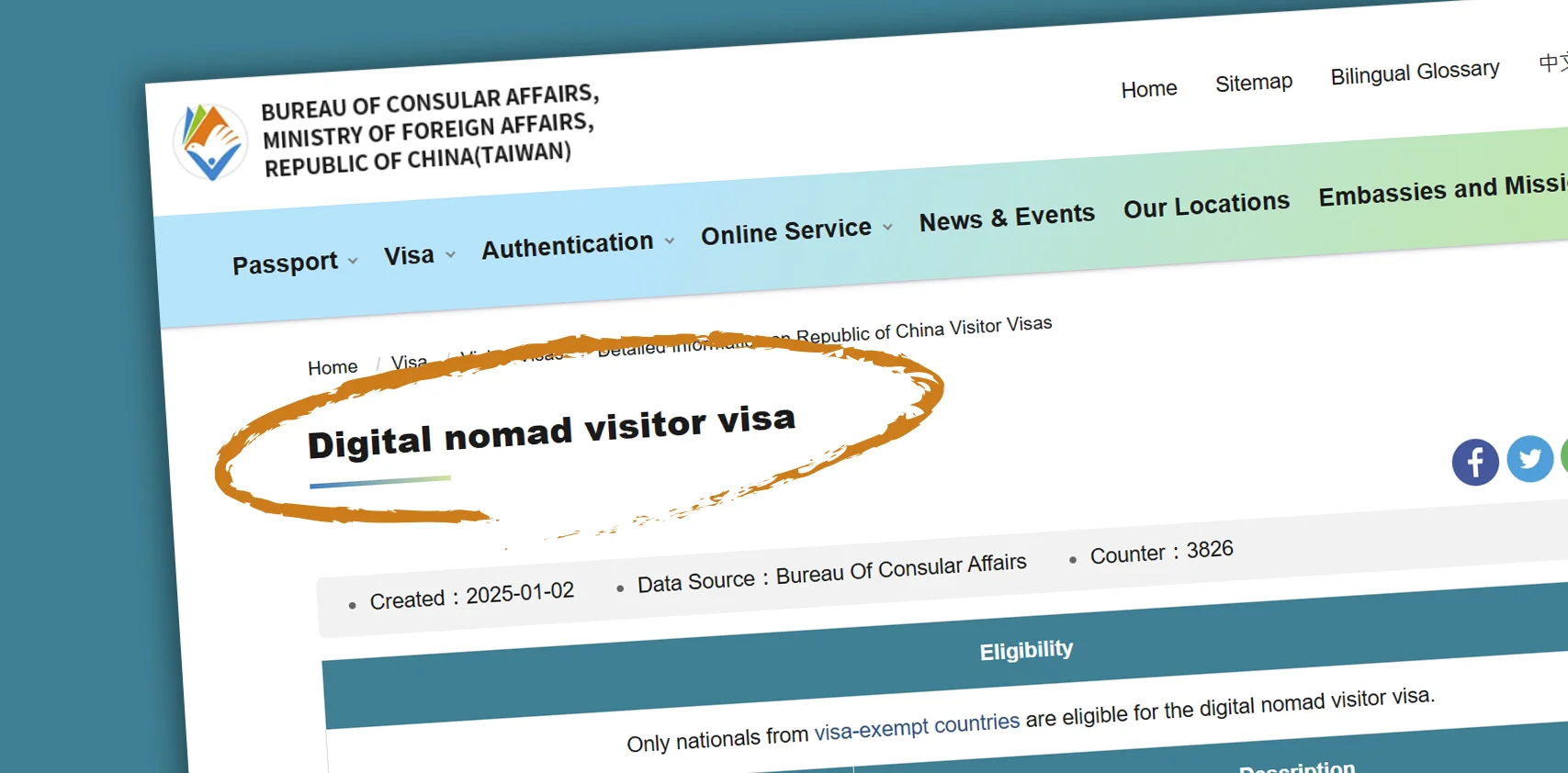
Taiwan Digital Nomad Visa is Here! Application Requirements and Required Documents All in One View!
Taiwan Digital Nomad Visa Officially Launched in January 2025! In the past, foreign digital nomads entering Taiwan under visa-free entry could only stay for up to 90 days. Now, with the Digital Nomad Visa, the maximum stay is extended to six months. Whether you are a freelancer or a remote worker employed by a foreign company, as long as you are from a visa-exempt country and meet the required salary, age, and work conditions, you can apply. According to the "Application Guidelines for Foreigners Applying for a Digital Nomad Stay Visa" published by the Bureau of Consular Affairs, Ministry of Foreign Affairs, here are the details for applying for the Digital Nomad Visa: Taiwan Digital Nomad Visa|Eligible Applicants Applicants must be citizens of a country that enjoys visa exemption status with the Republic of China(Taiwan). Taiwan Digital Nomad Visa|Required Documents Visa application form Two 2-inch color passport photos taken within the last six months (white background) Original passport and a photocopy (valid for at least six months) Proof of remote work(Personal resume and portfolio、Work contract、Completed Description of Intended Activities form) Additional supporting documents choose one of the following: (1)Previously issued Digital Nomad Visa from another country (2)Aged 30 or above, with an annual income of at least USD 40,000 in any of the past two years (3)Aged 20-30, with an annual income of at least USD 20,000 in any of the past two years Proof of regular bank deposits for the past six months, with an average monthly balance of at least USD 10,000 International health insurance certificate Other documents as required on a case-by-case basis Taiwan Digital Nomad Visa|How to Apply If you have not yet entered Taiwan, submit your application to an R.O.C. (Taiwan) overseas mission. If you are already in Taiwan, you can apply at the Bureau of Consular Affairs or one of the Central, Southwestern, Southern, or Eastern Taiwan Offices of the Ministry of Foreign Affairs (MOFA) at least 10 working days before your current stay expires. For detailed information, please refer to the "Application Guidelines for Foreigners Applying for a Digital Nomad Stay Visa" For more information on digital nomad life in Taiwan, check out: Taiwan Digital Nomad Guide | Visa, Currency Exchange, Weather, Internet All in One View
February 13, 2025

Taiwan Digital Nomad Guide | Visa, Currency Exchange, Weather, Internet All in One View
Located in East Asia, Taiwan has long been a popular destination for digital nomads. With its affordable cost of living, safe society, stable internet, affordable healthcare resources, and a welcoming attitude toward diverse cultures, Taiwan is highly favored by digital nomads. The Economist recently published the “The Global Liveability Index 2024”, where three Taiwanese cities—Taipei (ranked 66th), Kaohsiung (72nd), and Taichung (74th)—made it to the top tier of global cities. Taiwan also ranks among the top digital nomad destinations worldwide. If you're planning to become a digital nomad in Taiwan, this "Taiwan Digital Nomad Guide Series" will provide all the essential information you need. In this edition, we cover: Taiwan Nomad | Visa Details Taiwan Nomad | Travel Seasons Taiwan Nomad | Internet Recommendations Taiwan Nomad | Currency Exchange Methods Taiwan Nomad | Living Costs Taiwan Nomad | Emergency Situations Taiwan Nomad | Visa Details Foreign nationals coming to Taiwan typically enter using a visa-free entry or a tourist visa, allowing a maximum stay of 90 days. Taiwan now also offers a Digital Nomad Visa, which permits a stay of up to six months. For eligibility requirements and application procedures for Taiwan's Digital Nomad Visa, please refer to: Taiwan Digital Nomad Visa is Here! Application Requirements and Required Documents All in One View! Additionally, eligible individuals can apply for a "Taiwan Employment Gold Card", allowing a stay in Taiwan for one to three years. Here are the details: The Taiwan Employment Gold Card is a 4-in-1 card, that includes a resident visa, work permit, Alien Resident Certificate (ARC), and re-entry permit Holders can freely search for, take up, and change jobs within the validity period. Applicants must have a monthly salary of at least TWD 160,000 (from either domestic or foreign employers). High-skilled professionals in 11 fields, including Science & Technology, Economy, Education, Culture & Arts, Sport, Finance, Law, Architecture, National Defense, Digital, and Special cases recognized by the National Development Council, are eligible to apply. Photo from Taiwan Employment Gold Card Office Extended Reading: Taiwan "Employment Gold Card" for Digital Nomads:Steps on How to Apply for It Taiwan Nomad | Travel Seasons Taiwan experiences mild seasonal temperature changes, but the characteristics of each region are different. Be sure to check the weather before your trip. Spring (March - May): Warm and comfortable, with temperatures between 15°C and 25°C. Rainy season starts in May (May - June), bringing more rainfall. Summer (June - September): Hot and humid, with temperatures often exceeding 30°C, especially in July and August. Afternoon thunderstorms are common, and this is also typhoon season. Autumn (October - November): Cool and dry, with temperatures between 20°C and 28°C. This is the most pleasant season in Taiwan, ideal for outdoor activities and travel. Winter (December - February): Average temperatures between 16°C and 20°C, with larger temperature differences between day and night. Northern Taiwan is colder and more humid, with temperatures dropping to around 10°C during cold fronts. Northern Taiwan (Taipei, New Taipei, Keelung): Humid winters with frequent drizzle, hot summers with frequent afternoon thunderstorms. Central Taiwan (Taichung, Miaoli, Changhua): Relatively stable climate, dry year-round with moderate temperatures. Southern Taiwan (Kaohsiung, Tainan, Pingtung): Hot climate, with sunshine and little rainfall most of the year, also in Winter, the temperature in winter is about 19°C to 20°C. Eastern Taiwan (Hualien, Taitung): Humid and hot, with abundant sunshine throughout the year. However, the region is frequently affected by typhoons in summer. Taiwan Nomad | Internet Recommendations As a digital nomad in Taiwan, you can choose from three short-term internet solutions: buying a SIM card, using eSIM, or renting a Wi-Fi router. Here are the details: Buying a SIM Card Taiwan’s main telecom providers include Chunghwa Telecom, Taiwan Mobile, and FarEasTone, each offering prepaid Taiwan SIM cards for tourists (Tourist Taiwan SIM) and general prepaid SIM cards (Prepaid SIM). These are available at Taoyuan International Airport, Songshan Airport, train stations, telecom company stores, and convenience stores. It’s recommended to pre-order through the telecom provider’s website or travel platforms like KKday and Klook, and pick it up at one of the mentioned locations. Tourist Taiwan SIM: Available in 3-day, 5-day, 7-day, 10-day, 15-day, and 30-day plans. Insert the SIM card and start using it immediately, but it cannot be topped up with other plans and will expire automatically after the selected period. Prepaid SIM: Buy a general SIM card and top it up with plans based on your needs, such as daily, hourly, or data-limited plans. How to choose between the three telecom providers? Chunghwa Telecom: Best for outdoor activities in mountainous or island areas / faster and more stable internet. FarEasTone & Taiwan Mobile: Suitable for use in cities / lower prices and more discounts. Using eSIM eSIM is a virtual SIM card. If your phone supports eSIM, you can purchase a plan from a telecom provider and set it up directly on your phone, eliminating the hassle of switching physical SIM cards and the risk of losing them. Renting a Wi-Fi Router You can pre-order a Wi-Fi router from rental platforms like Rent WiFi in Taiwan, KKday, or Klook, and choose home delivery or pick up and return the goods at the airport or store. The advantage is that multiple devices can connect at once, and rental periods are very flexible. Taiwan Nomad | Currency Exchange Methods Photo by johan10 from iStock. Exchange money at the counter Taiwan’s major banks include Bank of Taiwan, Mega Bank, Cathay United Bank, E.SUN Bank, CTBC Bank, First Bank, SinoPac Bank, Hua Nan Bank, Taipei Fubon Bank, and Taishin Bank. You can visit any of these banks to exchange currency in person. Bank of Taiwan and Mega Bank also have service counters and ATMs at international airports. Here’s the detailed information: Taipei Songshan Airport Bank of Taiwan Arrival Hall: 06:00 - 22:30 Departure Hall: 06:00 - 07:30 Mega Bank Arrival Hall: 08:00 - 22:30 Departure Hall: 06:00 - 07:30 Taoyuan International Airport Bank of Taiwan / Mega Bank Service hours: 05:30 - 22:30, but each counter has different hours. It’s recommended to check online before your visit. Additionally, three locations offer 24-hour foreign exchange counters: Terminal 1 Arrival Hall, 1st floor, restricted area Terminal 1 Arrival Hall Terminal 2 Arrival Hall, 1st floor, restricted area Taichung Airport Bank of Taiwan Departure Hall: 06:00 - 23:00 Arrival Baggage Claim Area: 09:00 - 17:00 (adjusted based on arrival flight schedules) Kaohsiung Airport Bank of Taiwan 3rd Floor, Departure Hall: 05:30 - 16:30 1st Floor, Arrival Hall: 09:00 - 24:00 Mega Bank 3rd Floor, Departure Hall: 05:30 - 17:00 1st Floor, Arrival Hall: 09:00 - 21:00 Online Currency Exchange You can handle currency exchange in advance using the online exchange system or mobile banking apps from various banks, and pick up the cash in person at the designated bank. It is recommended to pre-arrange online exchange and select a bank based on the airport you’ll be arriving at to save time and hassle. However, only a few airport banks provide 24-hour services, and most banks outside the airport are open from 09:00 to 15:00. If you need to exchange currency during off-hours, foreign currency ATMs are also an option. Foreign Currency ATMs There are two types of foreign currency ATMs. The first type allows you to withdraw US dollars, Japanese yen, or Chinese yuan using any bank card (some ATMs from Bank of Taiwan and E.SUN Bank also offer Euros and Hong Kong dollars). The second type of machine, a foreign currency cash ATM, allows users to scan their passport or entry permit to instantly withdraw cash in US dollars, Japanese yen, or Chinese yuan. These ATMs are available 24/7 and can be found in airports, banks, major train stations, high-speed rail stations, tourist attractions, large hotels, shopping malls, or specific convenience stores. It’s best to check the locations and the available currencies beforehand. Extended Reading: What’s the most cost-effective way to exchange currency? Check out exchange methods, fee collection, and tips for saving money on domestic and international exchanges at once! Taiwan Nomad | Living Costs Many people wonder: Is the cost of living high for digital nomads in Taiwan? According to Numbeo, the monthly living cost for a single person (excluding rent) is around TWD 24,000 in Taiwan, TWD 38,000 in the U.S., and TWD 29,000 in Japan. However, actual expenses vary depending on the region. For example, the average monthly expense per person in Taipei last year was nearly TWD 34,000. In New Taipei City, Taichung, and Kaohsiung, it was around TWD 26,000. In Tainan, it was TWD 23,000, and in Hualien and Taitung in eastern Taiwan, it was TWD 21,000. If you want to experience the vibrant city life in the north but are worried about higher living costs, you can choose to live in more affordable areas such as New Taipei City and commute using convenient public transportation. Alternatively, Taichung is also a great option with excellent living conditions and moderate expenses. If you place more emphasis on enjoying a slower-paced lifestyle, the southern and eastern regions may be more suitable for you! Lover's Bridge in Tamsui District, New Taipei City(Photo by nevereverro from iStock.) Blue Highway Night View in Dadu District, Taichung City(Photo by bernie_photo from iStock.) Liyu Lake in Hualien County(Photo by GoranQ from iStock.) Taiwan Nomad | Emergency Situations Although Taiwan is generally safe with excellent law and order, there are still some emergency situations to be aware of: Health and Medical Emergencies Taiwan has many clinics and hospitals, and when you’re feeling unwell or injured, you can search for the nearest clinic or hospital. Foreign nationals with an Employment Gold Card can benefit from Taiwan’s National Health Insurance (NHI), while those with a general visa will need to pay for medical expenses themselves. The registration fee typically ranges from TWD 500 to TWD 1,500. In case of an emergency, you can call 119 for an ambulance. Emergency room fees are higher than regular consultation fees. Legal Disputes (e.g. theft, traffic accidents) Taiwan's emergency police number is 110. If you encounter lost property, traffic accidents, or any legal issues, be sure to call the police for assistance immediately! Earthquakes Taiwan is located on a seismic belt and experiences frequent minor earthquakes. It’s possible to encounter one or two major earthquakes (above magnitude 6.0) each year, especially in the east (Taitung, Hualien) and northeast (Yilan). Although Taiwan has excellent earthquake-resistant infrastructure, it’s important to stay alert and know how to protect yourself during an earthquake. Indoors: When an earthquake occurs, take cover under a sturdy table or in a corner, protecting your head with your hands. Avoid standing near windows to prevent injury from shattered glass. If you're in a tall building, do not use the elevator; remain in place until the shaking stops before evacuating. Outdoors: Quickly move away from buildings, utility poles, and billboards that could fall. Move to an open area. If driving during an earthquake, slow down and pull over. Stay in the car and wait for the earthquake to end. Listen to Government Announcements: After an earthquake, stay updated with announcements from the Central Weather Bureau or local government. You can track earthquake alerts, magnitude, and epicenter information through the Central Weather Bureau’s website, which will also provide warnings about aftershocks. Typhoons Taiwan is prone to typhoons from June to October, which can bring strong winds, heavy rain, flooding, and landslides. It’s essential to prepare ahead of time and stay alert during typhoon season. Before the Typhoon: Monitor forecasts from the Central Weather Bureau and prepare emergency supplies like enough food, water, lighting, batteries, fully charged power banks, medications, and cash. Check that doors and windows are secure, store potted plants indoors, and ensure drainage systems are clear. Avoid parking vehicles in low-lying areas. During the Typhoon: Stay inside a safe building and ensure windows and doors are tightly closed. Move valuable items to higher floors to prevent damage from flooding. Stay updated with the latest information from the government and weather bureau. In case of a power outage, use a mobile phone or flashlight instead of candles to avoid fire hazards. Avoid unnecessary travel, but if you must go out, check the road conditions in advance. -- Written and edited by / Irene Lin Follow the Digital Nomad Facebook fan page and stay updated with more recent articles on Instagram (@digital.nomad.press)!
November 5, 2024

Taiwan to Introduce 6 - Month Digital Nomad Visas
Taiwan is also set to launch a digital nomad visa! To attract international talent, Japan, South Korea, and Thailand have all introduced digital nomad visas. Recently, Taiwan government mentioned that Taiwan also plans to introduce a "Digital Nomad Visa" in the future, allowing international talent to come to Taiwan with the opportunity to stay longer. In the past, digital nomads usually came to Taiwan with a tourist visa or visa exemption, which allowed them to stay for up to 3 months. With the introduction of the "Digital Nomad Visa," digital nomads will be able to stay in Taiwan for up to 6 months. More details are still being worked out. Since the "Digital Nomad Visa" does not require legislative amendments, it can be quickly implemented after coordination with the Ministry of Foreign Affairs. The proposal is expected to be submitted in the next legislative session. In the past, Taiwan also introduced the "Employment Gold Card" policy for high-level foreign talent. The Employment Gold Card is a document that consolidates work permits, residence visas, foreign resident certificates, and re-entry permits into one, providing eligible foreign talents the flexibility to freely seek employment, work, and change jobs during its validity. The Employment Gold Card is valid for 1 to 3 years, depending on the applicant's preference, with the option to reapply upon expiration. The future introduction of the Digital Nomad Visa will further open the door, attracting more international talent to Taiwan.
August 15, 2024

Labor and Health Insurance for Freelancers in Taiwan: Professional Unions, National Pension, and Other Options
Labor and Health Insurance for Freelancers in Taiwan: Professional Unions, National Pension, and Other Options When you work for a company in Taiwan, your employer usually handles Labor Insurance and National Health Insurance for you. Once you become a freelancer, independent contractor, or self-employed professional, however, you need to understand how these systems work and decide how to maintain your own coverage. First, let us clarify the two systems: Labor Insurance is a social insurance program designed primarily for workers. It provides benefits for occupational injury, disability, old age, death, and other covered events. National Health Insurance (NHI) is Taiwan's compulsory health insurance system. Eligible residents must remain enrolled even when they are not employed by a company. Health insurance coverage must continue, but freelancers often wonder whether they should also maintain Labor Insurance. The main reasons are straightforward: No one can predict whether an accident or disability will interrupt their ability to work. Labor Insurance may provide financial protection when a covered event occurs. Labor Insurance can also provide old-age benefits after the insured person reaches the applicable retirement age and meets the eligibility requirements. In short, insurance is a way to reduce the financial impact of risks that may be difficult to absorb alone. 1. Four Ways Freelancers Can Handle Labor and Health Insurance Option 1: Enroll through an employer If you are genuinely employed by a company, the company should enroll you in the applicable insurance programs. The premium is normally shared among the insured person, the employer, and the government according to the relevant rules. Some freelancers ask a relative's or friend's company to enroll them even though no real employment relationship exists. This can create legal and eligibility risks. If the arrangement is not based on genuine employment, a future claim may be questioned, and the company may still ask the freelancer to cover the employer's share of the premium. Therefore, company-based enrollment should be used only when there is an actual employment relationship. Option 2: Establish your own business or company Another possibility is to register a business or company and become an insurance registration unit when the legal requirements are met. This route may make sense if you already need a formal business entity for contracts, invoicing, hiring, accounting, or tax planning. It is usually not efficient to establish a company solely for insurance because incorporation and ongoing administration involve additional costs, bookkeeping, filings, and compliance obligations. Business owners should also note that the rules for the responsible person of a company are not identical to those for an ordinary employee. Before making a decision, confirm the latest requirements with the Bureau of Labor Insurance, the National Health Insurance Administration, or a qualified accountant. Option 3: Join an occupational union Taiwan's Labor Union Act recognizes several types of labor unions. An occupational union is generally formed by workers in the same occupation within the same area. One of the services offered by many occupational unions is helping eligible members enroll in Labor Insurance and National Health Insurance. This is why many freelancers join an occupational union related to their actual work. However, an occupational union is not your employer. It does not have an employer-employee relationship with you and does not pay premiums in the same way an employer would. Members normally bear the required member share and union-related fees. Not everyone is eligible to enroll through an occupational union. Your work must generally match the union's occupational scope, and you must meet the statutory requirements. Examples may include: A person who regularly works for two or more employers that are not compulsory Labor Insurance registration units within a three-month period. A self-employed worker who independently performs labor or skilled work for compensation and does not hire paid workers to assist with that work. Eligibility should never be treated as a formality. If your actual occupation does not match the union's scope, your insured status or a future benefit claim may be challenged. Another important difference is the Labor Pension system. A regular employer generally contributes at least 6 percent of an employee's monthly wage to the employee's individual labor pension account. Occupational-union enrollment does not create an employer contribution. Freelancers therefore need a separate retirement savings plan. Option 4: Do not enroll in Labor Insurance and remain covered by National Pension Taiwan's National Pension Insurance is intended to provide basic social protection for eligible people who are not covered by Labor Insurance, Farmer Health Insurance, Government Employee and School Staff Insurance, or Military Personnel Insurance. In general, an eligible person aged 25 to under 65 who has household registration in Taiwan and is not covered by another qualifying social insurance program may be automatically enrolled in National Pension Insurance. Health insurance must still be handled separately, such as through dependent enrollment or the appropriate local administrative office when applicable. National Pension Insurance and Labor Insurance both provide certain old-age, disability, and survivor benefits, but their contribution methods, benefit calculations, and coverage are different. Choosing between them should not be based only on the monthly premium. 2. How to Choose an Occupational Union If occupational-union enrollment is suitable for you, consider the following points before joining. 1. The union must match your actual occupation This is the most important requirement. Choose a union whose occupational category genuinely reflects the work you perform. Joining an unrelated union simply because enrollment is convenient or inexpensive may lead to problems during an eligibility review or benefit claim. Geographic requirements may also apply, so confirm whether the union covers the area where you live or work. 2. Check the union's history and financial administration Before joining, look into how long the union has operated, whether its records and premium payments are properly managed, and how it handles member inquiries. You can also ask current members about the quality and reliability of its administration. Delayed or mishandled premium payments may affect members, so administrative stability matters more than promotional offers. 3. Compare fees and member services In addition to insurance-related work, unions may charge admission fees, recurring membership fees, or other administrative charges. Some also offer training, consultations, events, grants, or other member services. Ask for a complete fee schedule and make sure you understand what is included before applying. 3. Finding a Suitable Occupational Union You can consult the Ministry of Labor's labor union information and then contact unions related to your profession directly. When comparing unions, ask these questions: Does my actual work fall within your membership scope? What documents are required to prove my occupation? What are the admission, membership, and insurance-related fees? How is my insured salary determined and adjusted? How are premiums collected, and how can I verify that payments have been made? What should I do if I later become an employee, establish a company, hire workers, or stop freelancing? The original author of this article joined the Occupational Union of Online Media Workers because its membership scope matched the author's work, its customer service was responsive, and it offered a referral program. This is a personal experience rather than a universal recommendation. Your choice should be based on your own occupation, location, eligibility, fees, and the union's administrative quality. 4. Labor Insurance or National Pension: How Should You Choose? Comparing the two systems Labor Insurance and National Pension Insurance are separate systems. Labor Insurance is connected to employment or eligible occupational-union participation, while National Pension Insurance mainly covers eligible people who are not enrolled in other major social insurance programs. Benefit calculations are different Labor Insurance benefits are generally related to the insured salary and the insured period, subject to statutory formulas and limits. National Pension Insurance uses its own monthly insured amount and benefit formulas. This means that the system with the lower immediate premium is not necessarily the one that provides the protection you need. Consider disability, survivor, maternity, occupational injury, and old-age benefits as a whole. For an estimate, use the official calculators and guidance provided by Taiwan's Bureau of Labor Insurance. Because contribution brackets, premiums, and benefit formulas can change, confirm the current rules before making a long-term decision. Do not overlook retirement savings Labor Insurance old-age benefits and the Labor Pension are not the same thing. Employees may receive employer contributions to an individual Labor Pension account, but freelancers enrolled through an occupational union do not receive an employer's 6 percent contribution. If you are self-employed, you should create a separate retirement plan through regular saving and long-term investing appropriate to your risk tolerance. Social insurance should be treated as one layer of protection, not your entire retirement strategy. 5. Frequently Asked Questions Q1: How do I enroll through an occupational union? The exact process differs by union, but it usually includes the following steps: Contact a union related to your actual occupation. Submit identification and documents showing the nature of your work. Select or confirm the appropriate insured salary according to the rules. Review the insurance coverage, fees, and payment schedule. Pay the required admission, membership, and insurance fees. Ask the union when enrollment becomes effective and how to verify it. Some unions accept online applications, while others require an in-person visit. Q2: What insured salary should a freelancer choose? Freelance income may fluctuate, but your insured salary should reflect your actual monthly earnings under the applicable reporting rules. Do not deliberately report an unrealistically low amount simply to reduce premiums. An incorrect declaration may be adjusted after review and may affect contributions or benefits. If your income varies substantially, keep contracts, invoices, payment records, and other evidence of earnings. Ask the union or the Bureau of Labor Insurance how the current rules apply to your situation. Q3: Can I move from National Pension Insurance to Labor Insurance? Yes. If you later become eligible for Labor Insurance, you may enroll in Labor Insurance, and National Pension enrollment for the overlapping period will normally be handled according to the applicable rules. The insured periods under the two systems are recorded separately. In some circumstances, periods under both systems may be considered when determining eligibility for old-age benefits, while benefits are still calculated under each system's rules. Because the details depend on age, insured periods, and claim timing, consult the Bureau of Labor Insurance for an individual calculation. Q4: Can I enroll in National Health Insurance as a dependent? Possibly. If you meet the legal definition of a dependent and do not have a higher-priority enrollment status, you may be able to enroll through an eligible spouse or close family member. It is not a general-purpose option for every freelancer. The National Health Insurance Administration determines the correct enrollment category according to statutory priority rules. Q5: Should I establish a company just to obtain insurance? Usually not. A company may be appropriate when your business needs contracts, invoicing, employees, liability separation, or a formal operating structure. Establishing one only for insurance can create disproportionate accounting, tax, and compliance costs. 6. Conclusion Freelancers in Taiwan do not all have the same best option. The right arrangement depends on whether you have genuine employment, whether your work qualifies for occupational-union enrollment, whether you can enroll as a dependent for health insurance, whether National Pension Insurance applies to you, and whether your business already requires a registered entity. The most important principles are: Keep National Health Insurance enrollment continuous under the correct category. Use employer-based Labor Insurance only when a genuine employment relationship exists. Join an occupational union only when your actual work meets its membership scope. Remember that occupational-union enrollment does not include an employer Labor Pension contribution. Verify current contribution rates, insured salary brackets, and benefit rules with the relevant government agency. If you decide that Labor Insurance is appropriate and you are eligible, do not delay unnecessarily. Insurance periods accumulate over time, and gaps can affect future protection. Further Reading If you are deciding among occupational-union enrollment, dependent health-insurance enrollment, National Pension Insurance, and establishing a company, continue with How Do Freelancers Handle Labor and Health Insurance? Your Options When No Company Has Your Back. It compares the major routes, who each option is suitable for, the protection provided, and the main limitations. This article was republished from DR.DEAN (original Chinese article: How Should Freelancers Handle Labor and Health Insurance? Details for One-Person Businesses). Follow Digital Nomad Press on Facebook and Instagram for more articles and updates.
May 13, 2024

"Digital Nomad" Reader Submissions|Themes and Methods for Submission Revealed at Once
Are you on the digital nomad journey? Are you trying freelancing, remote work, or entrepreneurship? We sincerely invite you to share your experiences and stories to everyone! I. Submission Themes Feel free to share under themes such as digital nomadism, remote work, freelancing, entrepreneurship, personal branding, media management, overseas work, etc.: 1. Your Work Experience and Skills E.g., freelancing techniques, personal branding strategies, overseas job hunting experiences, etc. 2. Introducing Various Digital Tools Beneficial for Work and Life E.g., effective digital tools for managing remote teams. 3. Methods for Improving Work Efficiency and Time Management E.g., overcoming procrastination, enhancing efficiency in online meetings, etc. 4. Essential Knowledge on Work Visas, Payments, Cross-Border Financial Flow, Contract Signing, etc. 5. Sharing Experiences of Living in Different Places and Local Customs E.g., sharing information about local prices, culture, safety, etc. For more themes and content, please refer to the articles on the Digital Nomad official website. II. Submission Format Please send your submissions to digitalnomad@ftpm.com.tw, with the email subject titled "Digital Nomad Reader Submission: Please Fill in Article Title," and provide "Self-Introduction" and "Submission Article." 1. Self-Introduction To help us understand you better, please provide a self-introduction of about 150 words. 2. Submission Article Word Count: 1000 words. Language: Chinese or English are both acceptable. Submission File: Please provide a Google.doc cloud link with editing permissions enabled. Image Format: If you wish to provide images, please attach them to the email in .jpg format, along with captions and image sources. If there are copyright concerns regarding the images you provide, we will not use them. Contact Information: You can include your blog or social media links at the end of the article. We will create hyperlinks so that readers can get to know you better through these links. Reader submissions are unpaid, and the Digital Nomad editorial team reserves the right to decide whether to publish them. Titles may be adjusted, and content may be edited, with your consent, before publication. Due to the high volume of submissions, we will reply to your email within two weeks. Digital Nomad hopes to be a platform for digital nomads to exchange ideas. Your articles will be featured in Digital Nomad, and we will also promote them through Facebook and Instagram to help you gain visibility and explore more collaboration opportunities. The Digital Nomad team also hopes to use this opportunity to collaborate more deeply with outstanding creators in various aspects. Welcome to submit and share your journey on the digital nomad path. We look forward to the opportunity to exchange and learn together.
April 12, 2024

Podcast "Digital Nomad" | “Lifehacker" Raymond: Improve Work Efficiency by Experimenting on Yourself First!
Do you ever feel like life is overwhelming, with a mountain of tasks piling up, never enough time, and constantly forgetting things? Do you also find that the software tools available on the market aren't useful, or you're unsure how to make the best use of them? Raymond, founder of the self-media brand "雷蒙三十 Lifehacker", may be the most systematic, organized, and even "technological" digital nomad I've ever encountered. For instance, he uses Notion, ChatGPT, or various computer software to enhance his work efficiency and manage effectively. He has a variety of smart devices on his computer desk and at home to optimize his life. He truly integrates the word "digital" into his lifestyle. In fact, if you ask Raymond casually about his expenses for the whole year of 2016 or which project had the highest expenditure, or where certain collaboration data from five years ago is stored, he can immediately find the answers amidst a vast amount of data just by opening his computer. Reflecting on the past, Raymond started freelancing as a student in university to earn tuition and living expenses. Despite being a student during the day with 10 hours filled with exams and classes, he began to "systemize" his work and life due to limited time and numerous tasks. Three years ago, Raymond founded the self-media brand "雷蒙三十 Lifehacker" to share various methods of improving work efficiency, self-management, and unpacking digital tools, which gained much popularity among readers. His online course "Notion 線上訓練營 "(Notion Training Camp) even accumulated over ten thousand registrations. Raymond jokingly says his memory is very poor. His ability to manage his work and life systematically and efficiently lies in finding the "right" tools and methods that suit him best! Especially as a digital nomad, when you have a better grasp of your work and life, it's crucial to manage your life well. So, what are the best tools and methods for yourself? This article summarizes them for you! First, How to Be Effective? Try Experimenting! Many people aim to enhance their productivity and efficiency by learning from successful individuals, yet they find those methods ineffective. For instance, you might have seen media reports about Mark Zuckerberg or Steve Jobs, who are productive and efficient due to early rising. Consequently, you attempt to emulate their practices by trying to wake up early, only to find yourself unable to do so or feeling groggy, leading to even lower efficiency. Raymond emphasizes: "You don't have to follow mainstream methods; personalize your approach instead!" During college, Raymond heard about the notion that "early risers are more productive," but is it true? He decided to experiment and find out! For a month, he woke up at 7 a.m. every day, and for another month, he slept until 3 a.m. and woke up at 10 a.m., documenting his work mood, focus, and other factors daily. And then? He discovered that he was naturally a night owl, achieving better focus and productivity at night. "Early rising for productivity" didn't apply to him, and he found the most suitable working hours for himself. Raymond suggests, "To find the method that suits you best, experiment and keep records, rather than adhering to mainstream definitions of 'how things should be done' or methods used by successful individuals!" You can also refer to Raymond's articles about Lifehacker to gain a better understanding of how to establish a systematized life that suits you. Second, The Key to Choosing Tools Lies in "Goals" Many people use tools like iPads or various life management software to organize tasks, but they often give up midway or find them ineffective. How can you find the most suitable and effective tools for yourself? Raymond suggests starting with a blank sheet of paper and jotting down everything you do from waking up in the morning to going to bed at night. It could be a work flowchart or a mind map, nothing too complicated. Then, review your day. The key to choosing tools is to start from your needs and the goals you want to achieve. For example, if you enjoy reading articles online in the morning and often have many tabs open, wanting to manage your pages and data efficiently, you can use management tools or RSS to integrate information from different websites. "Identify what each work or life need is, and then find the corresponding tools. I believe this is the initial point of solving the problem!" says Raymond. Otherwise, when you have too many tools, you'll have to remember what Tool A is for, and what Tool B is for, leading to chaos in your life. "Your brain is meant for problem-solving, thinking, and creating, not for memorizing and storing information!" Raymond says. Trimming the fat, identifying your true needs, and using tools and methods that suit you can help you establish a more systematized life. If you're interested in Raymond's digital nomad journey and methods for systematic life management, feel free to listen to "JB's Small Talk" Digital Nomad SP1: Freelancers Need to Construct Personalized Systems for Long-term Balance Between Income and Freedom | Interview with "雷蒙三十 Lifehacker" Raymond. -- Follow the Digital Nomad Facebook fan page and stay updated with more recent articles on Instagram (@digital.nomad.press)!
March 21, 2024

BI Analyst Angel Chen Exclusive Interview | The Value of Digital Nomadism Lies in "Choosing" the Lifestyle You Want
"In my digital nomad journey, I've met many extraordinary people. For instance, when I was in Hainan, I had a friend from Beijing who only worked about half the year. During the winter, he did marketing at a ski resort, and the rest of the time, he surfed in Hainan." As I expressed my surprise, Angel on the other end of the video call continued, "Yes, I was also like, 'Wow, is that even possible?'" Currently working as a Business Intelligence Analyst in a Singaporean company, Angel has been a digital nomad for about two years. Passionate about surfing, she has lived not only in Yilan and Taitung but also in cities such as Hainan in China, Chiang Mai in Thailand, and Bali in Indonesia. A few weeks before the interview, she embarked on a long-awaited journey to Sri Lanka alone with her backpack. At the time of the interview, she had returned to her "nomadic hub" in Bali. Talking about her nomadic life, she smiled and mentioned that she always loved traveling. Therefore, even with a nine-to-five job with demanding responsibilities, she found immense joy in the nomadic lifestyle. However, as her travel experiences expanded and she met more people, she realized that her happiness didn't solely stem from traveling itself. Delving deeper, she discovered that digital nomadism created a larger space than before, enabling people to freely "choose" the kind of life they want. Don't Let "Nomadism" Limit You; Life Can Be Diverse When discussing "digital nomadism," many people often have a misconception that it means constantly moving from place to place. But according to Angel, we don't need to be restricted by terminologies. The proclaimed freedom of the nomadic lifestyle offers various possibilities. "Some people like frequent changes of location, finding it refreshing, while others, like me, prefer staying in one place for a longer period, maybe spending a few months deeply exploring a destination. Some people can travel, but they choose to stay in Taiwan and travel occasionally," she explained. For her, these are all valid options. Some might wonder if being a digital nomad means a decrease in income. After all, the conventional perception of "success" often involves working in modern, tidy offices rather than traveling around. However, Angel suggests otherwise. With the right career strategies during nomadic life, it's entirely plausible to maintain or even increase one's income compared to before. Understanding digital nomadism in this light, it's not difficult to comprehend: It doesn't signify one "ideal" way of living but rather prompts individuals to contemplate the kind of life they truly desire and make choices accordingly. Angel working remotely by the beach. (Photo from Angel) "Moreover, embarking on nomadic life has exposed me to various lifestyles, expanding my imagination about life," Angel added. She elaborated that after graduating from university, she worked in Shanghai. In the fast-paced metropolitan city, her perception of what life should be like was similar to that of most people—working in tech giants or internet companies, earning a substantial income, and climbing up the career ladder. However, after embracing the nomadic lifestyle, she met many new friends from different backgrounds and countries during her journeys. She mentioned a few examples: Friend A, who works only half the year, spending the winter working at a ski resort and the rest of the time surfing in Hainan; Friend B, who quit her job in the tourism industry to run a homestay in Taitung, Taiwan; and Friend C, who moved from Spain to Indonesia simply because they loved the lifestyle in Bali. "I used to believe there was only one way to live life, but now I realize there are numerous possibilities. Whether one focuses on their career or pursues their interests, as long as their income supports the life they desire, it's the most important and fulfilling choice," Angel concluded. Choices Always Come with "Costs"; Accept Reality and Find Solutions Although Angel has gained a lot during her nomadic journey, she also acknowledges that every choice comes with its own set of costs. For her, there are two significant costs she feels in her current lifestyle: 1.It's challenging to establish stable new relationships because she typically stays in one place for only a few months. 2.Due to spending long periods away from Taiwan, she naturally has less contact with her old friends. However, over the past two years, she has developed coping mechanisms for these challenges. Regarding building stable relationships, she gradually reduced engagement in social activities that she wasn't good at or fond of, such as parties where she had to chat with large groups of people at once. Instead, she focused on connecting with like-minded individuals through shared interests like surfing. This not only provided surfing companions but also fostered deeper interactions and friendships. She also shared a memorable experience from her nomadic journey: "Last year, I celebrated my 30th birthday in Bali. I went diving with a Spanish roommate who brought a slate underwater with 'Happy Birthday Angel' written on it. Looking back, I was really touched. I never expected to make such close friends during my solo nomadic journey, let alone celebrate my birthday in such a surprising way." The Spanish roommate surprises Angel with a "birthday message" underwater. (Photo from Angel) Angel (front right) poses with roommates from Russia, Germany, New Zealand, and Australia in Bali. (Photo from Angel) Regarding the second challenge—reduced contact with old friends—her approach is to make the most of opportunities to meet with friends when she returns to Taiwan. After all, as adults, everyone has their own lives, and actively inviting important friends to hang out is more practical than waiting for them to reach out. Making "Choices" Rationally: Consider 5 Self-Assessment Aspects + 6 Nomadic Destination Considerations After weighing the feasibility of your job conditions, if you have a nomadic plan similar to Angel's, she offers five aspects for further consideration: What kind of travel/lifestyle suits me: Do I prefer frequent movement? Staying in one city for a few months before moving? Or mostly staying in Taiwan and traveling occasionally? Am I capable of living independently: Can I handle everyday tasks (like laundry, cooking, etc.) by myself? How capable am I of traveling alone: Can I solve various problems during travel alone? Is my language Do I have the ability to be alone: Does being alone make me uncomfortable, or do I enjoy it? How can I make friends: Do I enjoy participating in social activities? Or how do I plan to make friends during my travels? It's important to note that the implications of these five aspects are not "I can't do it, so I can't be a nomad"; rather, they help evaluate the corresponding skill requirements based on the type of nomadic lifestyle one is suited for or desires. If you currently don't meet the requirements, how can you enhance or adjust your travel/lifestyle? If you're unsure about some aspects, such as solo travel experience, you can start with minimal endeavors (like short-term trips) to test the waters. In addition to pre-departure assessments and improvements, when it comes to choosing the first nomadic destination, Angel shares her approach: "I think the priority is to determine whether I'm interested in this city and if there are places I want to explore here." Then, she evaluates factors such as internet stability, cost of living, safety, and visa requirements (including application difficulty and duration of stay). You can find this information on nomadic websites like Nomad List, or you can search using keywords like "city" and "digital nomad." "Besides, time zone differences are also crucial," Angel added. Although she wishes to nomad in Europe, she considers her current job requiring frequent collaboration with colleagues in Singapore, which might be inconvenient in different time zones. Therefore, she temporarily keeps this wish in mind, waiting for a time when it can be realized in the future. Thinking about the future, Angel said, "Nomadic life has brought me immense happiness. I may not stay in my current job forever, but I will find ways to maintain this lifestyle that I love." For friends who have been contemplating nomadism but haven't taken action yet, she encourages with a bright smile, "Just do it! After all, the happiness I currently enjoy also comes from the 'choice' I made two years ago, mixed with caution and a little impulsiveness." If you're curious about Angel's digital nomad journey, you can also refer to "JB's Small Talk." -- Follow the Digital Nomad Facebook fan page and stay updated with more recent articles on Instagram (@digital.nomad.press)!
March 12, 2024

3 Special Experiences Brought by Freelancing|You Should Try It At Least Once in Your Lifetime!
For many, the term "entrepreneurship" embodies dreams and passion. The startup stories of Apple, Google, and Tesla have become epics and legends of our time, akin to the clarion call of adventure, urging the brave to embark on risky ventures. However, among the millions of workers in Taiwan, only a minority ultimately choose entrepreneurship. For most of us, even after graduation, we opt to join companies to utilize our skills. However, today, I want to persuade you of one thing: even if entrepreneurship isn't your choice, I still recommend trying freelancing or earning some extra income outside your regular job, at least once. Because it will bring you many unique and interesting experiences, some of which could even pave the way for your future career. 1. Experience of Flying Solo There's a documentary about Air Force pilot training called "Taiwan's Elite Warriors :Fighter Pilot", which I highly recommend. Regardless of how many flights rookie pilots take under the guidance of instructors, they must ultimately pass the test of "solo flight" to become true pilots. Many professions are similar. For instance, a surgeon can only truly become a proficient doctor when they can operate independently. It's like when we were kids learning to ride bicycles; no matter how stable our rides were with training wheels, it wasn't until the day the adults removed them that we could proudly say, "I can ride a bike!" Similarly, even if you always accomplish your missions at work, have you ever wondered, if you didn't have a boss or supervisor guiding you, could you solve a problem from start to finish or produce an output? I suggest you frequently ponder this because more and more companies are particularly interested in whether job applicants have the ability to "work independently" or even "make independent decisions," which has almost become a standard interview question. Unless you never have to look for a job again in your life, you'll have to prove to others that even without an "instructor" or "training wheels," you can still independently create value. My first freelancing experience was being a lecturer for a company. At that time, I had experience giving lectures within the company to my colleagues. Later, a friend asked me to give lectures to the employees and the boss of a small company. I thought it wouldn't be a big deal, just revisiting my previous PowerPoint presentations, but after agreeing, I realized that when I used to give lectures within the company, everything from timing, location, venue equipment, attendees, notifications, and tracking results was arranged by supervisors and colleagues. The learners also knew each other well. Many "invisible" tasks and responsibilities were taken care of by others. It wasn't until this freelancing gig that I truly felt the thrill of "flying solo." Despite the immense pressure, I grew immensely. Nowadays, many companies require job seekers to have the ability to "work independently," especially for positions involving "remote work." If you have had several successful experiences of freelancing independently, it can definitely serve as a strong testament to your capabilities. 2. Experience of Market Value I remember my first freelancing gig as a lecturer, where I charged an hourly rate of NT$ 4,500. For someone under 30 years old with no professional teaching experience, this was quite high. After successfully completing the project, I realized: People are willing to pay NT$ 4,500 per hour for my time! I quickly compared this to my hourly "rate" at the company, which was only a little over NT$ 200.NT$ 4,500 compared to NT$ 200, a difference of 22.5 times - this stark contrast left me astonished! This led to a new realization. I thought, if I have a market value of NT$ 4,500 per hour, why would I accept a company's hourly wage of just over NT$ 200? You might think, NT$ 4,500 per hour gigs aren't available every day, but the company's monthly salary is stable! But what's more important, I believe, is that by working at the company, I'm "earning less" byNT$ 4,300 per hour. So, I must "earn it back" from elsewhere; otherwise, working in the company would be too costly! How do you "earn back the difference"? Certainly not by stealing office supplies or tea bags! It's by diligently learning skills, accumulating experience and contacts, obtaining these intangible yet valuable company resources, so that in the future, there's a better chance of selling yourself for NT$ 4,500 or even higher per hour. So, I would suggest trying freelancing independently to understand how much you're worth from the perspective of the market? This way, the next time you complain about low company salaries or aim for a higher pay, you'll have more confidence! And when you plan to switch jobs, you'll have a more precise understanding of your market value! 3. Experience in Business Operations Working in a company, especially in highly specialized roles in large corporations, often creates a sense of dependence. Because each of us only does our part, and there's often an SOP to follow, we can become mere cogs in a big machine, losing our ability to solve problems and be creative. If being a little screw all your life brings you happiness, that's fine. But in this era, where companies have shorter lifespans, and entire industries rapidly decline, if you're a young person under 40, you must think carefully about how to support yourself and your family in the future. Although Taiwan's legal retirement age is 65, in recent years, people in their early 50s have trouble finding jobs, and there are more and more "retirees." If these "old screws" have the ability to operate a small personal business independently, wouldn't that provide more career security? In recent years, I've seen many seniors around me who were high-ranking executives in companies, receiving retirement benefits, wanting to start small businesses (usually cafes or food stalls), but most of them failed. "I led hundreds of people in a listed company, expanded business globally, why would opening a small coffee shop be difficult for me?" However, "professionalism" and "entrepreneurship," though only differing by a word, are entirely different games. Being good at management is going from 1 to 100, while starting a business is going from 0 to 1. There are too many different know-hows and challenges between the two, being proficient in one doesn't guarantee an easy transition to the other. Therefore, for office workers within the stable framework of a company, if you can allocate some extra time to try "freelancing," experience the feeling of going from 0 to 1, face the market alone, and take on the new role of "principal and bell ringer," you'll be building strength for your career. Even if you face career risks in middle age, you'll have more chips to deal with it. Conclusion Most office workers, when they hear "freelancing," first think of "earning money," and if the money isn't much, they lose interest. But what I want to say is, even if you're not interested in earning extra income and have no intention of starting a business, just want to be a professional office worker, the rare experiences brought by freelancing, such as "flying solo," "market value," and "business operations," will help build excellent assets and moats for your career, making it worth trying when you have some free time! -- Follow the Digital Nomad Facebook fan page and stay updated with more recent articles on Instagram (@digital.nomad.press)!
February 27, 2024

Digital Nomad in Chiang Mai! 8 Recommended Shared Spaces
Many novice digital nomads choose Chiang Mai as their first destination for remote work. Not only is the cost of living low and the city safe, but it also offers abundant leisure and entertainment options, making it a favorite among digital nomads. Read more:Capital of Digital Nomads! Why is Chiang Mai the Best Choice for Remote Workers? Therefore, this article will recommend 8 places in Chiang Mai that are suitable for digital nomads to work and live. The Social Club The Social Club is a hotel located in Chiang Mai, offering complimentary WiFi, air-conditioned rooms, private parking, and room service. Digital nomads can utilize indoor and outdoor shared workspace, meeting rooms, and enjoy complimentary coffee and tea from 9 am to 9 pm. 在 Instagram 查看這則貼文 The Social Club - Coliving & Coworking Space(@thesocialclub.asia)分享的貼文 Punspace Punspace is located in the heart of Chiang Mai's old city, close to many cultural landmarks and eateries. It offers high-speed internet, comfortable desks and chairs, coffee machines, shower facilities, lockers, and other amenities, allowing you to focus on your work. Punspace also fosters a friendly community where you can network and collaborate with people from diverse fields. 在 Instagram 查看這則貼文 Punspace(@punspace)分享的貼文 Yellow Co-Working Space Yellow Co-Working Space is a shared workspace focused on Web3 and blockchain, providing digital nomads and remote workers with communal and private office spaces, meeting rooms, event areas, soundproof Skype rooms, YouTube media rooms, and other modern amenities, entertainment zones, and collaborative facilities. 在 Instagram 查看這則貼文 Yellow Coworking(@yellowcoworking)分享的貼文 Alt_ChiangMai It's a shared space that combines accommodation with workspaces conveniently located downstairs. The venue is clean yet not overcrowded, making it easy to meet many digital nomads here. Regular activities such as yoga, ice baths, and travel excursions are organized, facilitating interaction and learning with people from different countries and fields. 在 Instagram 查看這則貼文 Alt_ChiangMai(@alt_chiangmai)分享的貼文 Akha Ama Phrasingh It's a café located in the old city of Chiang Mai. While it's not a shared workspace per se, many digital nomads still come here to work because of the free charging and WiFi. With two seating areas spread across two floors, it's suitable for both work and leisure. In addition to coffee, they offer various desserts and tea, providing you with a cool sanctuary amidst the heat of Chiang Mai. 在 Instagram 查看這則貼文 Akha Ama Coffee Roasters(@akhaamacoffee)分享的貼文 Life Space Located in the heart of Chiang Mai, this place offers convenient transportation. There are spacious and bright work areas, quiet reading rooms, fast and stable internet, complimentary coffee and tea, comfortable sofas and hammocks, as well as a small garden. You can enjoy the freedom and flexibility of working here. Additionally, they provide multi-person meeting rooms, with regular meeting rooms accommodating up to 4 people and a training room accommodating more than 10 people. 在 Instagram 查看這則貼文 Life Space(@lifespaceth)分享的貼文 One Workspace One Workspace offers digital nomads shared workspaces, meeting rooms, event spaces, and virtual offices. There's also a café called Tora Bake, serving delicious coffee and pastries, allowing you to relax during breaks from work. 在 Instagram 查看這則貼文 OneWorkspace_Chiangmai(@oneworkspace2021)分享的貼文 Hub53 Although Hub53 is located further away from the old city, it offers affordable prices and amenities such as a shared kitchen and laundry room. The shared space has everything you need, and there are user-exclusive groups where you can organize outings and activities. 在 Instagram 查看這則貼文 Hub53 Coworking & Coliving(@hub53coworking)分享的貼文 -- Follow the Digital Nomad Facebook fan page and stay updated with more recent articles on Instagram (@digital.nomad.press)!
February 23, 2024
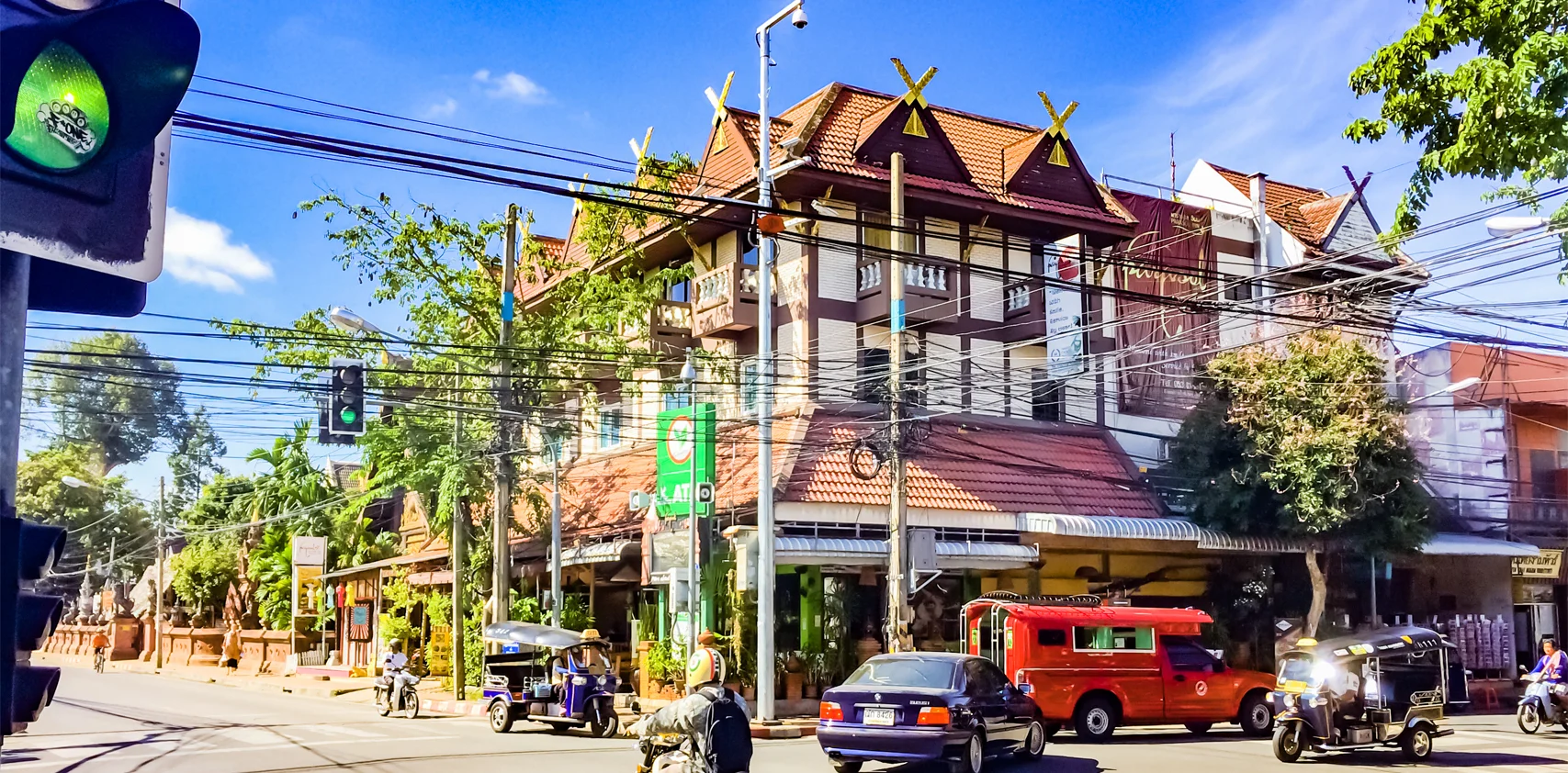
Capital of Digital Nomads! Why is Chiang Mai the Best Choice for Remote Workers?
Stepping into a café in Chiang Mai, you'll find it bustling with remote workers from all over the world. They order a cup of coffee, open their laptops, and begin remote work. Chiang Mai is often hailed as the 'Capital of Digital Nomads,' the premier destination for remote workers and freelancers worldwide. In numerous surveys conducted by media outlets and organizations, Chiang Mai consistently ranks among the top cities favored by digital nomads. Many newcomers to the digital nomad lifestyle choose Chiang Mai as their first stop, and even seasoned digital nomads find themselves drawn back to this city time and again. But why is Chiang Mai so popular? Here are five key reasons that explain why! 1. Low Cost of Living Living in Chiang Mai comes with a remarkably low cost of living. According to statistics from Nomad List , the overall monthly living expenses in Chiang Mai are approximately $980 USD. When it comes to accommodation, you can typically find high-value hotels ranging from $7 to 15 USD per day. Apart from hostels, there are also co-living spaces, short-term apartments, and even upscale condominiums with amenities like swimming pools and gyms available for $320 to 650 USD per month, offering a comfortable living experience. For more detailed pricing information, you can refer to NUMBEO. 2. Safety Chiang Mai boasts excellent safety ratings. In the NUMBEO "Safety Index by City 2024" survey of 333 cities worldwide, Chiang Mai ranked 22, surpassing Singapore at 23 and Tokyo at 25. 3. Abundant Leisure and Entertainment Options Apart from its rich natural and historical attractions, Chiang Mai offers a vibrant nightlife scene. In addition to night markets, numerous bars attract travelers and digital nomads from around the world to socialize and enjoy drinks. Furthermore, many digital nomads organize activities such as sightseeing, jogging, rock climbing, and even boxing, providing ample opportunities for networking and sharing experiences. In Chiang Mai, there's never a shortage of things to do after work! 4. Excellent Working Environment Often dubbed the "Capital of Digital Nomads," Chiang Mai boasts a friendly environment for remote workers, with both reliable internet connections and conducive workspaces. Many cafes offer stable Wi-Fi and power outlets, while numerous coworking spaces, some of which are open 24 hours, cater specifically to digital nomads. Additionally, many accommodations provide dedicated office spaces and meeting rooms for digital nomads, ensuring that finding a place to work is never a concern. 5. Digital Nomad Networking Chiang Mai attracts digital nomads from around the globe, providing ample opportunities to meet and connect with individuals from different countries. Here, you can exchange experiences, seek advice on unfamiliar topics, and build friendships with fellow digital nomads. There are also various digital nomad communities and groups on social media platforms dedicated to Chiang Mai, offering insights into local life and facilitating networking opportunities. Whether you're a novice or seasoned digital nomad, a visit to Chiang Mai, Thailand, is definitely worthwhile! -- Follow the Digital Nomad Facebook fan page and stay updated with more recent articles on Instagram (@digital.nomad.press)!
February 22, 2024

The Downsides of Digital Nomadism! 3 Real Challenges You Should Know
Leaving the office behind and taking only your computer, the world becomes your workspace. This digital nomad lifestyle has long been an aspiration for many, offering a blend of work and life where individuals no longer feel like cogs in a machine but instead have greater control over their lives. But did you know? Many digital nomads eventually choose to return to conventional workplaces. There's a plethora of struggles shared by digital nomads online, shedding light on the reality of their journey, which might not always align with the romanticized image. If you're considering embarking on a digital nomad lifestyle, it's worth understanding the three main challenges frequently encountered by digital nomads. 1. Long-Term Career Development Before diving into digital nomadism, your first thought might be about your career. Planning for long-term career development has long been a concern for those interested in committing to the digital nomad lifestyle, and perhaps it's the most crucial issue. If you have a clear career plan and are still an employee of a company, merely offering your expertise through remote work might alleviate some of the stress. However, some choose to leave their current jobs altogether to pursue freelance work or create their own brands while diving into digital nomadism. This decision often brings to the forefront the issue of unstable income. Can your financial situation handle the uncertainty of project availability and fluctuating income? Moreover, how will this freelance work or brand development contribute to your long-term career growth? These are questions you must contemplate. Many digital nomads leave traditional employment structures to work on a freelance basis or establish their own brands. However, when they encounter career roadblocks or struggle with unstable and slow salary growth, they may become more anxious and ultimately choose to return to traditional workplaces. If you're interested in this topic, you can refer to "Stable Job vs. High-Paying Freelance: Which Is a Better Career Choice?" to help you think through your decision. You can also listen to the "Digital Nomad" series on the podcast "JB's Small Talk." We've interviewed many digital nomads who share their experiences on how to start digital nomadism and plan for long-term careers, which could be valuable references for you. 2. Work Isn't Necessarily Easier Many assume that digital nomadism involves leisurely working at a beachside café while enjoying the ocean view, with thoughts of playtime after work. However, the reality is often quite different. Digital nomads still have work to do, and often the workload is similar to or even greater than when they were employed in a traditional office setting. Without effective time management skills and with constant distractions from the desire to travel, tasks may remain unfinished or not done well. Business matters can also interrupt leisure time during travel, leaving them with a sense of being pulled in two directions. When traveling to different locations, digital nomads may also have to adjust to different time zones to accommodate various companies or clients, leading to further confusion in balancing work and life. Many digital nomads share in online communities that the work pressure of digital nomadism isn't necessarily lower. Some even have to deal with the instability of freelancing or entrepreneurship, making the overall experience not necessarily easier. This is one of the reasons why some ultimately return to traditional workplaces. If work is equally demanding, they might as well return to the stability of a traditional job. In digital nomadism, time management skills are especially crucial. You can refer to articles on time management, which may be helpful to you. 3. Sense of Isolation The digital nomad lifestyle may not be as joyous as you imagine, with the opportunity to make friends from around the world through travel. Since most digital nomads work remotely alone, even if they're employees of a company, they may not be very familiar with their colleagues due to long-distance work. When encountering problems or seeking someone to talk to, it can be challenging to find someone, leading to a profound sense of loneliness. While traveling and working, you may meet other digital nomads along the way. However, these encounters are often fleeting, making it difficult to form deep friendships. Some digital nomads establish communities to connect with others, work together, and maintain contact. They may also organize regular workshops to share experiences. Therefore, before embarking on digital nomadism, consider joining such communities. Not only will you meet more digital nomads, but you'll also build connections. You can also refer to the article "Remote Work Socializing: 7 Ways to Never Be an Outsider Again" to help you make friends more smoothly. These are the realities behind the digital nomad lifestyle shared by many digital nomads. Before starting your journey, evaluate whether your situation is suitable for digital nomadism and seek advice from other nomads, which will be more helpful to you! -- Follow the Digital Nomad Facebook fan page and stay updated with more recent articles on Instagram (@digital.nomad.press)!
February 22, 2024