


Career Insights
30 posts
Sort by Latest

The Midlife Crisis of Digital Nomadism: When Freedom Becomes Its Own Trap
You remember the first time you opened your laptop in a Chiang Mai café, don't you? Sunshine pouring in, a latte for less than two dollars, your project on screen, and a single thought in your head: "I'm never going back to an office." That feeling was real. The problem is, three years later you find yourself in a Lisbon café doing roughly the same thing, drinking roughly the same coffee—except the latte now costs three euros and the questions running through your mind are completely different. The first two years of digital nomadism are a honeymoon. You learn to manage meetings across time zones, to fit your life into a carry-on, to compare cities on Nomad List like a sommelier comparing vintages. These skills make you feel like you've cracked a code that cubicle workers haven't. But by year three, four, five, an uncomfortable thought creeps in: you're free, but you're not moving forward. According to MBO Partners' 2025 Digital Nomad Trends Report, the top challenges nomads face are burnout (23%), time zone friction (21%), and loneliness (19%). A 2023 survey by Passport Photo Online is even blunter—77% of digital nomads have experienced professional burnout at least once, with the figure climbing to 80% among entrepreneurs. These aren't outliers. They're structural. Structural problem one: your career has no "up." In a traditional job, you have titles, promotions, and salary negotiations that serve as benchmarks. You might hate the game, but at least it gives you coordinates for measuring growth. Digital nomads don't have this. You might go from a freelancer charging $40 an hour to one charging $80, but fundamentally you're still one person selling time. Nobody's going to write "Congratulations on your promotion to Senior Digital Nomad" on LinkedIn, because that title doesn't exist. Your income may have grown, but your operating model, client relationships, and daily routine are virtually unchanged. You're not climbing a ladder. You're sliding across a flat surface. Structural problem two: your social connections reset constantly. The friends you made at a co-working space in Bali scatter within three months. You follow each other on Instagram, exchange occasional likes, but meaningful conversations go from daily to monthly to annual. Human intimacy requires time and repeated contact, and the essence of nomadism is constant movement. By year five, you know people everywhere but nobody is waiting for you to come home anywhere. Structural problem three: you have no safety net. No employer-sponsored health insurance, no pension contributions, no HR department to call when things go sideways. You might have international health coverage, but that's the bare minimum. A major illness, a client pulling the plug, a political crisis in the country you're staying in—you handle it all yourself. You are your own HR, CFO, and therapist. At twenty-eight, that sounds empowering. At thirty-five, it starts to feel like a liability. These problems aren't bugs in the nomadic lifestyle. They're side effects of its best feature. You chose freedom, and freedom's price is the absence of structure. The question isn't whether to keep nomading—it's whether you're conscious of the cost and willing to build your own scaffolding. The nomads I've seen navigate the "midlife crisis" successfully tend to take one of three paths. Path one: base-camp nomadism. It sounds like an oxymoron, but it's the most pragmatic solution. You pick a home base—your favorite city, the most tax-friendly jurisdiction, or wherever your partner and family are—and orbit around it. You stop being "a person with no home" and become "a person whose home is somewhere, but who's often not there." The subtle difference solves the social reset problem: you build a stable friend circle, a regular café, a family doctor in your base city. You travel three to four months a year and return to your anchor the rest of the time. This isn't abandoning nomadism. It's nomadism's second act. Lisbon, Chiang Mai, Medellín, Taipei—different nomads pick different bases for different reasons, but the logic is the same: you need somewhere to come back to. Path two: from solo operator to partnership. After five years alone, you hit a ceiling that no hourly rate increase can break through. There are only so many hours in a day. The way past this ceiling is finding complementary partners and turning your one-person shop into a two-or-three-person micro-agency. One codes, one sells, one designs—suddenly you can take on bigger projects, serve longer-term clients, and build a brand instead of just selling your personal skills. The bonus is genuine companionship. Not the nodding-acquaintance kind you get in co-working spaces, but someone who shares your risk and your profit. The depth of that bond is entirely different. Path three: from selling time to building assets. This is the hardest path but offers the highest return. You convert years of accumulated expertise and connections into assets that generate income without requiring your real-time involvement—online courses, SaaS products, paid newsletters, automated services in a niche market. The transition from "selling time" to "selling assets" typically takes one to two years of overlap, during which you maintain freelance income while developing new revenue streams. But once the assets start generating, you shift from "free but anxious freelancer" to "genuinely passive-income business owner." Your income decouples from your hours, and your anxiety drops with it. These three paths aren't mutually exclusive. You can absolutely live in Lisbon, run a micro design studio with two remote partners, and publish a paid newsletter on the side. The point isn't which path to pick—it's recognizing that "keep doing the same thing indefinitely" isn't a sustainable option. The digital nomad midlife crisis isn't an ending. It's a turning point. It forces you to redefine yourself from "someone who escaped the office" to "someone who actively designed their life structure." The former runs on negation—no commute, no boss, no cubicle. The latter runs on affirmation—I want this kind of relationship, this income structure, this rhythm. The shift from negation to affirmation is the real rite of passage in a nomadic career. Those who survive the midlife crisis often end up living better than their office-bound peers. Because they were forced, at thirty-five, to confront a question most people don't face until forty-five or fifty: what kind of life do I actually want? That's not a misfortune. It's a privilege—provided you're willing to stop, think, and not just book a flight to the next city pretending the question doesn't exist.
March 16, 2026

Remote Work Isn't a Perk—It's a Selection Mechanism: Why the Strongest Companies Are Embracing Async Collaboration
In 2023, while most tech companies were busy herding employees back into offices, GitLab CEO Sid Sijbrandij said something in an interview that cut through the noise: "We're not remote-first. We're all-remote. And we're never going to have an office." This wasn't a marketing slogan. GitLab has team members in over 65 countries, and the company's entire operating system is built on a publicly available handbook that exceeds two thousand pages. No headquarters, no physical offices, no weekly all-hands meetings. What they do have is a work culture built on written communication, asynchronous collaboration, and the relentless measurement of output. This isn't a Silicon Valley anomaly. Automattic, the company behind WordPress, has been fully distributed since its founding in 2005, spanning more than 90 countries. Basecamp (now 37signals) has practiced remote work since the late 1990s—its founders Jason Fried and David Heinemeier Hansson wrote an entire book, Remote, arguing that offices are the enemy of productivity. Zapier, Buffer, Doist (the company behind Todoist)—these companies share a common trait that goes beyond "allowing employees to work from home." Their organizational DNA was designed from the ground up for asynchronous collaboration. Understanding this distinction is critical. "Allowing remote" and "built for remote" are two fundamentally different organizational models. The former patches remote capability onto a traditional company framework—you can work from home, but the meetings are the same meetings, just migrated from conference rooms to Zoom. The latter rebuilds from the foundation—synchronous meetings are not the default, all decision-making processes are documented in writing, and the default mode of communication is text, not voice. Why Async Collaboration Is a Superior Way to Work Synchronous communication—real-time conversations and meetings that require everyone to be online simultaneously—has a fatal flaw: it assumes everyone's time has equal value in that moment. A one-hour meeting with eight people doesn't cost one hour. It costs eight. And of those eight hours, the actual information exchange that required everyone's simultaneous presence might account for fifteen minutes. The rest is people listening to discussions irrelevant to them, waiting for their turn to speak, or mentally drifting. GitLab's handbook captures this precisely: "If a decision can be communicated through a document, it should not be communicated through a meeting. Meetings are the most expensive form of synchronous communication." Their approach: all proposals are first written as Issues or Merge Requests. Relevant stakeholders read and provide feedback at their convenience. The responsible person makes the decision and records it in the document. The entire process requires no one to be online at the same time. Basecamp's Shape Up methodology goes further. Work is divided into six-week cycles. At the start of each cycle, teams receive a "pitch"—a thoroughly argued proposal document, not a presentation meeting. Team members read it on their own, plan their own approach to delivering within six weeks, and in between there are no daily standups, no progress check-in meetings. At the end of six weeks, you either shipped or you didn't. Results talk. Automattic's internal communication runs primarily through a tool called P2—essentially an internal blog platform. Every team and every project has its own P2, and all discussions happen in long-form text. CEO Matt Mullenweg once said: "If you can't write down your idea, you probably haven't fully thought it through." This isn't a motivational poster quote. It's the core logic by which Automattic filters talent: if you can't clearly articulate your thinking process in writing, you won't survive at this company. The Brutal Side of Async: An Output-Only Game Here's something that isn't entirely politically correct: async remote work is paradise for some people and hell for others. It's paradise for those who can self-manage, excel at written communication, and sustain output without external pressure. It's hell for those who depend on office structure and atmosphere for motivation, who communicate better face-to-face, or whose work habits require real-time feedback. In a traditional office, you can create the illusion of value by "looking busy." Arriving early, leaving late, speaking up actively in meetings, frequently walking within the boss's line of sight—these behaviors all signal "effort" in a physical office. In an all-remote company, every one of these signals becomes invisible. Nobody sees what time you start working. Nobody knows whether you're paying attention in a call. The only thing visible is your output: the documents you wrote, the code you committed, the designs you delivered, the projects you moved forward. GitLab's performance evaluation system directly reflects this logic. Their handbook states explicitly: "We measure results, not input. We don't care when you work or how long you work. We care about what you deliver." This sounds liberating, and it is—but the flip side is unforgiving: if you don't deliver, no excuse is valid. You can't say "I was in six meetings today, I was busy," because in an async culture, meetings aren't work. The output of meetings is work. This "output-only" culture demands enormously from workers. You need strong time management, because no one will schedule your day for you. You need excellent written communication skills, because more than 80% of collaboration happens through text. You need discipline, because your manager won't—and shouldn't—micromanage you. You need initiative, because in an async environment, people who wait to be told what to do get culled quickly. What This Means for Job Seekers If you're considering joining an all-remote company, the first thing you need to do isn't updating your technical résumé. It's asking yourself honestly: are you built for this? All-remote companies often interview differently from traditional ones. GitLab's process involves substantial asynchronous written communication—you may be asked to complete a written assignment rather than (or in addition to) a live video interview. This isn't to save the interviewer's time. It's because written communication ability is itself the core skill being evaluated. If you can't express your ideas clearly in writing during the interview, you won't perform any better in daily work. Automattic's interview process is famously distinctive—they have a "trial project" phase, typically lasting three to eight weeks, during which you actually participate in company projects. You get paid, but it's a mutual evaluation. They want to see not just your skills, but whether you can consistently produce high-quality work when nobody's watching you. Some concrete advice for job seekers. First, before applying, spend a few days working in a completely async mode—turn off instant messaging, conduct all communication via email or documents, batch-process messages at fixed times instead of responding instantly. See if you can tolerate this rhythm. Second, start building a "written portfolio"—technical documentation, project proposals, decision memos. These artifacts are more useful in all-remote interviews than any verbal presentation. Third, if possible, gain actual async collaboration experience through freelancing or part-time remote work first. Fourth, carefully read the target company's public handbook—GitLab's handbook is public, Basecamp's Shape Up documentation is public. Reading and understanding these documents is more valuable than any job-search guide. The Truth About Remote Work: It's Not a Benefit, It's an Organizational Philosophy Many people treat remote work as an employee benefit—a fancier version of free lunch or flexible hours. But in the context of GitLab, Automattic, and Basecamp, remote work isn't a perk. It's a fundamental organizational design choice. It changes communication patterns, decision-making processes, performance evaluation criteria, and even how company culture is defined. These companies chose all-remote not because it's better for employees (though for some employees it certainly is), but because they believe this way of working produces better outcomes. When you force all communication through writing, you force people to think more deeply. When you eliminate most meetings, you return time to the deep work that actually creates value. When you stop measuring performance by attendance, you select for people who can autonomously deliver. That's why the title calls remote work a "selection mechanism." It doesn't just select for employees who are suited to remote work. It selects for a way of thinking, communicating, and maintaining work discipline that is suited to remote work. Not everyone fits this system, just as not everyone fits a clock-in-clock-out office. But if you're the kind of person who can sustain output without external structure, who thinks more clearly in writing than in speech, who thrives on autonomy over your own work rhythm—then an all-remote company isn't just a job option. It might be the best environment you'll ever work in. The strongest companies are embracing async not because it's trendy, but because in a globalized talent market, whoever removes the constraint of "everyone must be in the same place at the same time" first gets to hire the best people from everywhere on Earth. The office isn't the source of productivity. Talent is. And asynchronous collaboration is the key that unlocks the global talent pool.
March 13, 2026

Gen Z Will Bring Remote Work Back When They're in Charge: Insights from an 8,000-Person Study
In early 2026, Fortune magazine reported on a study tracking 8,000 employees, and the conclusion surprised many: Gen Z employees actually want to return to the office more than other generations. This finding quickly sparked discussions on social media. Some said "young people still need face-to-face learning after all," others said "see, remote work never worked." But if you draw that conclusion, you might be missing the point entirely. The Real Signal Is in the Details The same research revealed another key finding: these Gen Z employees clearly stated that when they become managers or founders, they will let everyone work from home. This isn't a contradiction. This is precise generational observation. Axios further confirmed this trend in their February 28 report. The data shows that Gen Z is indeed more willing to go to the office than other generations, but the same group also most strongly supports hybrid work arrangements. Across all age groups, "hybrid work" is the overwhelming winner, with support far exceeding either full-remote or full-office. These seemingly contradictory data points actually converge on one core truth: Gen Z cares about choice, not location. They want to go to the office now because as workplace newcomers, they need to learn, build networks, and be seen. But they also clearly understand that when they have enough experience and power, they won't use the same logic to restrict others. Because they themselves grew up under forced RTO (Return to Office) policies, they know how terrible that "control for control's sake" feeling is. Why Will Gen Z Change the Game? Let's go back to 2020. The world was forced into history's largest remote work experiment. The results proved that most work can indeed be done remotely, with efficiency unchanged or even improved. But by 2023-2024, many large enterprises began pushing mandatory return-to-office policies. Amazon, Disney, and JPMorgan Chase all required employees to be in the office at least three to five days per week. These decision-makers are mostly Gen X or Baby Boomer executives. Their management logic is built on the foundation of "seeing is believing." They believe in office culture, face-to-face collaboration, and that physical presence equals productivity. This doesn't mean they're wrong; their experience comes from a different era. Gen Z is completely different. They're the first generation to grow up in a digitally native environment. For them, collaboration can happen on Discord, creativity can be co-created in Notion, and relationships can be built through video calls. Location has never been their primary dimension for defining work. More importantly, Gen Z personally experienced the absurdity of forced RTO. They watched companies spend big money requiring everyone back to the office, only to spend the entire day wearing headphones in online meetings. They watched capable colleagues quit because they refused to relocate. They also watched their own quality of life plummet due to commuting. So when Inc. magazine reported "Gen Z says when they're in charge, everyone can work from home," this isn't empty talk. This is a rational choice made by a generation that experienced both systems. Hybrid Work: The Real Future Model If you think Gen Z will push for "full remote" work, that's not entirely correct either. The data shows what they really want is "hybrid work." That means you can choose to go to the office or stay home, depending on work needs and personal preferences. This model is good news for digital nomads. Because a hybrid work company culture fundamentally acknowledges that "location doesn't matter." Once a company builds the infrastructure and culture for remote collaboration, geographical limitations dissolve further. You can be in Taipei or Bali, as long as you deliver results. MBO Partners research further confirms this trend: Gen Z is the key generation driving digital nomadism into the mainstream. They don't just want to work from home; they want to work from anywhere. For them, work is an activity, not a location. Time Is on Whose Side? The question now isn't "will remote work come back," but "when will it come back." Considering the pace of generational turnover, in about 10 to 15 years, Gen Z will start entering management in large numbers. In 20 years, they'll be the backbone of CEOs and boards. By then, today's mandatory RTO policies will become as outdated as "prohibiting employees from using the internet" or "requiring suits and ties." This period is a critical preparation phase for digital nomads. Many companies may not accept remote work now, but the trend is very clear. Rather than complaining about the status quo, use this time to: Build remote work skills and portfolios Join companies or industries that already support remote work Develop freelancing or entrepreneurial capabilities Accumulate international work experience Because when the market truly opens up, those who prepared early will be the biggest beneficiaries. Conclusion: The Generation of Choice Back to the original question: Why does Gen Z want to go to the office now but say they'll let everyone work from home in the future? The answer is simple: because they want choice, not a single answer. They go to the office now for learning and growth. But they don't think this should be the only option, and certainly not a mandatory requirement. They experienced the absurdity of forced return to office, so they promise that when they have power, they won't repeat the same mistake. This isn't just generational justice; it's a more efficient management philosophy. When you give people choice, they make the best decision for themselves. Some need the social structure of an office, some need the quiet and flexibility of home, some need the atmosphere and variety of cafes. No single answer fits everyone. So what that 8,000-person study really tells us is: remote work isn't dead, it's just waiting. Waiting for a generation that truly understands "work is output, not location" to take charge. And that day is closer than you think. For today's digital nomads, this is good news. The tide will eventually return, and it will be bigger than last time. You just need to be ready when the wave comes.
March 11, 2026

3 Special Experiences Brought by Freelancing|You Should Try It At Least Once in Your Lifetime!
For many, the term "entrepreneurship" embodies dreams and passion. The startup stories of Apple, Google, and Tesla have become epics and legends of our time, akin to the clarion call of adventure, urging the brave to embark on risky ventures. However, among the millions of workers in Taiwan, only a minority ultimately choose entrepreneurship. For most of us, even after graduation, we opt to join companies to utilize our skills. However, today, I want to persuade you of one thing: even if entrepreneurship isn't your choice, I still recommend trying freelancing or earning some extra income outside your regular job, at least once. Because it will bring you many unique and interesting experiences, some of which could even pave the way for your future career. 1. Experience of Flying Solo There's a documentary about Air Force pilot training called "Taiwan's Elite Warriors :Fighter Pilot", which I highly recommend. Regardless of how many flights rookie pilots take under the guidance of instructors, they must ultimately pass the test of "solo flight" to become true pilots. Many professions are similar. For instance, a surgeon can only truly become a proficient doctor when they can operate independently. It's like when we were kids learning to ride bicycles; no matter how stable our rides were with training wheels, it wasn't until the day the adults removed them that we could proudly say, "I can ride a bike!" Similarly, even if you always accomplish your missions at work, have you ever wondered, if you didn't have a boss or supervisor guiding you, could you solve a problem from start to finish or produce an output? I suggest you frequently ponder this because more and more companies are particularly interested in whether job applicants have the ability to "work independently" or even "make independent decisions," which has almost become a standard interview question. Unless you never have to look for a job again in your life, you'll have to prove to others that even without an "instructor" or "training wheels," you can still independently create value. My first freelancing experience was being a lecturer for a company. At that time, I had experience giving lectures within the company to my colleagues. Later, a friend asked me to give lectures to the employees and the boss of a small company. I thought it wouldn't be a big deal, just revisiting my previous PowerPoint presentations, but after agreeing, I realized that when I used to give lectures within the company, everything from timing, location, venue equipment, attendees, notifications, and tracking results was arranged by supervisors and colleagues. The learners also knew each other well. Many "invisible" tasks and responsibilities were taken care of by others. It wasn't until this freelancing gig that I truly felt the thrill of "flying solo." Despite the immense pressure, I grew immensely. Nowadays, many companies require job seekers to have the ability to "work independently," especially for positions involving "remote work." If you have had several successful experiences of freelancing independently, it can definitely serve as a strong testament to your capabilities. 2. Experience of Market Value I remember my first freelancing gig as a lecturer, where I charged an hourly rate of NT$ 4,500. For someone under 30 years old with no professional teaching experience, this was quite high. After successfully completing the project, I realized: People are willing to pay NT$ 4,500 per hour for my time! I quickly compared this to my hourly "rate" at the company, which was only a little over NT$ 200.NT$ 4,500 compared to NT$ 200, a difference of 22.5 times - this stark contrast left me astonished! This led to a new realization. I thought, if I have a market value of NT$ 4,500 per hour, why would I accept a company's hourly wage of just over NT$ 200? You might think, NT$ 4,500 per hour gigs aren't available every day, but the company's monthly salary is stable! But what's more important, I believe, is that by working at the company, I'm "earning less" byNT$ 4,300 per hour. So, I must "earn it back" from elsewhere; otherwise, working in the company would be too costly! How do you "earn back the difference"? Certainly not by stealing office supplies or tea bags! It's by diligently learning skills, accumulating experience and contacts, obtaining these intangible yet valuable company resources, so that in the future, there's a better chance of selling yourself for NT$ 4,500 or even higher per hour. So, I would suggest trying freelancing independently to understand how much you're worth from the perspective of the market? This way, the next time you complain about low company salaries or aim for a higher pay, you'll have more confidence! And when you plan to switch jobs, you'll have a more precise understanding of your market value! 3. Experience in Business Operations Working in a company, especially in highly specialized roles in large corporations, often creates a sense of dependence. Because each of us only does our part, and there's often an SOP to follow, we can become mere cogs in a big machine, losing our ability to solve problems and be creative. If being a little screw all your life brings you happiness, that's fine. But in this era, where companies have shorter lifespans, and entire industries rapidly decline, if you're a young person under 40, you must think carefully about how to support yourself and your family in the future. Although Taiwan's legal retirement age is 65, in recent years, people in their early 50s have trouble finding jobs, and there are more and more "retirees." If these "old screws" have the ability to operate a small personal business independently, wouldn't that provide more career security? In recent years, I've seen many seniors around me who were high-ranking executives in companies, receiving retirement benefits, wanting to start small businesses (usually cafes or food stalls), but most of them failed. "I led hundreds of people in a listed company, expanded business globally, why would opening a small coffee shop be difficult for me?" However, "professionalism" and "entrepreneurship," though only differing by a word, are entirely different games. Being good at management is going from 1 to 100, while starting a business is going from 0 to 1. There are too many different know-hows and challenges between the two, being proficient in one doesn't guarantee an easy transition to the other. Therefore, for office workers within the stable framework of a company, if you can allocate some extra time to try "freelancing," experience the feeling of going from 0 to 1, face the market alone, and take on the new role of "principal and bell ringer," you'll be building strength for your career. Even if you face career risks in middle age, you'll have more chips to deal with it. Conclusion Most office workers, when they hear "freelancing," first think of "earning money," and if the money isn't much, they lose interest. But what I want to say is, even if you're not interested in earning extra income and have no intention of starting a business, just want to be a professional office worker, the rare experiences brought by freelancing, such as "flying solo," "market value," and "business operations," will help build excellent assets and moats for your career, making it worth trying when you have some free time! -- Follow the Digital Nomad Facebook fan page and stay updated with more recent articles on Instagram (@digital.nomad.press)!
February 27, 2024

The Downsides of Digital Nomadism! 3 Real Challenges You Should Know
Leaving the office behind and taking only your computer, the world becomes your workspace. This digital nomad lifestyle has long been an aspiration for many, offering a blend of work and life where individuals no longer feel like cogs in a machine but instead have greater control over their lives. But did you know? Many digital nomads eventually choose to return to conventional workplaces. There's a plethora of struggles shared by digital nomads online, shedding light on the reality of their journey, which might not always align with the romanticized image. If you're considering embarking on a digital nomad lifestyle, it's worth understanding the three main challenges frequently encountered by digital nomads. 1. Long-Term Career Development Before diving into digital nomadism, your first thought might be about your career. Planning for long-term career development has long been a concern for those interested in committing to the digital nomad lifestyle, and perhaps it's the most crucial issue. If you have a clear career plan and are still an employee of a company, merely offering your expertise through remote work might alleviate some of the stress. However, some choose to leave their current jobs altogether to pursue freelance work or create their own brands while diving into digital nomadism. This decision often brings to the forefront the issue of unstable income. Can your financial situation handle the uncertainty of project availability and fluctuating income? Moreover, how will this freelance work or brand development contribute to your long-term career growth? These are questions you must contemplate. Many digital nomads leave traditional employment structures to work on a freelance basis or establish their own brands. However, when they encounter career roadblocks or struggle with unstable and slow salary growth, they may become more anxious and ultimately choose to return to traditional workplaces. If you're interested in this topic, you can refer to "Stable Job vs. High-Paying Freelance: Which Is a Better Career Choice?" to help you think through your decision. You can also listen to the "Digital Nomad" series on the podcast "JB's Small Talk." We've interviewed many digital nomads who share their experiences on how to start digital nomadism and plan for long-term careers, which could be valuable references for you. 2. Work Isn't Necessarily Easier Many assume that digital nomadism involves leisurely working at a beachside café while enjoying the ocean view, with thoughts of playtime after work. However, the reality is often quite different. Digital nomads still have work to do, and often the workload is similar to or even greater than when they were employed in a traditional office setting. Without effective time management skills and with constant distractions from the desire to travel, tasks may remain unfinished or not done well. Business matters can also interrupt leisure time during travel, leaving them with a sense of being pulled in two directions. When traveling to different locations, digital nomads may also have to adjust to different time zones to accommodate various companies or clients, leading to further confusion in balancing work and life. Many digital nomads share in online communities that the work pressure of digital nomadism isn't necessarily lower. Some even have to deal with the instability of freelancing or entrepreneurship, making the overall experience not necessarily easier. This is one of the reasons why some ultimately return to traditional workplaces. If work is equally demanding, they might as well return to the stability of a traditional job. In digital nomadism, time management skills are especially crucial. You can refer to articles on time management, which may be helpful to you. 3. Sense of Isolation The digital nomad lifestyle may not be as joyous as you imagine, with the opportunity to make friends from around the world through travel. Since most digital nomads work remotely alone, even if they're employees of a company, they may not be very familiar with their colleagues due to long-distance work. When encountering problems or seeking someone to talk to, it can be challenging to find someone, leading to a profound sense of loneliness. While traveling and working, you may meet other digital nomads along the way. However, these encounters are often fleeting, making it difficult to form deep friendships. Some digital nomads establish communities to connect with others, work together, and maintain contact. They may also organize regular workshops to share experiences. Therefore, before embarking on digital nomadism, consider joining such communities. Not only will you meet more digital nomads, but you'll also build connections. You can also refer to the article "Remote Work Socializing: 7 Ways to Never Be an Outsider Again" to help you make friends more smoothly. These are the realities behind the digital nomad lifestyle shared by many digital nomads. Before starting your journey, evaluate whether your situation is suitable for digital nomadism and seek advice from other nomads, which will be more helpful to you! -- Follow the Digital Nomad Facebook fan page and stay updated with more recent articles on Instagram (@digital.nomad.press)!
February 22, 2024
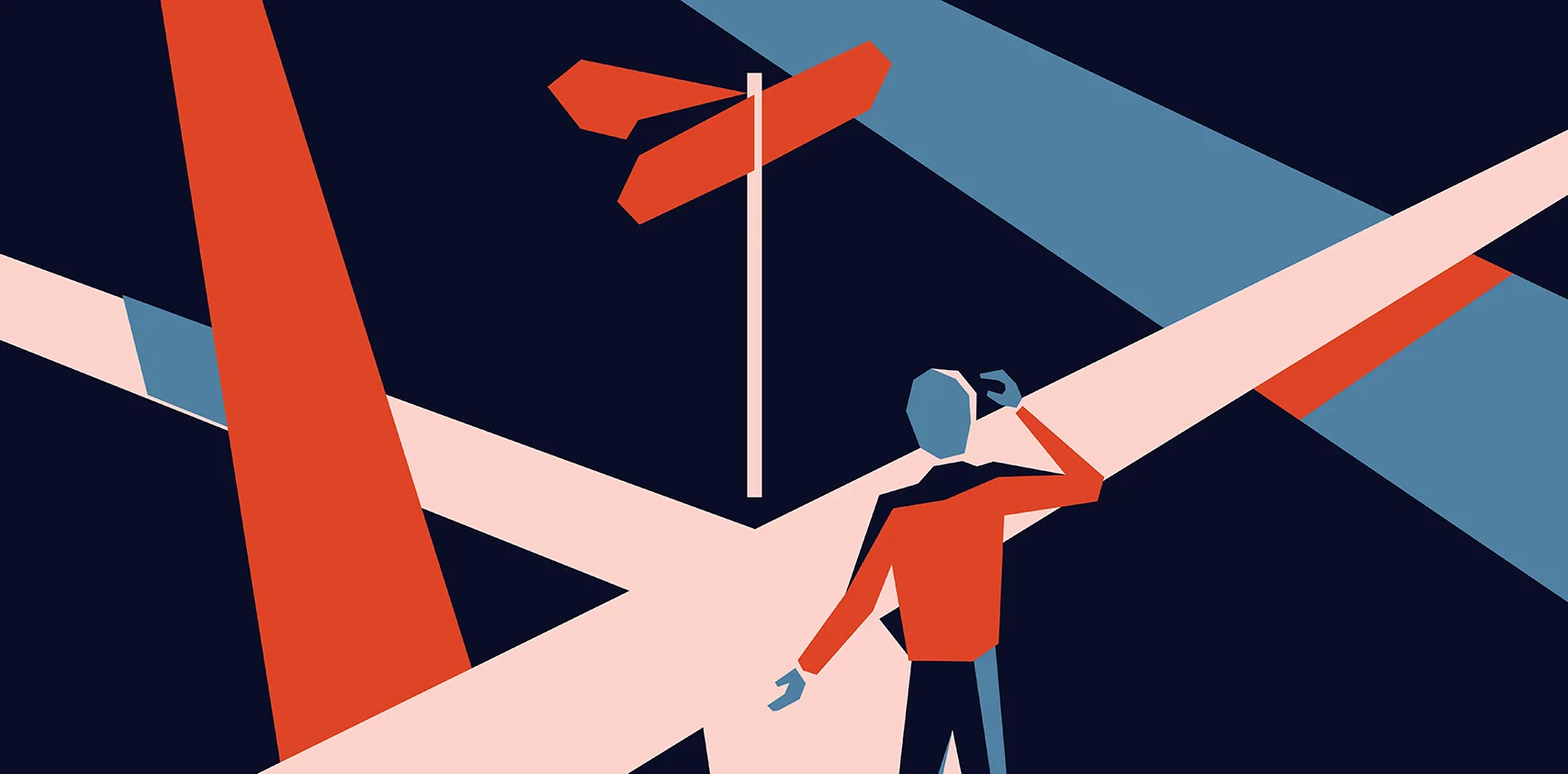
Stable Job vs. High-Paying Freelance: Which Is a Better Career Choice?
This time, I’m going to answer a question from a reader, Xiao Jing (pseudonym). Her letter is as follows: -- Dear Joe and Bryan, Hello! Whenever I am lost and doubtful, I always habitually search for articles from "Darencademy" . I am also a loyal listener of "JB’s Small Talk", thank you for sharing beneficial things; I have genuinely gained a lot. I have a doubt in my heart that I have been hesitating for a long time.I am an office worker and also a mother of two children. Because I have no professional skills, I have been engaged in administrative jobs for many years, receiving a fixed salary. My monthly salary is about NT$ 30,000 and overtime pay is calculated separately. Last year, by chance, I started a freelance job. This job is very similar to tutoring, where customers are introduced through a platform, and I negotiate hours with customers and go to their homes to provide teaching and guidance. Since the pay is quite good, where I can actually receive NT$ 400 to 500 per hour, I have taken cases part-time on holidays. At present, I find it very interesting and fulfilling, and customer satisfaction is also high, with many customers booking the next teaching service. However, I can only take cases on holidays, so the actual hours are not many. And usually, because I have a full-time job, I can only use the time outside of work to read books and improve the knowledge and abilities needed for freelance work. Therefore, I started to think about whether to quit my full-time job and devote myself to freelance work. I have made a preliminary evaluation myself: I like the simplicity, regularity, and content of my full-time job, and I get along well with my colleagues, but the salary will not grow, and I cannot have enough time to accumulate freelance experience. In terms of freelance work, I like its flexibility and high hourly pay, and I also have time to take care of my family. But if I devote myself to freelancing, I am very worried whether the income is stable enough to support family expenses, and whether my body can handle running around and teaching for a long time. Moreover, for such a job change, I also have to face the unpredictable risks after stepping out of my comfort zone. I like both jobs very much, but each has its pros and cons, and I don’t know how to choose. Facing such a problem, how should I set evaluation criteria? Can both teachers give me some advice? Xiao Jing -- In response to Xiao Jing’s question, that is, "Should I give up a stable, low-paying job and engage in unstable but high hourly paid freelance work?" As usual, I will not give a standard answer directly because my knowledge of some details in her life is limited. It’s difficult to directly suggest choosing A or B. However, through this article, I want to provide some of my thought processes to give everyone facing similar issues some references. First, before choosing between two jobs, the most fundamental thing is to consider the following two questions. Question One: Do You Like This Job? No matter which job is chosen, whether you like the job is a crucial prerequisite. Because if you don't like a job, even if it pays well, it will be hard for you to be fully invested and enjoy doing it well. You might ask: "Can’t I do a job that I don’t like?" Yes, you can, but there are only two situations where I think the job can still be done even if you don’t like it. First, you might not like the job, but you are very good at it and can easily complete it. This way, at least you can get economic returns and a sense of accomplishment. Additionally, the economic returns of the job are incredibly high, for example, the job allows you to feel super worthwhile and forget the parts you don’t like. Encountering these two situations, I think you should just go for it! After all, there can be significant returns in accomplishments and salary. However, for most people, there are actually few opportunities to encounter such situations. Therefore, I still recommend everyone to choose a job they like. Question Two: What Exactly Are You Pursuing in Your Work? Everyone has their own goals when going out to work. For instance, some people might not be after the salary but rather look to make friends, while some hope to achieve a balance between work and life. I think there is no right or wrong in these pursuits. However, you need to delve deep into your heart. During the work process, what is the most important thing that you gain from investing a month or a day of your time? This can help clarify what goals you want to pursue in your work. Whether you choose a stable, low-paying job or unstable, high hourly paid freelance work, or even when choosing any job, the above two questions are fundamental things we should consider to help understand what we want. When you know what you are seeking, you can move on to the next stage of consideration, evaluating whether to give up a stable job to choose freelancing. In particular, although freelancing seems to offer a high hourly wage and flexible hours, I believe two things still need to be assessed: First, the Long-Term Nature of the Work Compared to regular full-time jobs, freelancing is generally more unstable. For example, you might initially think that due to inconsistent client sources, it cannot maintain stability for a long time. But I suggest you should think further ahead what is the long-term demand for this freelance job? For instance, if you are tutoring, helping students with physics or math, and if there are no significant changes in the education system or curriculum, perhaps you can do this job for a long time. However, if the knowledge you are teaching now is a short-term trend, like many people doing Podcasts in recent years, you might think you can teach people how to record programs, purchase equipment, etc. This year, there might be people wanting to learn, but next year or the year after, Podcasts might go out of fashion, and then nobody will want to take your class. So, you still have to evaluate whether the content of this freelance job has long-term demand. Second, Financial Considerations Let's do a simple calculation. If your current full-time job pays NT$ 30,000, plus freelancing on holidays, you can earn NT$ 40,000 a month. However, suppose you fully commit to freelancing and earn an hourly wage of NT$ 500. Working 80 hours will give you NT$ 40,000. Eighty hours are equivalent to 10 working days. If your freelancing is stable and legitimate, then in about 20 working days a month, you could earn NT$ 80,000. However, many freelancing jobs, despite seeming to offer a high hourly wage, might still involve many hidden costs. For example, commuting costs might be incurred when you travel to different tutoring students' homes. Moreover, some tutoring platforms might also take a commission from your earnings, among other considerations. These are all crucial factors because they imply that even if you work full-time, there will be an upper limit to the hours you can freelance. Next, the stability of your clientele is, of course, a critical consideration in deciding whether or not to switch to full-time freelancing. So, if financial factors are crucial in your consideration, I would suggest you test it gradually. Wait until the freelancing work is stable, and the financial aspect is comparable to your full-time job or at a level you can accept before considering committing full-time to freelancing. Lastly, I would like to discuss a concern mentioned at the end of Xiao Jing's letter, which is "stepping out of the comfort zone might encounter unpredictable risks." Let’s reconsider the concept of the "comfort zone." Many people might feel that working in a company for 20 years, with familiar supervisors, colleagues, and mastering the job, is their comfort zone. But I don't think so. I believe the "comfort zone" refers to an environment that you can fully grasp and control. However, there is actually no permanent comfort zone in life; instead, you should continually strive to expand the boundaries of your comfort zone. What does this mean? Think about it. You are currently engaged in an administrative position, which seems stable, but suppose one day your boss wants to replace you with someone younger and lower-salaried, you are forced to leave the position, and it's no longer your comfort zone. Especially, the replaceability in administrative jobs is high; you can’t fully assure everlasting security in this position. If you suddenly consider freelancing when forced out without preparation, it implies instability in your situation. But if you start preparing now, embracing it with a part-time mentality, building a reputation, optimizing processes, and considering how to gain a more stable clientele, then over one or two years, as you gain more control over the freelancing work, it becomes your next comfort zone. When the comfort zone of your full-time job crumbles, you’ll still have another comfort zone to turn to. Moreover, sometimes what you consider a comfort zone is not genuinely "comfortable." For instance, in your original family home, you may be accustomed to your room, bed, etc., and unwilling to leave. However, without autonomy, where parents might storm into your room in anger, it’s not truly comfortable; it's just that you are used to it. I've always believed that "autonomy" is crucial within a comfort zone. Imagine moving out and living independently as you grow older. Although initially, there are adjustments and numerous matters to handle yourself, once you step out, the new home becomes your new comfort zone where no one can disturb you. You can play video games until midnight or do whatever you want, extending your autonomy and controlling the situation. That’s true comfort. When you continuously expand your comfort zone while maintaining autonomy, that’s when you can genuinely thrive for the long term! You can also accompany this article with our Podcast show "JB's Small Talk". -- Narrator/Joe Chang ;Editor/Amanda Chiu (This article is translated by the Digital Nomad editor group.)
December 5, 2023