


What Freelancers Really Need to Manage is Not Clients, but Uncertainty
August 3, 2026
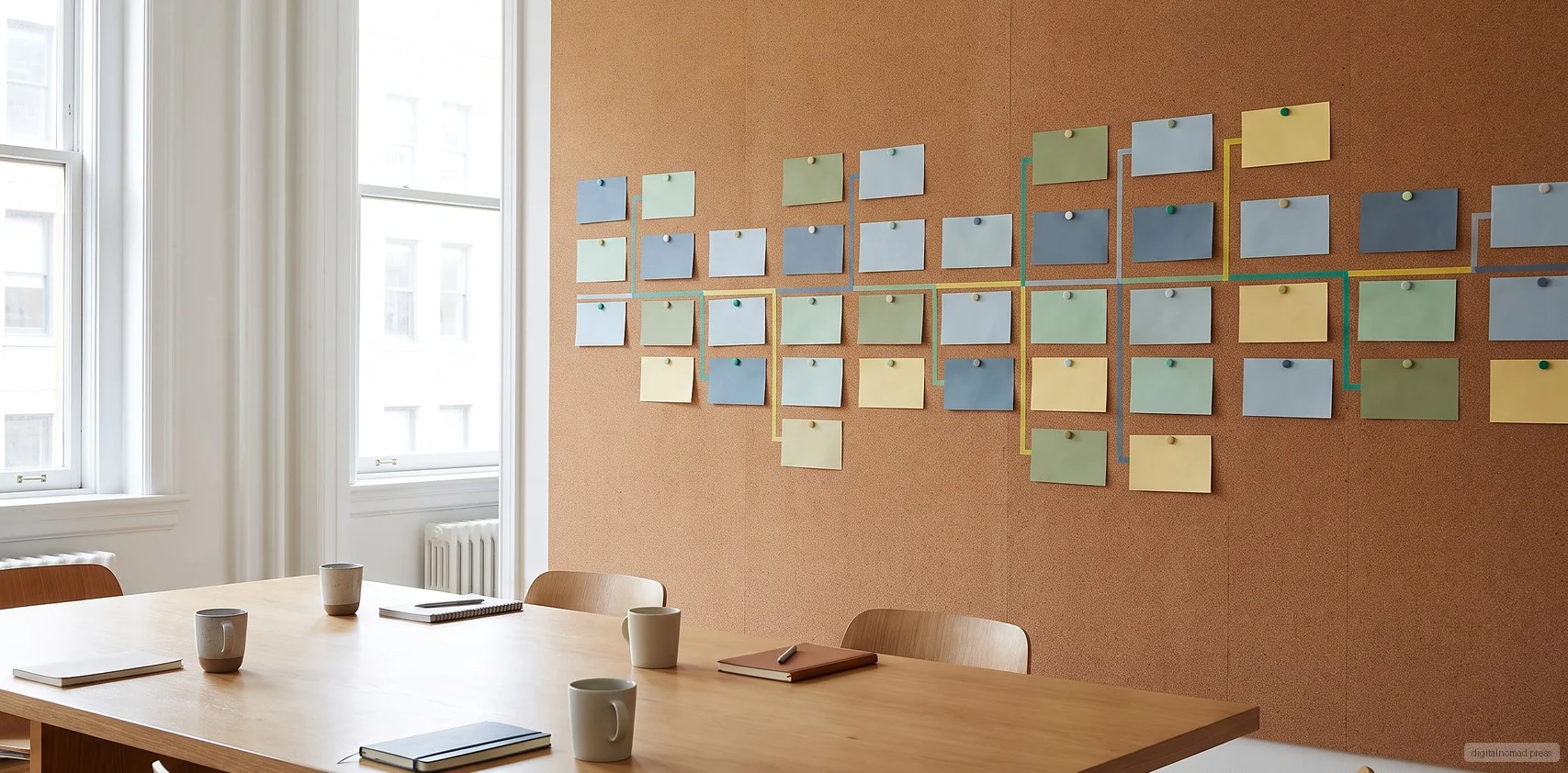
AI Generated - Editorial Use
We want you to know that many freelancers blame their struggles on difficult clients, but the real issue is unmanaged uncertainty during the collaboration process. Good clients are not found by luck; they are created through well designed collaboration workflows. By proactively clarifying project goals, defining exact scopes, bringing decision makers in early, and managing change requests, you can eliminate the chaos that derails projects. Mastering these fundamental project management skills allows you to transform from passively taking orders to professionally guiding the process. This ensures smoother collaborations and protects your valuable time and energy in every freelance project you take on.
Many freelancers dread dealing with difficult clients.
Requirements keep changing, replies are slow, deadlines are tight, and budgets are low. You try your best to accommodate them, yet they always feel something is missing. You hand over the work, and the client says it is not what they want. You ask what they want, and they say they cannot explain it, but it just feels wrong.
After experiencing this a few times, many freelancers come to a conclusion: the most painful part of freelancing is managing clients.
But this statement is only half right.
Because the real trouble is usually not the client themselves. It is the unmanaged uncertainty during the collaboration process.
Uncertain requirements make every discussion feel like starting from scratch.
Uncertain scope turns a minor tweak into a complete redo.
Uncertain responsibilities mean anyone on the client's side can give feedback, yet no one takes responsibility for the final decision.
Uncertain acceptance criteria make you think the job is done, while the client feels it has just begun.
If freelancers fail to see this, they will keep thinking the problem is a difficult client. From a business perspective, many difficult clients are actually created by a poor collaboration process.
Not every client naturally knows how to work with freelancers. They do not all know how to clarify requirements, bring in decision makers, or consolidate feedback. Often, the client is just as confused.
If you simply follow their confusion, you will end up absorbing the cost of all that uncertainty.
Good Clients Are Designed, Not Found
In the early days of freelancing, many rely on luck for the quality of collaboration.
If they meet a client who communicates clearly, pays on time, and makes crisp decisions, they feel lucky.
If they encounter a client who constantly asks for revisions, adds last-minute tasks, and has conflicting internal opinions, they feel unlucky.
Of course, client maturity does vary. Some clients are great at collaborating, while others are disorganized. But if you rely on luck for every project, your freelance career will be exhausting.
A more mature approach is to break down a good collaboration into several designable steps.
First, clarify goals before starting.
Many freelancers rush to quote as soon as they hear a request. The client asks for a website, and you ask how many pages. The client asks for branding, and you ask how many proposals they need. The client asks for copywriting, and you ask for the article count.
However, these are specifications, not goals.
The real questions to ask are: What problem do you hope this project solves? What is your biggest challenge right now? If you consider this collaboration successful three months from now, what exactly will have happened?
These questions seem slow, but they actually save time later. If goals are not aligned from the start, all subsequent specification discussions turn into a guessing game.
Second, clearly define the scope.
The scope should not just be building a website or designing a presentation. This description is too vague and practically useless.
You need to detail what is included, what is excluded, how many rounds of revision are allowed, the definition of each revision round, scenarios that require a new quote, materials the client must provide, and how deadlines adjust if the client delays.
Many hesitate to write these down out of fear the client will find them petty.
Yet the real relationship breaker is rarely setting clear rules upfront. It is arguing halfway through the project about whether something was included in the original quote.
Third, bring decision makers in early.
Freelancers often face a scenario where their initial contact approves everything. Then, at the final stage, the boss, manager, partner, spouse, or investor suddenly steps in and dislikes it.
This is frustrating because you have already done multiple revisions based on the contact's feedback. From the client's perspective, the real decision maker is seeing the work for the first time, so they naturally give feedback from scratch.
Therefore, ask upfront: Who makes the final decision? Who needs to be involved along the way? At what milestones should the decision maker review the work? If multiple people provide feedback, who is responsible for consolidating the final response?
This is not bureaucracy. It is protecting the quality of the collaboration.
Remote Freelancing Requires Explicit Agreements
In an office, much collaboration relies on unspoken understandings.
A colleague asks a quick question, a manager adds a comment during a meeting, or people pick up background information in the break room. Many things are simply understood this way.
Remote freelancing lacks this natural flow of information.
You are in Taipei, the client is in Singapore, the designer is in Bangkok, and the developer is in Kuala Lumpur. People are not necessarily online at the same time, nor do they always understand problems in the same language. What you think is obvious might be completely missed by the other party. What you think is a minor tweak might look like a total change of direction to them.
This is why managing collaboration for digital nomads and remote freelancers cannot just rely on everyone being nice.
Being nice only lowers the emotional cost of conflict. It cannot replace a process.
What truly reduces risk is documenting key collaboration details.
Start with a project brief that outlines goals, scope, deliverables, timeline, and roles.
Follow every meeting with short notes confirming decisions, action items, owners, and deadlines.
Include an explanation with each delivery round. Tell the client what problems this version solves, what areas need their approval, and which types of feedback might affect the future timeline or budget.
Do not let feedback scatter across chat apps, emails, shared documents, presentation comments, and verbal messages. Centralize it when possible, number the items, and ask the client to consolidate feedback instead of sending it in five separate pieces.
These tasks do not look like creative work or professional skills. Yet for a freelancer, they often determine whether you can finish a project smoothly.
Many highly capable freelancers fail at collaboration management.
They can produce great work, but the results are drained away by unclear requirements, incomplete decisions, and constant changes.
Changes Are Not the Enemy, Unmanaged Changes Are
Freelancers often fear clients changing their requirements.
Frankly, changing requirements is normal.
Clients might not have a clear vision initially. Market conditions can shift. Internal company opinions might emerge. The client might only realize their original idea was wrong after seeing a draft halfway through. These are all common scenarios.
The problem is not the change itself. The problem is when the change goes unmanaged.
If every change is treated as a free service, the client will not realize that changes have costs.
If changes are not recorded, no one will be able to explain what was altered by the end of the project.
If you do not reconfirm the timeline and budget for every change, you will be forced to absorb all the uncertainty with your own time.
Therefore, freelancers need to establish a simple rule for changes.
This is not to make things difficult for the client. It is to ensure both sides know how to handle situations when the direction shifts.
For example, minor text edits are included in the original revision rounds. Adding pages, changing strategic directions, creating different audience versions, or requesting extra interviews requires a new time estimate and quote.
It is best to include these rules in the contract. If there is no contract, at least put them in the quote or collaboration overview. Do not wait until a conflict happens to introduce rules, because it is usually too late by then.
Some worry that stating this clearly will make them seem difficult to work with.
My view is the exact opposite. Truly mature clients usually appreciate it when you establish clear rules. It shows you are not just taking projects blindly, but actually know how to steer a collaboration to success.
Clients who get upset because you clarify boundaries upfront are likely the ones you need to be careful with.
Freelancing is Also a Form of Small-Scale Project Management
Many freelancers dislike the term project management.
They feel it is something used by large corporations, engineering teams, project managers, and executives, and has nothing to do with solo freelancing.
But if you look closely, a freelance gig is actually a small project.
It has goals, timelines, scopes, resource limits, stakeholders, risks, changes, deliverables, and acceptance criteria.
The only difference is that a large company project might have a dozen people sharing the load. A freelancer often acts as sales, project manager, executor, customer service, finance, and legal contact all at once.
So you actually have a greater need to understand basic project management.
You do not have to learn a bunch of jargon or get a certification. But you should at least know how to define scope, break down deliverables, set milestones, manage changes, involve decision makers at the right time, and highlight risks early.
If we relate this back to the ProjectUp courses, the 101 Project Management One-Day Bootcamp or 102 Process Design and Cross-Departmental Communication can actually provide freelancers with very practical foundational skills. This is not because freelancers need to become corporate project managers. It is because you need to start using mature methods to manage the variables that cause projects to derail.
Especially when you hope to freelance remotely, collaborate internationally, or even work while traveling, these skills will be more important than you think.
Because distance amplifies chaos.
Something you cannot explain clearly in the same office will only become more confusing in a cross-timezone remote collaboration.
Finally, Do Not Treat Smooth Collaboration as the Client's Responsibility
Freelancers who want a long career cannot just hope to meet good clients.
Good clients are certainly important. But you also need the ability to guide average clients into better collaboration methods.
Ask about goals clearly from the very beginning.
Write the scope clearly when quoting.
Explain roles and decision processes clearly when starting the project.
Record progress and changes clearly throughout the process.
State the acceptance criteria clearly upon delivery.
Doing these things is not romantic. They will not make you look like some amazing superstar freelancer. But they will save you a lot of pointless exhaustion.
The freedom of freelancing is not just about choosing where you work.
More importantly, it is about whether you can stop work from constantly eroding you in chaotic ways.
When you start managing the uncertainty in collaboration, you are no longer someone just dragged along by client demands. You will gradually become a professional service provider who can clarify vague matters and turn chaotic collaborations into an executable state.
This is the true capability worth building as a freelancer.
This content is protected by copyright. Please respect the author's work and do not copy or distribute without permission.

數位遊牧編輯群 Digital Nomad Editor Group
Digital Nomad is a knowledge sharing platform specially designed for “those who dream to become digital nomads.” We share the latest news and industry trends related to digital nomadism, as well as introduce essential skills and knowledge needed for freelancers, remote workers, etc. Our goal is to help you connect with fellow digital nomads!
