


Forbes 2026 Nomad City Rankings: Beyond Cheap Rent
May 27, 2026
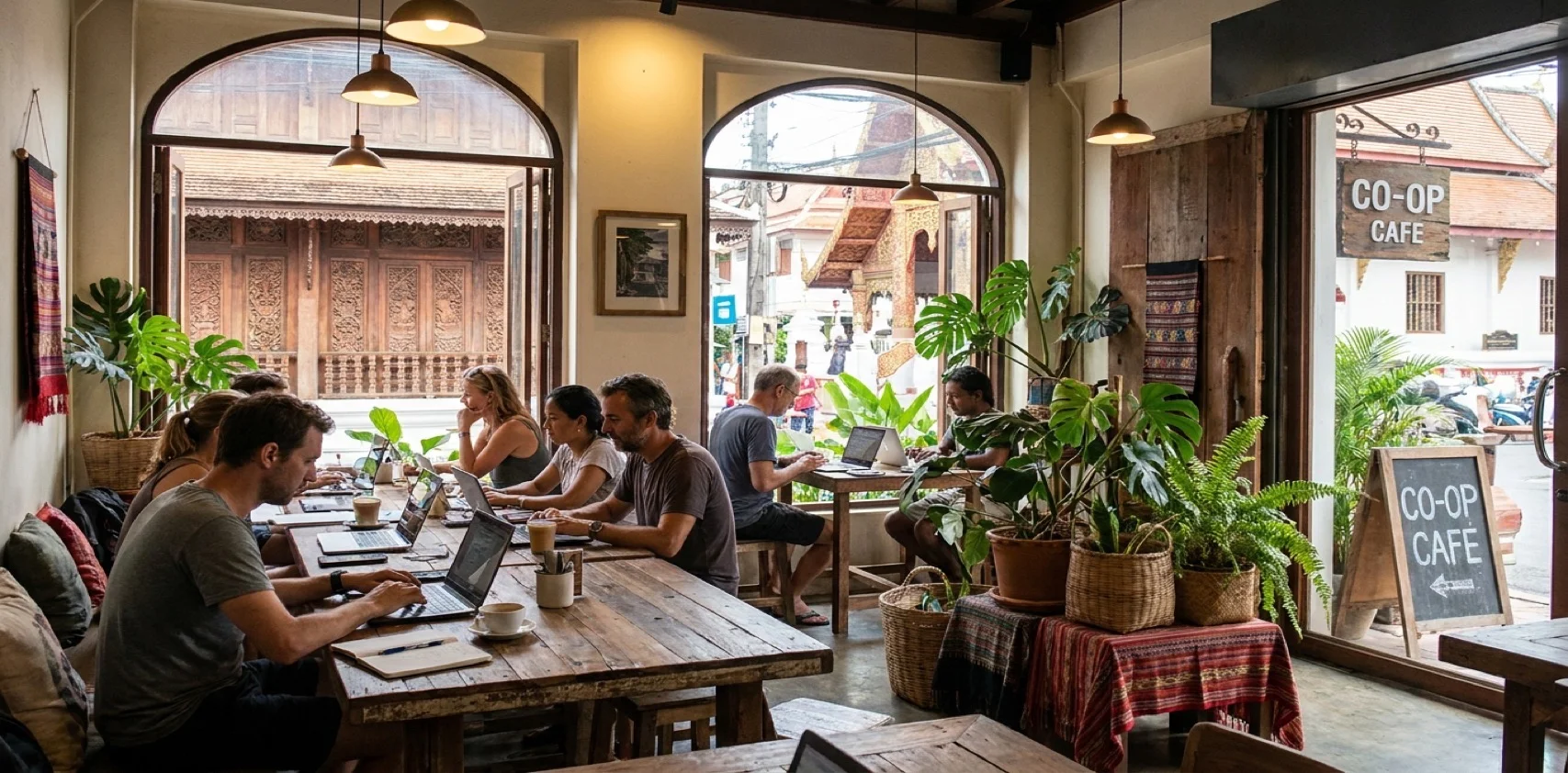
AI Generated - Editorial Use
Forbes just dropped its 2026 best cities for digital nomads list, and it looks different. Cheap rent and good weather are no longer the primary criteria. Chiang Mai and Da Nang remain, but their selling points have shifted from '$300/month studios' to 'visa infrastructure, founder ecosystems, and healthcare access.' New entries include Brno, Kotor, and Tirana. This article decodes the selection logic and explains why nomad city rankings are evolving from 'good for vacationing' to 'good for running a business.'
In April 2026, Forbes published its annual list of the best cities for digital nomads and creators. Eight cities made the cut: Lisbon, Medellín, Chiang Mai, Da Nang, Cape Town, Austin, Miami, and Asheville. TimeOut Asia quickly followed up, confirming the two Southeast Asian picks. The list itself was unsurprising. What changed was the logic behind it.
For years, nomad city rankings were essentially cost-of-living indexes dressed up with co-working space counts and average Wi-Fi speeds. The implicit question was always the same: where can a remote worker live cheaply while maintaining a decent internet connection? Forbes 2026 flipped the script. The new evaluation criteria center on visa infrastructure, founder ecosystems, healthcare access, co-working density, and banking accessibility. Cost of living still matters, but it has been demoted from the lead criterion to a supporting factor.
The smoothie bowl era of digital nomadism is officially over.
What Changed in the Ranking Criteria
Visa infrastructure over visa-free days. Previous rankings celebrated countries where nomads could stay 90 or 180 days without a visa. The 2026 list cares more about whether a country offers a dedicated digital nomad visa, whether the application process is transparent and digitized, and whether the visa permits opening a local bank account. Over 69 countries now offer some form of remote work visa, but quality varies wildly. The real differentiator is whether a visa provides a stable legal framework for extended stays.
Founder ecosystems over café culture. Forbes explicitly used the term "digital entrepreneur" this year, reframing the nomad demographic from laptop-toting freelancers to builders of portable online businesses. A city's appeal is no longer measured by how many cafés let you camp out all day. It's measured by the density of its startup community, the presence of investor networks, cross-industry collaboration in co-working spaces, and the availability of professional services that support scaling a business.
Infrastructure completeness as a baseline. Healthcare quality, international schools, banking friendliness toward foreigners, and transportation reliability—factors once treated as nice-to-haves—are now table stakes. A city can offer the cheapest apartments in Southeast Asia, but if a dental appointment requires a three-hour commute, it won't appear on a 2026 list.
City-by-City Analysis
Lisbon: The Structural Advantage
Lisbon has topped nomad city rankings for years, but the rationale has evolved. It's no longer "Europe, but affordable." It's "Europe's startup ecosystem on-ramp." Portugal's D7 visa and digital nomad visa provide clear legal pathways, and the prospect of eventual EU residency adds long-term appeal. The city offers a mature English-speaking startup community, a dense co-working network, and residual momentum from years of hosting Web Summit.
The irony: Lisbon's popularity has driven rents up sharply. A one-bedroom apartment now runs €1,200 to €1,800 per month. It remains on the list not because it's cheap, but because its infrastructure is irreplaceable.
Chiang Mai: The Original, Evolved
Chiang Mai is one of the oldest nodes in the global nomad network, and it retains its core advantages in 2026: an exceptionally dense co-working ecosystem (Punspace, HUB53, Yellow Coworking), a mature long-stay rental market, and a cost structure that supports a comfortable life at around $1,000 per month.
But Forbes' emphasis this year isn't on those familiar selling points. Chiang Mai earns its spot because it has evolved from "cheap and livable" to "easy to build a routine in." For entrepreneurs who need stability to run a business, the city offers something that took a decade of community-building to create: a complete nomad infrastructure layer, from visa agents and international hospitals to founder meetups and tax advisory services.
Thailand's Long-Term Resident (LTR) visa, introduced in 2025, gives high-income remote workers a more stable residency option, further strengthening Chiang Mai's position.
Da Nang: The Window Before Saturation
Forbes describes Da Nang as a "fast-growing coastal hub" with reliable internet, an expanding co-working scene (Enouvo Space, Toong), strong café culture, and low barriers to entry. TimeOut also named central Vietnam among Asia's best travel destinations for 2026.
The city occupies a delicate position: its co-working ecosystem isn't yet saturated, rents are still approachable, but the international nomad community is gathering fast. Forbes' phrasing—"before the city hits full saturation"—implies a limited window. For nomads scouting their next base, Da Nang's value proposition may be at its peak right now.
Medellín, Cape Town, Austin: Different Strengths
Medellín offers the density of Latin America's startup community and a gateway to Spanish-language markets. Cape Town provides Africa's rare combination of international-grade infrastructure and English-speaking professional networks. Austin represents a domestic nomad option for those who can't or won't leave the United States—Texas' zero state income tax and active tech scene offer an alternative path.
Miami and Asheville round out the list, reflecting an interesting trend: digital nomadism is no longer synonymous with "moving to Southeast Asia." Domestic city-hopping within the U.S. now falls within the nomad definition.
Beyond the List: Emerging Cities to Watch
Several European cities are building reputations in the nomad community outside Forbes' eight picks.
Brno, Czech Republic. Prague's shadow has long obscured this Moravian capital, but Brno is attracting nomads with lower costs, fewer tourists, and a tech industry foundation that rivals Prague's. The Czech freelance license (Živnostenský list) is relatively straightforward, and the city's walkable scale makes daily routine-building easy.
Kotor, Montenegro. A medieval town on the Adriatic coast, known for dramatic natural scenery and very low living costs. Montenegro introduced a digital nomad residence permit in 2024. Kotor's international community is small but growing. Its positioning isn't to replace Lisbon or Chiang Mai—it's to serve nomads who need a quiet, low-distraction European option for deep-work periods. Dubrovnik is less than two hours away; Tirana is about three and a half hours. Intra-Balkan travel costs are minimal.
Tirana, Albania. Possibly the most underrated nomad city in Europe. Albania's cost of living undercuts even some popular Southeast Asian hubs. The coffee culture is excellent (a dual Italian-Ottoman heritage), and the city is modernizing rapidly. Infrastructure stability and banking internationalization remain challenges, but the early-mover advantage is real.
Italy's hidden cities: Lecce, Matera, Orvieto. Italy has long been excluded from nomad recommendations due to high costs and bureaucratic complexity. But an "anti-major-city" trend is emerging: smaller cities in southern and central Italy offer Italian quality of life at rents far below Milan or Rome, attracting nomads willing to accept less international communities. Italy's 2024 digital nomad visa provides the legal foundation. Lecce is called "the Florence of the South," Matera is world-famous for its cave dwellings (and was the 2019 European Capital of Culture), and Orvieto sits on a volcanic plateau in Umbria, just an hour from Rome.
A New Decision Framework
The real value of the Forbes 2026 list isn't the eight cities it names. It's the decision framework it reveals.
The old nomad city logic ran roughly like this: Cost → Weather → Internet speed → Visa-free days → Community. Cheap came first; everything else was a bonus.
The 2026 logic runs differently: Visa stability → Business support systems → Life infrastructure → Community quality → Cost. Cost has moved to the back of the line, because the first four factors determine whether someone can stay in a city for longer than three months.
This shift reflects the maturation of the nomad demographic itself. When a person evolves from "traveling with a laptop" to "running a business from different cities," the selection criteria naturally pivot from "where can I save the most money" to "where can I be most productive." Whether a city's co-working spaces might connect you with a potential co-founder matters far more than whether its apartments are $200 cheaper per month.
For nomads planning their next move, the Forbes list offers a useful self-diagnostic: if the first question in the decision process is still "how much will it cost per month?"—it might be time to reorder priorities. The questions that matter more: How long can this city's visa system support legal residency? Is there a professional community relevant to my industry? Can I access quality healthcare within a reasonable distance? Can I open a bank account?
Cheap cities will always exist. But cities that keep both a business and a life running—those are the ones that matter in 2026.
This content is protected by copyright. Please respect the author's work and do not copy or distribute without permission.

數位遊牧編輯群 Digital Nomad Editor Group
Digital Nomad is a knowledge sharing platform specially designed for “those who dream to become digital nomads.” We share the latest news and industry trends related to digital nomadism, as well as introduce essential skills and knowledge needed for freelancers, remote workers, etc. Our goal is to help you connect with fellow digital nomads!
