


Forbes Names the 10 Best Countries for Digital Nomads in 2026: Visas, Income Thresholds, and Hidden Perks
April 7, 2026
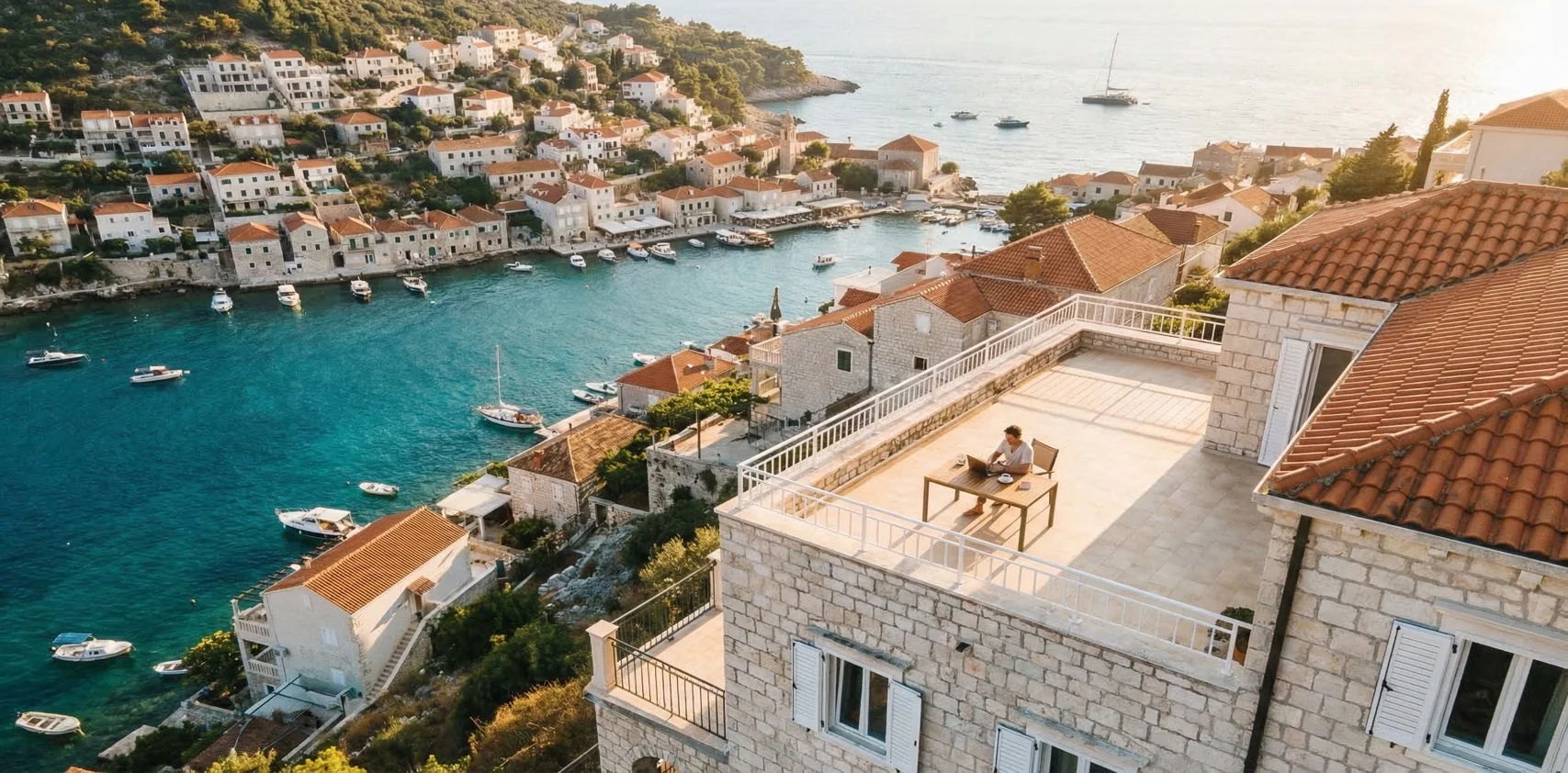
AI Generated - Editorial Use
Forbes ranks the 10 best digital nomad visa countries for 2026, including Portugal, Spain, Greece, and Italy. Full breakdown of visa requirements, income thresholds, tax benefits, and living costs.
On March 15, 2026, Forbes published its latest ranking of the world's most attractive digital nomad visa programs. The list of ten countries doesn't just reflect which governments are rolling out the welcome mat for remote workers. It reveals an accelerating global competition for a new class of high-value migrants: laptop-carrying professionals who bring foreign income, stay longer than tourists, and ask for nothing from local labor markets.
From the sunlit coasts of Southern Europe to emerging hotspots in South America, governments are deploying visa policies, tax incentives, and infrastructure investments at unprecedented scale to attract this growing workforce. Here's what each country offers and what prospective nomads need to know.
The Global Landscape
As of March 2026, more than 60 countries and territories worldwide have introduced some form of digital nomad visa or remote work permit. In 2020, that number was fewer than ten. The explosion reflects three converging forces: the pandemic's permanent normalization of remote work, tourism-dependent economies discovering that nomads are premium visitors who inject foreign capital without competing for local jobs, and intensifying global talent competition that has made nomad visas a new tool for attracting high-skilled individuals.
Forbes evaluated candidates across multiple dimensions: application ease, income threshold reasonableness, tax treatment, internet infrastructure, cost of living, safety, and community maturity.
1. Portugal
Portugal has topped digital nomad rankings for years, and 2026 is no exception.
Visa: The D8 visa (passive income/remote work) grants non-EU citizens residence in Portugal. It's valid for one year, renewable, and creates a pathway to permanent residency.
Income threshold: Approximately €3,280 per month (four times Portugal's minimum wage). Mid-range by European standards.
Tax treatment: Portugal's Non-Habitual Resident (NHR) regime once offered a flat 20% income tax rate for up to ten years. The original NHR was revised in 2024, but the 2026 version still provides tax benefits for specific industries and high-value activities under stricter conditions.
Why it ranks: Lisbon and Porto host mature nomad ecosystems with abundant coworking spaces, international communities, reliable high-speed internet, and reasonable living costs. The climate, food, safety, and high English proficiency complete the package.
Watch out for: Lisbon rents have surged over the past three years, approaching levels seen in major Western European cities. Consider secondary cities like Braga, Coimbra, or Faro.
2. Spain
Since launching its digital nomad visa in 2023, Spain has rapidly become a top destination. In 2026, the country further streamlined its application process and expanded eligibility.
Visa: Non-EU citizens can reside in Spain while working for overseas employers or clients. Initial validity is one year, extendable to five.
Income threshold: Approximately €2,520 per month (double the Spanish minimum wage). One of the lowest among major European nomad visa countries.
Tax treatment: The "Beckham Law" allows qualifying new tax residents to pay a flat 24% rate on Spanish-source income for six years, rather than progressive rates. However, freelancers may need to register as "Autónomo" (self-employed), which triggers additional social security contributions and quarterly VAT filings.
Why it ranks: Barcelona, Madrid, Valencia, and Málaga all host thriving nomad communities. Spain's quality of life, food culture, social atmosphere, and climate are world-class. Living costs remain reasonable, especially outside tier-one cities.
Watch out for: Spain's tax system is complex for freelancers. Autónomo social security fees and VAT obligations can become unexpected financial burdens. Consult a Spanish tax specialist before applying.
3. Greece
Greece's digital nomad visa stands out for its unique 50% income tax reduction, and its 2026 completion of island-wide 5G coverage has dramatically increased its appeal.
Visa: Valid for up to five years, with eligibility for permanent residency after five years. Applicants must commit to residing in Greece for at least two years.
Income threshold: Approximately €3,500 per month, increasing for dependents.
Tax treatment: The headline benefit is a 50% reduction on foreign-source income tax for those who commit to a two-year residency. Effective tax rates can drop to between 11% and 22% depending on income level, making Greece one of Europe's most competitive options.
Why it ranks: Beyond tax incentives, Greece completed its "Island Mesh" 5G network project in 2026, extending high-speed mobile connectivity to remote islands that previously had unreliable internet. Working from Santorini, Mykonos, or Crete is no longer a bandwidth gamble. Athens living costs run roughly 40-50% of London's, with island locations even cheaper.
Watch out for: Greek bureaucracy can be slow. Visa applications and tax registrations may take longer than expected. Budget extra processing time and consider hiring a local immigration lawyer.
4. Italy
After launching its digital nomad visa in 2024, Italy spent time refining the supporting framework. By 2026, the program has matured into a compelling option backed by cultural magnetism and quality of life.
Visa: Non-EU citizens can reside and work remotely in Italy. Initial validity is one year, renewable. Applicants must demonstrate high-skilled remote employment.
Income threshold: Approximately €2,800 per month, plus adequate health insurance.
Tax treatment: Italy's "Impatriate Regime" offers qualifying new tax residents up to 70% income tax reduction for the first five years. In designated southern regions, the reduction can reach 90%, making Italy one of Europe's most aggressive tax competitors for nomad talent.
Why it ranks: Italy's cultural, culinary, and scenic assets need no introduction. In 2026, the government invested in coworking spaces and digital infrastructure across several southern cities (Bari, Catania, Lecce), actively steering nomads toward less-developed southern regions.
Watch out for: Administrative processing can be slow by European standards. English proficiency is lower than in Northern Europe, potentially creating daily-life friction for non-Italian speakers.
5. Croatia
One of Europe's earliest digital nomad visa adopters, Croatia upgraded its program in 2026 with enhanced family-friendly provisions.
Visa: The digital nomad residence permit is valid for one year. After expiry, applicants must leave for at least 90 days before reapplying. Holders are exempt from Croatian income tax during their stay (provided they don't work for Croatian employers or clients).
Income threshold: Approximately €2,540 per month.
Tax treatment: The headline advantage is zero Croatian income tax during the residency period. Holders only owe tax in their country of tax residence, which can be extremely favorable for those based in low-tax or zero-tax jurisdictions.
Why it ranks: Dubrovnik, Split, and Zagreb offer excellent living environments with growing nomad communities. Croatia joined the Eurozone and Schengen Area in 2023, simplifying financial and travel logistics. The Adriatic coastline and Mediterranean climate are powerful quality-of-life draws.
Watch out for: The one-year limit plus 90-day cooling period constrains long-term settlement. Croatia works better as a rotation base than a permanent home.
6. Argentina
South America's most enthusiastic adopter of the digital nomad trend, Argentina cracks Forbes' top ten for the first time.
Visa: Launched in 2022, it allows remote workers to reside for up to six months, extendable for another six.
Income threshold: No strict minimum, but applicants must demonstrate stable overseas income.
Tax treatment: Visa holders are classified as non-tax residents and owe no Argentine income tax.
Why it ranks: Argentina's primary draw is its extraordinary cost-of-living advantage driven by favorable exchange rates. Buenos Aires consistently ranks among the world's best cities for quality-of-life-to-cost ratio. Rich cultural life, world-class cuisine (especially steak and wine), vibrant nightlife, and numerous English-friendly coworking spaces make it a nomad paradise.
Watch out for: Economic volatility and currency fluctuations are real risks. Persistent high inflation, while primarily affecting peso-denominated spending, means consumer prices can shift rapidly.
7. Estonia
The global pioneer in digital governance, Estonia integrates its nomad visa with the broader e-Residency ecosystem for a uniquely digital experience.
Visa: Available in short-term (Type C, up to 90 days) and long-term (Type D, up to one year) variants. Long-term visas are renewable.
Income threshold: At least €4,500 average monthly income over the previous six months. One of the highest thresholds on this list.
Tax treatment: Estonia's globally renowned corporate tax system charges zero tax on undistributed profits, paying only when dividends are distributed. This is especially advantageous for nomads who establish companies through e-Residency. Personal income tax is a flat 20%.
Why it ranks: Estonia's digital infrastructure is world-leading. Nearly every administrative process, from banking to tax filing, can be completed online. Tallinn's tech startup ecosystem is thriving, and e-Residency allows nomads to establish and operate EU companies without physically residing in Estonia.
Watch out for: Long, dark, cold winters. Limited options outside Tallinn. Living costs are lower than Western Europe but higher than most Eastern European countries.
8. Malta
This Mediterranean island nation leverages English as an official language and EU membership to carve a unique niche in the nomad visa market.
Visa: The Nomad Residence Permit allows non-EU remote workers to reside for up to three years. Applicants must work for employers or clients outside Malta.
Income threshold: Approximately €2,700 per month (€32,400 annually).
Tax treatment: Malta's tax system offers multiple favorable schemes for qualifying foreign residents. Nomad visa holders generally pay tax only on income remitted to Malta, starting at 15%.
Why it ranks: English as an official language eliminates communication barriers. Mediterranean climate, high safety index, and EU/Schengen membership enabling easy European travel. Despite its small size, coworking spaces and the nomad community continue growing.
Watch out for: Malta is tiny. Long-term residents may experience "island fatigue." Summer tourist season drives up prices and crowds. Housing options are limited and increasingly expensive.
9. Costa Rica
Central America's digital nomad leader combines tropical living with infrastructure sophistication.
Visa: The Rentista visa and dedicated digital nomad visa allow remote workers to reside for up to two years.
Income threshold: Approximately $3,000 per month, or a one-time deposit of $60,000.
Tax treatment: Costa Rica operates on a territorial tax system, taxing only income generated within its borders. Remote workers serving overseas clients typically owe zero Costa Rican income tax.
Why it ranks: Stunning natural landscapes, political stability, a solid healthcare system, and Central America's best internet infrastructure. The country's "Pura Vida" (pure life) philosophy aligns naturally with nomad values. San José, Tamarindo, and Santa Teresa host active nomad communities.
Watch out for: Living costs are high by Central American standards. Internet quality remains inconsistent in some areas. The rainy season (May through November) can disrupt outdoor activities and transportation in certain regions.
10. Thailand
After years of policy debate, Thailand launched its digital nomad visa in 2025 and continued refining it through 2026, earning a spot on the Forbes list.
Visa: The Long-Term Resident Visa (LTR) "Work-from-Thailand" category allows stays of up to ten years (in five-year increments). A shorter-term Digital Nomad Visa with one-year validity is also available.
Income threshold: LTR requires at least $80,000 annual income over the past two years. The short-term nomad visa has a lower bar of approximately $2,500 per month.
Tax treatment: LTR holders enjoy a flat 17% income tax rate (versus Thailand's standard progressive rates reaching 35%), with certain categories of overseas income exempt.
Why it ranks: Thailand has been the unofficial capital of digital nomadism for over a decade. Bangkok, Chiang Mai, and Phuket host the world's most mature nomad infrastructure and communities. Ultra-low living costs, exceptional food, convenient transportation, warm climate, and welcoming local culture make Thailand competitive on every objective metric. The formal visa program finally resolves the gray-area immigration status that nomads in Thailand have navigated for years.
Watch out for: Political volatility. The LTR income threshold excludes many nomads. Air quality is a serious health concern during burning season, particularly in Chiang Mai from February through April.
Cross-Country Comparison Highlights
Lowest barriers to entry: Argentina (no strict minimum) and Spain (€2,520/month).
Best tax deals: Greece (50% income tax cut), Italy (up to 90% reduction in southern regions), Croatia (zero local tax).
Longest stay options: Thailand LTR (10 years), Italy and Greece (5 years).
Lowest living costs: Argentina and Thailand.
Best for English speakers: Malta and Estonia.
Clearest path to permanent residency: Portugal, Greece, and Italy.
Emerging Trends for 2026
Forbes' report highlights several emerging patterns. Family-friendly provisions are proliferating as the nomad demographic shifts from solo backpackers to families. The "southward shift" is accelerating as South American and Southeast Asian countries chase European first-movers. Digital infrastructure has become a decisive competitive factor, exemplified by Greece's Island Mesh 5G project. And tax competition among nomad-friendly nations is intensifying with no end in sight.
For anyone considering or already living the digital nomad lifestyle, 2026 offers more choices and better terms than any previous year. The question is no longer whether you can work from anywhere. It's which anywhere to choose.
This content is protected by copyright. Please respect the author's work and do not copy or distribute without permission.

數位遊牧編輯群 Digital Nomad Editor Group
Digital Nomad is a knowledge sharing platform specially designed for “those who dream to become digital nomads.” We share the latest news and industry trends related to digital nomadism, as well as introduce essential skills and knowledge needed for freelancers, remote workers, etc. Our goal is to help you connect with fellow digital nomads!
