


4 Emerging Digital Nomad Cities You Haven't Heard Of (But Should)
March 25, 2026
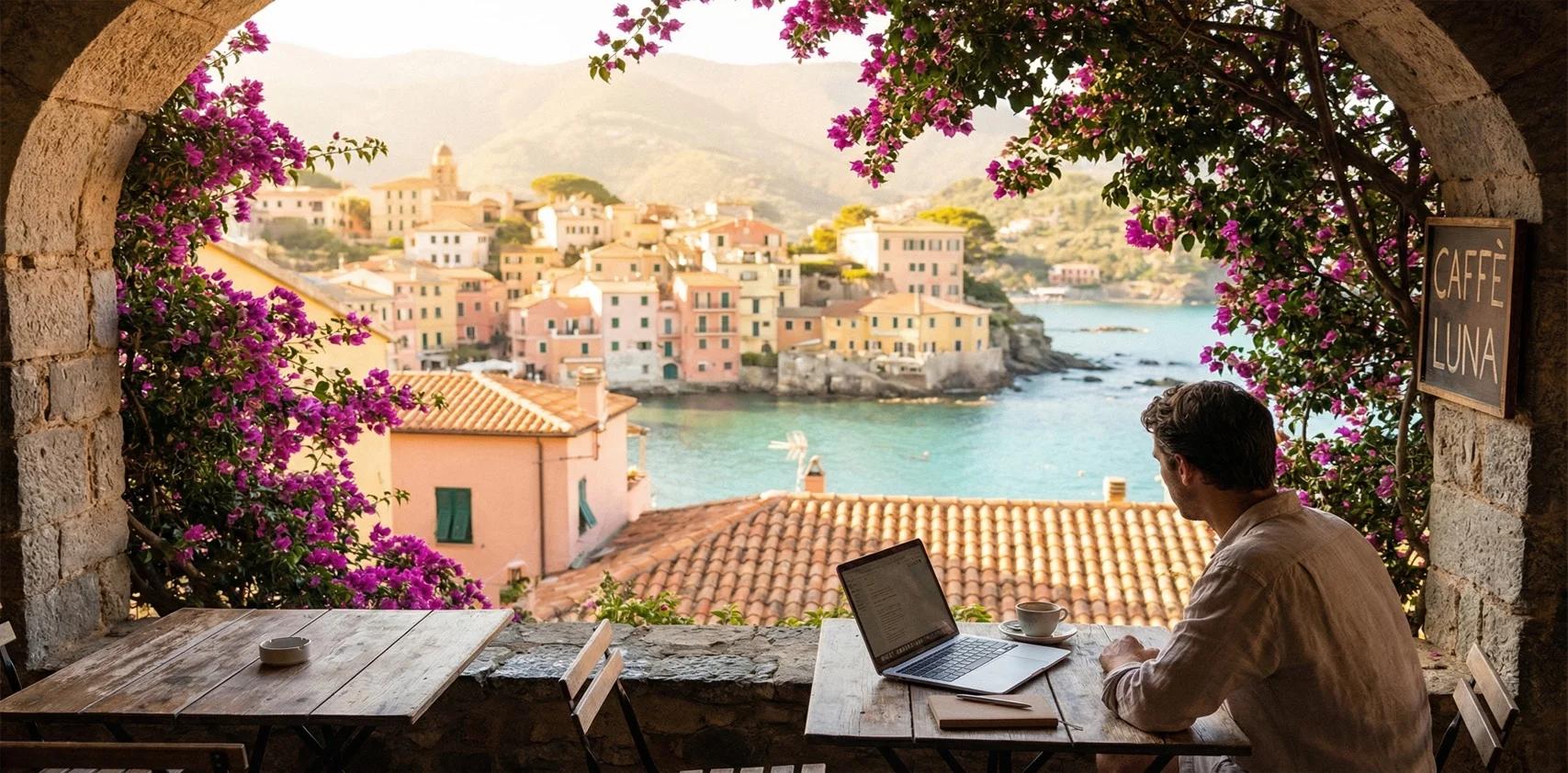
AI Generated - Editorial Use
4 emerging digital nomad cities for 2026: Kotor, Medellín, Penang, and Tirana. Visa requirements, monthly costs, internet speeds, and honest pros and cons — all in one guide.
Chiang Mai, Bali, Lisbon, Budapest. If you've been in the digital nomad space for more than a year, you've probably heard these names a hundred times. They're great — genuinely. But precisely because everyone knows about them, prices have crept up, visa processes have tightened, and every café is packed with foreigners staring at MacBooks.
In 2026, I want to put four rising cities on your radar — places that are gaining momentum but haven't been overrun yet. Over the past eighteen months, I've spent at least three weeks in each. Here's what I found.
Kotor, Montenegro: A Secret Base on the Adriatic
I first arrived in Kotor last April. It's less than two hours by car from Dubrovnik, but the prices are immediately cut in half. This medieval town, cradled between mountains and a bay, has a quality that's hard to articulate: it has Croatia's scenery without Croatia's crowds.
Visa Conditions
Montenegro offers visa-free entry for 90 days to most passport holders. For longer stays, the Digital Nomad Visa allows up to two years of residency, renewable. The income threshold is relatively flexible — you just need to demonstrate stable remote income. The visa fee is approximately €25.
Montenegro is actively pursuing EU accession, and its legal framework and infrastructure are improving rapidly.
Monthly Budget Breakdown
| Category | Cost (USD) |
|---|---|
| Accommodation (1BR apartment, city center) | 500-800 |
| Food (mostly home cooking, occasional dining out) | 300-400 |
| Transport (mostly walking, occasional taxi) | 50 |
| Coworking space | 100-150 |
| Internet/SIM card | 15-20 |
| Entertainment/misc | 150-200 |
| Monthly total | 1,100-1,600 |
Internet Speed
Fiber coverage in the city center is solid. Real-world download speeds in Airbnbs averaged 50 to 80 Mbps. Coworking spaces can hit 100 Mbps and above. 4G mobile coverage is stable. It's not Tokyo-tier, but it's more than adequate for standard remote work.
Pros and Cons
Pros: Stunning scenery (the view from any random café includes the Adriatic Sea), lower costs than Western Europe with comparable quality of life, decent English communication, excellent food (where seafood meets Balkan cuisine), and a strong sense of safety.
Cons: Summer months (July-August) bring a tourist surge with rising prices and noise; coworking options are limited; winters are quiet and the social scene shrinks dramatically; few direct flights — you'll usually connect through Dubrovnik or Podgorica.
Best for: People who prefer quiet environments, natural beauty, and don't need constant social stimulation. Particularly well-suited for writers, designers, or anyone doing deep-focus work. Avoid peak season in July and August.
Medellín, Colombia: The City of Eternal Spring's New Wave
Medellín has some name recognition in the nomad community already, but compared to Chiang Mai or Bali, it's still a relatively fresh option. And what sets it apart is this: its infrastructure is far better than most people expect from a South American city.
Visa Conditions
Colombia offers a dedicated Digital Nomad Visa valid for up to two years. The income threshold is three times the Colombian minimum wage — roughly $1,100 per month as of 2025. The application process is straightforward: submit documents online, and approval typically comes within two to four weeks. Visa fee is about $55.
Without the nomad visa, most passport holders can enter visa-free for 90 days, with the option to exit and re-enter to reset.
Monthly Budget Breakdown
| Category | Cost (USD) |
|---|---|
| Accommodation (1BR in El Poblado) | 700-1,200 |
| Food (mix of cooking and dining out) | 300-500 |
| Transport (metro + occasional Uber) | 40-60 |
| Coworking space | 80-150 |
| Internet/SIM card | 10-15 |
| Entertainment/misc | 200-300 |
| Monthly total | 1,300-2,200 |
Internet Speed
Medellín's internet quality is top-tier for South America. Residential fiber is widespread, with real-world speeds of 50 to 100 Mbps being common. Coworking spaces typically offer 100 to 200 Mbps. 4G/5G mobile coverage is comprehensive. Video calls run without a hitch.
Pros and Cons
Pros: Perpetual spring weather (average 22°C year-round — no AC, no heating needed), excellent coworking variety (Selina, WeWork, and local brands), active nomad community, diverse cuisine, vibrant nightlife, and a convenient metro system.
Cons: Safety requires awareness (El Poblado and Laureles are relatively safe, but some areas aren't great for solo walks at night); Spanish is practically essential (English penetration is lower than Southeast Asia); El Poblado is gentrifying rapidly due to nomad influx; occasional foreigner-pricing.
Best for: Social butterflies who enjoy nightlife and can embrace a bit of urban edge. If you speak even basic Spanish, your experience improves dramatically. Best enjoyed over a three-to-six-month deep stay.
Penang, Malaysia: Southeast Asia's Underrated Gem
In Southeast Asia's nomad landscape, Penang has always lived in the shadow of Bangkok and Chiang Mai. But if you asked me to name one city that delivers low costs, incredible food, fast internet, and Mandarin-friendly communication, Penang is my first answer.
Visa Conditions
Malaysia offers the DE Rantau Digital Nomad Visa (also called the Nomad Pass), valid for 12 months and renewable. The annual income threshold is $24,000 (about $2,000 per month), and you need to work in a digital field. Application fee is approximately 218 MYR (about $50).
Many passport holders can also enter visa-free for 30 to 90 days — sufficient for a trial run.
Monthly Budget Breakdown
| Category | Cost (USD) |
|---|---|
| Accommodation (1BR in George Town) | 350-600 |
| Food (street food + occasional restaurants) | 200-350 |
| Transport (Grab + occasional scooter rental) | 30-50 |
| Coworking space | 60-120 |
| Internet/SIM card | 10-15 |
| Entertainment/misc | 100-200 |
| Monthly total | 750-1,300 |
Internet Speed
Malaysia's internet infrastructure is genuinely impressive. Fiber broadband in Penang's urban areas regularly tests at 100 to 300 Mbps. Café Wi-Fi typically runs 30 to 50 Mbps. 4G mobile networks are fast and reliable.
Pros and Cons
Pros: World-class food (Penang's street food is widely considered among the planet's best — char kway teow, laksa, curry mee — you could eat a different breakfast every day for a month and never get bored), extremely low prices (likely the cheapest city on this list), Mandarin and English both widely spoken, culturally diverse and welcoming, and George Town's heritage architecture has a unique charm.
Cons: Hot and humid weather (28 to 32°C year-round), public transport is underdeveloped (no metro — you'll rely on Grab or rentals), the nomad community is less mature than Chiang Mai or Bali, and nightlife options are limited.
Best for: Budget-conscious nomads who refuse to sacrifice quality of life, food lovers, people comfortable with tropical climates, and anyone looking for an overseas base where Mandarin or English gets you everywhere. Especially recommended for first-time nomads — the cultural adjustment is minimal.
Tirana, Albania: Europe's Best-Kept Budget Secret
When someone tells me "I want to live in Europe long-term, but I'm on a budget," I point them to Tirana. This city might be the single best value-for-money nomad destination on the European continent.
Visa Conditions
Albania offers a "Unique Permit" digital nomad visa (Type D). The income threshold is remarkably low — approximately $9,800 per year, one of the lowest in all of Europe. The visa is valid for one year and renewable.
Many nationalities can also enter visa-free for extended periods — some for up to a full year, which is extraordinarily rare for a European country.
Monthly Budget Breakdown
| Category | Cost (USD) |
|---|---|
| Accommodation (1BR, city center) | 400-700 |
| Food (mostly home cooking, eating out is cheap) | 200-350 |
| Transport (bus + walking) | 20-30 |
| Coworking space | 50-100 |
| Internet/SIM card | 8-12 |
| Entertainment/misc | 100-200 |
| Monthly total | 780-1,400 |
Internet Speed
Tirana's internet performance is a genuine surprise. The city has high fiber coverage, and residential connections regularly test between 80 and 250 Mbps. The country's average internet speed ranks in the upper-middle tier for Europe. It's nothing like the "underdeveloped small country" image many people carry.
Pros and Cons
Pros: Extremely low cost of living (50 to 60% cheaper than Western Europe), surprisingly fast internet, incredibly warm and hospitable locals, rich coffee culture (Italian influence means espresso quality is absurdly good — under $1 per cup), and a city that's rapidly modernizing while retaining genuine character.
Cons: English proficiency isn't universal (younger generation is fine, older residents struggle), public infrastructure is still catching up (some roads are rough, waste management needs work), limited international flight connections, and the banking system heavily favors cash (bring plenty).
Best for: Budget-sensitive nomads, anyone wanting long-term European residence without breaking the bank, and adventurers who enjoy discovering "off-the-beaten-path" destinations. Tirana is at an interesting inflection point — it's being discovered but hasn't been swamped yet. That window probably won't stay open forever.
The Logic Behind Choosing a City
Four cities, four personalities. Kotor gives you silence and beauty. Medellín gives you energy and community. Penang gives you value and food. Tirana gives you affordability and surprise.
Choosing a digital nomad city isn't just about comparing prices and download speeds. More importantly, it's about understanding what kind of environment you need at this particular stage of your life.
Need deep focus? Go to Kotor. Need community and stimulation? Go to Medellín. Need comfort and familiarity? Go to Penang. Need a budget-friendly European base? Go to Tirana.
These four cities share one thing: they're all still in the "being discovered" phase. Show up now, and you're the interesting early arrival. Wait two or three years, and you might just be another nomad in the crowd.
Timing windows like these don't wait around.
This content is protected by copyright. Please respect the author's work and do not copy or distribute without permission.

數位遊牧編輯群 Digital Nomad Editor Group
Digital Nomad is a knowledge sharing platform specially designed for “those who dream to become digital nomads.” We share the latest news and industry trends related to digital nomadism, as well as introduce essential skills and knowledge needed for freelancers, remote workers, etc. Our goal is to help you connect with fellow digital nomads!
